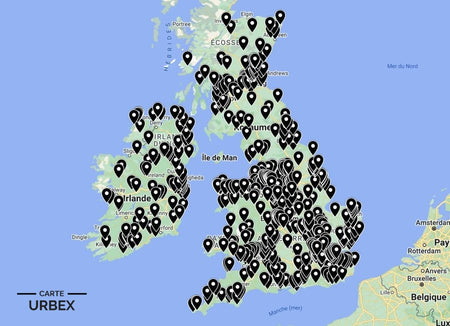
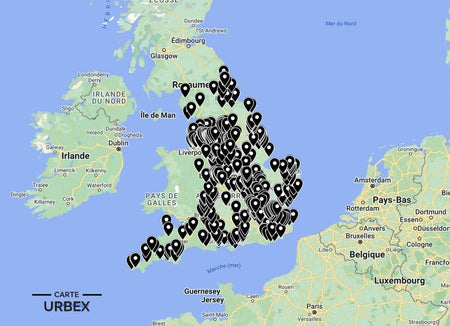
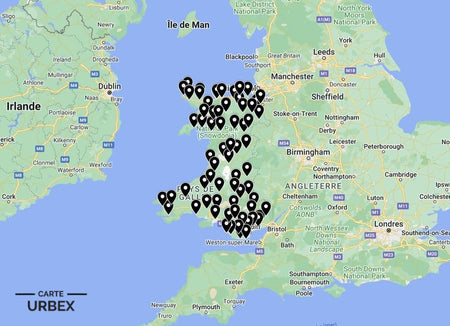
Merthyr Tydfil is the birthplace of the Industrial Revolution's iron age — the South Wales market town that in 1806 hosted the world's largest ironworks at Cyfarthfa, where Richard Trevithick ran the world's first steam locomotive along a tramroad in 1804, and where the iron and steel industry created both extraordinary wealth and extraordinary human suffering across three generations of Merthyr workers. Its abandoned places carry the full weight of that history: the monumental ruins of the Dowlais Ironworks that made Merthyr the iron capital of the world, the Cyfarthfa works whose blast furnaces created the iron for railways across five continents and a medieval church abandoned in the hills above a valley that iron built. Here are 5 of the best abandoned places in Merthyr Tydfil, selected from our Abandoned Places Map UK — 640+ GPS locations across England, Scotland, Wales and Ireland.
Why Merthyr Tydfil Is a Hidden Gem for Urban Exploration
Merthyr's urbex landscape is defined by the scale of the industrial archaeology that the iron age left behind — ironworks ruins, blast furnace remains, tramroad infrastructure and the institutional heritage of a Victorian industrial town that at its peak had the highest population density in Wales. The Taff and Morlais valleys add a layer of pre-industrial and post-industrial abandonment that makes Merthyr's derelict landscape unique in South Wales.
1. Dowlais Ironworks Ruins – Dowlais, Merthyr Tydfil — Founded 1750, World's Largest Ironworks at Peak, Stables and Engine House Ruins Listed as Scheduled Ancient Monuments (Known Location)
The Dowlais Ironworks was founded on 20 September 1750 and grew to become the largest ironworks in the world — a complex that at its Victorian peak operated eighteen blast furnaces and employed 7,000 workers producing the iron rails, girders and steel that built railways across the British Empire and beyond. The ironworks closed in 1930; the surviving Dowlais stables building and engine house are listed as Scheduled Ancient Monuments, the most visible remnants of an operation that transformed not just Merthyr but the entire material fabric of the industrial world. The monumental scale of the surviving ruins and the extraordinary historical weight of a works that made Merthyr the iron capital of the world make Dowlais one of the most historically significant pieces of derelict industrial heritage in Wales.
🔗 Learn more: Wikipedia – Dowlais Ironworks Merthyr Tydfil
2. Cyfarthfa Ironworks Ruins – Cyfarthfa, Merthyr Tydfil — 1765 Foundation, World's Largest Ironworks in 1806 with Six Blast Furnaces, Canal Tramroad Infrastructure, Taff Valley Setting (Known Location)
The Cyfarthfa Ironworks at Merthyr were established in 1765 and by 1806 were the largest ironworks in the world — six blast furnaces producing the iron that the Crawshay family shipped down the Merthyr Tramroad to Cardiff and thence to the world. Richard Trevithick's world-first steam locomotive ran along the Cyfarthfa tramroad in 1804; the ironworks closed in 1919, leaving the blast furnace bases, canal infrastructure and tramroad route in atmospheric dereliction below Cyfarthfa Castle. The combination of the Trevithick locomotive connection, the world-largest-in-1806 status and the Taff valley setting make Cyfarthfa one of the most historically extraordinary industrial heritage sites in Britain.
🔗 Also read: Top 5 Abandoned Places in Wales →

3. Vaynor Old Church – Vaynor, Merthyr Tydfil — Medieval Parish Church Abandoned in the Hills Above Merthyr, Robert Thompson Crawshay's Grave, Taff Fechan Valley Setting (Known Location)
Vaynor Old Church in the hills above Merthyr Tydfil is one of South Wales's most hauntingly atmospheric abandoned medieval churches — a pre-Norman foundation whose graveyard contains the grave of Robert Thompson Crawshay, the last Merthyr ironmaster, whose epitaph reads simply "God Forgive Me." The abandoned church and its overgrown graveyard occupy a dramatically elevated position above the Taff Fechan valley, the Beacons visible to the north. The combination of the medieval archaeology, the ironmaster's grave and its extraordinary epitaph and the Brecon Beacons setting make Vaynor one of the most emotionally resonant pieces of abandoned heritage in Merthyr.
🔗 Learn more: Coflein – Welsh Historic Environment Record
4. Merthyr Victorian Ironmaster's Villa – 1840s-1860s Ironmaster's Suburban House, Original Library and Drawing Room, Cyfarthfa Setting (Exclusively on Our Map)
An 1840s-1860s ironmaster's villa in the Cyfarthfa suburb — the original library with its period shelving, the drawing room with its iron grate (Merthyr iron, naturally) and the servants' wing of a house built by one of the managers or junior partners of the Merthyr ironworks. The ironmaster class created a distinctive residential tier in Victorian Merthyr — between the Crawshay family's Cyfarthfa Castle and the ironworkers' terraces lay the villas of the ironworks management, a class that has been progressively erased from Merthyr's landscape. GPS coordinates available with our Wales Urbex Map.
5. Merthyr Tramroad Incline – 1802 Trevithick Tramroad Infrastructure, Stone Sleepers and Incline Profile, Merthyr Taff Valley Gorge Setting (Only on Our Map)
The Merthyr Tramroad infrastructure that survives in the Taff valley gorge — the original stone tramroad sleepers, the incline profile where Trevithick's 1804 locomotive ran the world's first steam-hauled journey and the canal and tramroad corridor that connected the Merthyr ironworks to Cardiff Docks. The Penydarren Tramroad that Trevithick used is one of the most historically significant pieces of transport infrastructure in the world; the surviving stone sleepers in the valley gorge are a Scheduled Ancient Monument. Find it on our map — with access rating and condition report.
Safety Tips
- Industrial contamination: ironworks sites have heavy metal contamination in soil from centuries of iron smelting — never disturb ground surfaces or touch any residual slag or furnace lining material
- Unstable masonry: Dowlais and Cyfarthfa ruins have exposed masonry of varying stability — always assess overhead stability and stay back from any leaning or cracked sections
- Never explore alone — always bring at least one other person
The urbex code: "Respect the decay. It tells the story."
❓ FAQ
What is the most famous abandoned place in Merthyr Tydfil?
The Dowlais Ironworks ruins — founded in 1750, the world's largest ironworks at its Victorian peak with eighteen blast furnaces and 7,000 workers. The surviving neoclassical stables building and engine house are Scheduled Ancient Monuments.
What happened at Merthyr in 1804?
Richard Trevithick ran the world's first steam locomotive journey along the Penydarren Tramroad on 21 February 1804 — a 9.75-mile trip carrying ten tonnes of iron and 70 men from the Cyfarthfa ironworks to Abercynon. The locomotive worked successfully but proved too heavy for the cast-iron tramroad rails. Merthyr's claim to have witnessed the world's first steam railway journey is uncontested.
What did Robert Thompson Crawshay's grave epitaph mean?
Robert Thompson Crawshay (1817-1879), the last Merthyr ironmaster to run Cyfarthfa as an active ironworks, had "God Forgive Me" carved on his grave at Vaynor Old Church at his own request. The meaning remains debated — some interpret it as a reference to his treatment of Merthyr's ironworkers; others as simple personal humility. The epitaph is one of the most discussed pieces of text in Welsh industrial heritage.
🎯 Summary
Merthyr Tydfil's abandoned places range from the neoclassical stables of the world's largest Victorian ironworks to the blast furnace bases where Trevithick's locomotive ran in 1804 and a medieval churchyard where the last ironmaster asked God's forgiveness. Each of these 5 derelict buildings in Merthyr Tydfil captures a different layer of the Welsh town that built the Industrial Revolution's iron age.

Abandoned Places Map Wales
- ✓ 60+ GPS locations across Wales
- ✓ Exclusive locations not found anywhere else
- ✓ Instant access after purchase
- ✓ Free updates forever
9,99€
Explore All Locations →