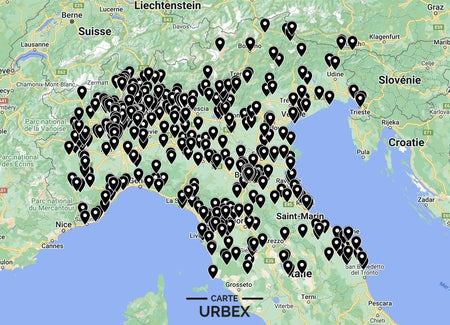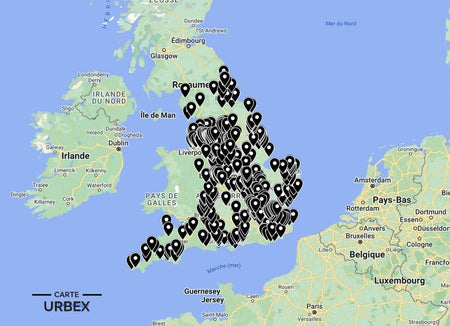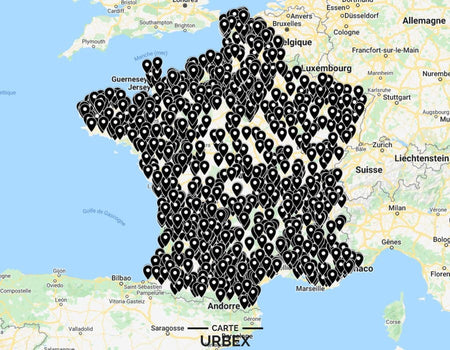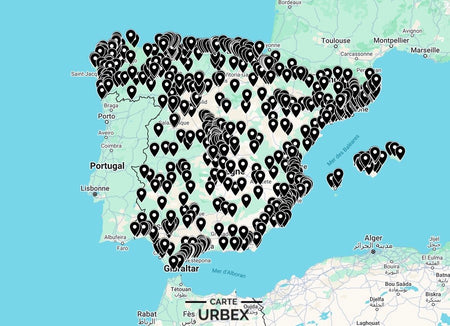


In this article, discover five essential locations selected from our Urbex China Map, which features over 500 abandoned places across China, carefully documented for unique and immersive explorations.
Urbex China in Yunnan offers one of the most diverse and visually extraordinary exploration experiences in the country. From ghost districts built for a million people on the outskirts of Kunming, to decaying colonial-era tin mining infrastructure deep in the mountains near the Vietnamese border, Yunnan's abandoned places span centuries of history — and sit within some of the most spectacular landscapes in China.
Why Yunnan Is One of the Best Urbex Destinations in China
Yunnan's unique position — a mountainous crossroads between China, Southeast Asia, and Tibet — produced an extraordinary variety of abandoned places. French colonial railway infrastructure, Maoist industrial projects, speculative ghost districts, ethnic minority villages emptied by migration, and forgotten temples lost in subtropical jungle all coexist within a single province. Few regions in China offer such diversity for urban exploration.
📍 All locations below are referenced on our Urbex China Map — GPS coordinates, access notes, condition ratings, and explorer reports included.
1. Chenggong District – Asia's Largest Ghost District, Kunming (Known Location)
One of the most reported ghost cities in China. Chenggong was built from 2003 as an expansion district for Kunming, Yunnan's capital — a 41 square mile development featuring 13 marble-clad government buildings, a Central Business District with dozens of office towers, 15 university campuses, and residential blocks for over one million people. When the BBC and Foreign Policy visited in 2012, they found 100,000 vacant apartments, empty 8-lane boulevards with no traffic, and a bank branch with no customers.
👉 Pristine high-rise towers with glinting windows and no residents, wide government plazas with no visitors, and shopping mall atriums finished to the last detail — with no one inside.
| Architecture | Ghost district — residential, civic, commercial |
| Condition | ⭐⭐⭐☆☆ Medium — partially inhabited |
| Access | ⭐⭐⭐⭐⭐ Easy — Metro Line 1 to Chenggong Station |
| Photo potential | ⭐⭐⭐⭐☆ Very good |
👉 Story: Launched in 2003 to relieve Kunming's overcrowding, Chenggong was reported as one of the largest ghost cities in Asia by 2012. Parts have since filled in as universities and government offices moved in — but desolate pockets remain.
🔗 More on Chenggong: Wikipedia – Chenggong District
2. Gejiu – The Decaying Tin Capital of China, Honghe Prefecture (Known Location)
One of the most atmospheric industrial decay sites in southwest China. Gejiu — known as "Tin City" — was built on the world's largest tin ore deposits and became China's most important mining city from the late 19th century onwards. The French-built Yunnan-Vietnam Railway, completed in 1910, connected Gejiu's tin to global markets. At its peak the city exported over 10,000 tonnes of tin per year. As ore deposits depleted and the industry contracted, Gejiu entered a long decline — leaving behind French colonial architecture, abandoned mine infrastructure, a derelict railway station, and an entire urban fabric built for an industry that no longer exists.
👉 Mustard-yellow French colonial facades crumbling in a mountain valley, abandoned smelting works on the hillsides, and a railway station that once connected Yunnan to Hanoi now standing empty.
| Architecture | Industrial mining city — French colonial, industrial |
| Condition | ⭐⭐☆☆☆ Deteriorated |
| Access | ⭐⭐⭐⭐☆ Easy |
| Photo potential | ⭐⭐⭐⭐⭐ Exceptional |
👉 Story: Founded as a tin mining settlement in the Ming Dynasty, Gejiu reached its peak in the 1930s. As ore deposits depleted and the Yunnan Tin Group consolidated operations, large sections of the city were left to decay.
🔗 More on Gejiu: Britannica – Gejiu

3. The Abandoned Ethnic Minority Village – Dehong Prefecture (Exclusive on our Map)
A deserted Dai or Jingpo village in Yunnan's Dehong Prefecture, emptied as younger generations relocated to Ruili or Mangshi in search of work and education.
👉 Traditional bamboo and timber stilt houses slowly collapsing under tropical vegetation, a village temple with offering bowls still on the altar, and terraced rice fields being reclaimed by jungle.
| Architecture | Ethnic minority village — Dai or Jingpo timber stilt houses |
| Condition | ⭐⭐☆☆☆ Deteriorated |
| Access | ⭐⭐⭐☆☆ Medium |
| Photo potential | ⭐⭐⭐⭐⭐ Exceptional |
👉 Story: Yunnan's border regions saw significant rural depopulation from the 1990s as improved roads and economic opportunity drew younger generations to cities. Traditional village architecture — unique to each ethnic group — is disappearing rapidly.
📍 Exact location available on our Urbex China Map.
4. The Abandoned Colonial-Era Mansion – Dali Prefecture (Exclusive on our Map)
A crumbling colonial-era or Republican-era mansion in Dali Prefecture, built during Yunnan's trade boom and abandoned as the families who built it scattered during the upheavals of the 20th century.
👉 Ornate carved wooden screens still in the doorframes, a courtyard garden collapsed inward, and faded murals on plaster walls telling stories of a prosperous past — all wrapped in the mountain air of the Cangshan range.
| Architecture | Colonial/Republican-era mansion — courtyard house |
| Condition | ⭐⭐☆☆☆ Deteriorated |
| Access | ⭐⭐⭐⭐☆ Easy |
| Photo potential | ⭐⭐⭐⭐⭐ Exceptional |
👉 Story: Dali's position on ancient trade routes between China, Tibet, and Southeast Asia made it the seat of considerable private wealth in the 19th and early 20th centuries. Much of that heritage was abandoned or damaged during the Cultural Revolution and never restored.
📍 Exact location available on our Urbex China Map.
5. The Abandoned French Railway Station – Yunnan-Vietnam Line (Exclusive on our Map)
A decommissioned station on the historic Yunnan-Vietnam Railway — the French-built metre-gauge line that once connected Kunming to Hanoi and carried Yunnan's tin to the world.
👉 A French-style station building with original ironwork still intact, overgrown tracks disappearing into the mountain forest, and a platform that once saw international freight trains now hearing only birdsong.
| Architecture | Colonial railway station — French metre-gauge line |
| Condition | ⭐⭐⭐☆☆ Medium |
| Access | ⭐⭐⭐☆☆ Medium |
| Photo potential | ⭐⭐⭐⭐⭐ Exceptional |
👉 Story: Completed in 1910 by French engineers at extraordinary cost in lives and capital, the Yunnan-Vietnam Railway was decommissioned in sections from the 1970s onward. Several of its original stations survive intact — forgotten pieces of colonial infrastructure in the Yunnan mountains.
📍 Exact location available on our Urbex China Map.
Urbex China – Safety & Legal Reminder
Urban exploration in China carries specific risks. Trespassing is illegal, and security has increased significantly around abandoned structures. Always:
- Research each site thoroughly before visiting
- Explore with at least one other person
- Wear protective gear — mask, gloves, and sturdy boots
- Never force access or cause damage to any structure
- Respect the spaces and leave no trace
The urbex code applies everywhere: "Take nothing but photographs, leave nothing but footprints."
❓ FAQ – Urbex Yunnan
What is the most famous abandoned place in Yunnan?
Chenggong District in Kunming is the most internationally documented — reported by BBC, Foreign Policy, and the World Bank as one of Asia's largest ghost cities in 2012. It is easily accessible by Metro Line 1 from central Kunming.
How do I get to Gejiu from Kunming?
Gejiu is approximately 250 kilometres south of Kunming. Take a long-distance bus from Kunming South Bus Station to Gejiu (around 3–4 hours). The city is 85% mountains, so local transport within the city requires taxis or a rental vehicle.
What makes Yunnan unique for urbex compared to other Chinese provinces?
Yunnan combines industrial decay, French colonial heritage, ethnic minority architecture, and ghost district urbanism within a single province — a diversity of site types found nowhere else in China. The subtropical climate also accelerates vegetation growth, making even recently abandoned sites feel ancient.
🎯 Conclusion
Yunnan offers one of the most extraordinary experiences in urbex China — a province where the ruins of French colonial industry sit alongside ghost districts built for a million people, and where ethnic minority villages lost to migration decay quietly in some of the most beautiful mountain landscapes in Asia.
Thanks to our Urbex China Map, you get access to over 500 unique locations for a safe and immersive exploration experience — with GPS coordinates, access ratings, photos, and explorer reports for every spot.