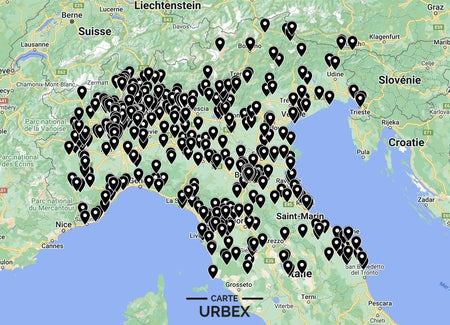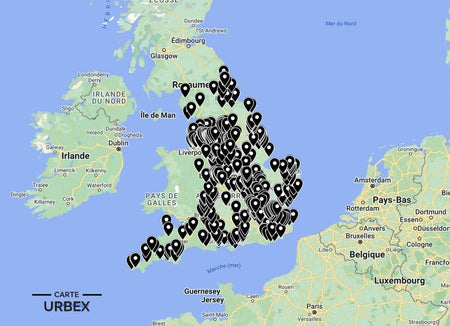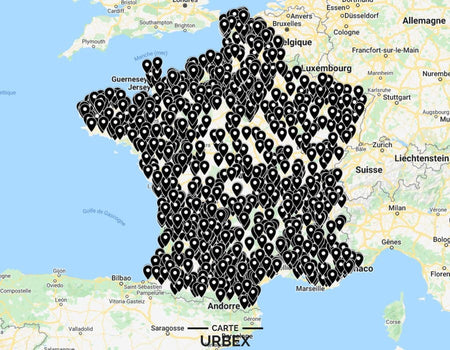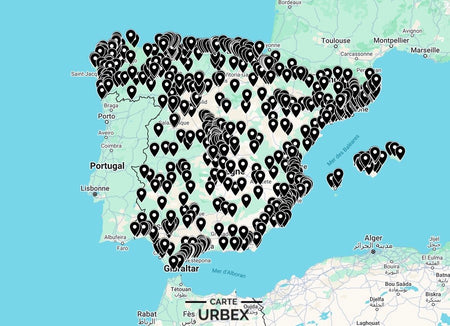


In this article, discover five essential locations selected from our Urbex China Map, which features over 500 abandoned places across China, carefully documented for unique and immersive explorations.
Urbex China in Xinjiang offers the most historically layered and geographically extreme urban exploration experience in the country. From 2,300-year-old Silk Road fortresses carved from desert rock to wind-eroded ghost cities shaped over 100 million years, and from abandoned Soviet-era industrial towns to forgotten oasis settlements swallowed by the Taklamakan — Xinjiang's abandoned places span a scale of time that no other province in China can match.
Why Xinjiang Is One of the Most Extraordinary Urbex Destinations in China
Xinjiang sits at the crossroads of civilizations — Chinese, Mongol, Uyghur, Persian, and Russian influences have all left their mark on a landscape spanning deserts, mountain ranges, and ancient Silk Road oases. Abandonment here has many faces: cities deserted when trade routes shifted, industrial towns emptied when Soviet ties broke, oasis settlements swallowed by advancing desert, and ghost districts built speculatively on the outskirts of Kashgar and Urumqi. Few places on earth offer such a range of derelict history in a single region.
📍 All locations below are referenced on our Urbex China Map — GPS coordinates, access notes, condition ratings, and explorer reports included.
1. Jiaohe / Yarkhoto – The World's Oldest Abandoned City, Turpan (Known Location)
The most extraordinary abandoned city in China — and one of the oldest in the world. Jiaohe (known to local Uyghurs as Yarkhoto) is a 2,300-year-old city carved entirely from the desert plateau rather than built with stone — government halls, Buddhist temples, residential quarters, and 101 stupas all dug directly from the yellow siltstone of the Turpan Basin. It was the capital of the Jushi Kingdom, a major Silk Road hub, and was abandoned around the 14th century as Mongol invasions made the region uninhabitable.
A UNESCO World Heritage Site since 2014, it is the world's best-preserved, largest, and longest-lasting ancient city of rammed earth — and one of the most photogenic abandoned places on the planet.
👉 A 1.7 km city of windswept earth towers rising from a desert plateau between two river valleys — government halls, monastery ruins, stupa groves, and residential streets all perfectly legible after 2,300 years.
| Architecture | Ancient rammed-earth city — 37 hectares |
| Condition | ⭐⭐⭐☆☆ Deteriorating — UNESCO protected |
| Access | ⭐⭐⭐⭐⭐ Easy — open to visitors (entrance fee) |
| Photo potential | ⭐⭐⭐⭐⭐ Exceptional |
👉 Story: Founded in the 2nd century BC as the Silk Road capital of the Jushi Kingdom. Abandoned around 1400 CE after Mongol raids and the shift of trade routes. Preserved by the extreme aridity of the Turpan Basin.
🔗 More on Jiaohe: Wikipedia – Jiaohe Ruins
2. Urho Ghost City – The Wind-Carved Desert Labyrinth, Karamay (Known Location)
The most surreal natural abandoned landscape in China. Urho Ghost City — officially the Wuerhe Wind City — is a 30 km² Yardang landform area located 100 kilometres northeast of Karamay, created over 100 million years of wind and water erosion from what was once a prehistoric lake. The desert winds carve the rock into shapes that resemble towers, castles, temples, and animals — earning it the name "Ghost City" for the eerie howling sounds it produces at night. It was the filming location for the Oscar-winning film Crouching Tiger, Hidden Dragon.
Adjacent to the natural formation is Urho Town itself — an abandoned oil workers' settlement built for mining and left empty, its deserted apartment blocks and silent public buildings slowly being overtaken by desert.
👉 A labyrinth of wind-carved rock towers rising from the Gobi, with the ruins of an abandoned industrial town visible on the perimeter — one of the most otherworldly urbex landscapes in Asia.
| Architecture | Natural yardang landform + abandoned oil town |
| Condition | ⭐⭐⭐☆☆ Medium |
| Access | ⭐⭐⭐⭐☆ Easy — open to visitors (entrance fee) |
| Photo potential | ⭐⭐⭐⭐⭐ Exceptional |
👉 Story: Named "Ghost City" by both Mongol and Kazakh peoples for the eerie sounds of desert winds. The adjacent oil workers' town was built during Xinjiang's petroleum boom and abandoned as operations consolidated elsewhere.
🔗 More on Urho: Wikipedia – Wuerhe Ghost City

3. The Abandoned Oasis Town – Tarim Basin, Southern Xinjiang (Exclusive on our Map)
A former Silk Road oasis settlement in the Tarim Basin, abandoned as the water table dropped and the Taklamakan Desert advanced — its mud-brick houses and irrigation channels slowly disappearing under the sand.
👉 Collapsed earthen walls merging with dunes, a dried-up karez (underground irrigation channel) running through empty courtyards, and the silence of a place where water once made life possible and its absence made it impossible.
| Architecture | Oasis settlement — mud brick, karez irrigation |
| Condition | ⭐⭐☆☆☆ Deteriorated |
| Access | ⭐⭐⭐☆☆ Medium — desert 4WD recommended |
| Photo potential | ⭐⭐⭐⭐⭐ Exceptional |
👉 Story: Dozens of small oasis settlements across the Tarim Basin were abandoned throughout the 20th century as desertification advanced and traditional water management systems failed. Some lie only metres below the current sand surface.
📍 Exact location available on our Urbex China Map.
4. The Abandoned Soviet-Era Industrial Complex – Northern Xinjiang (Exclusive on our Map)
A derelict Soviet-influenced factory complex in northern Xinjiang, built during the Sino-Soviet cooperation period of the 1950s and abandoned when relations collapsed in 1960.
👉 Russian-style industrial architecture decaying in the Central Asian steppe, Cyrillic signage still visible on equipment panels, and vast production halls with the particular silence of a place that was once a symbol of international solidarity and became a monument to its failure.
| Architecture | Soviet-era industrial complex |
| Condition | ⭐⭐☆☆☆ Deteriorated |
| Access | ⭐⭐⭐☆☆ Medium |
| Photo potential | ⭐⭐⭐⭐⭐ Exceptional |
👉 Story: The Sino-Soviet split of 1960 led Soviet advisors to withdraw from hundreds of joint projects across Xinjiang overnight, taking blueprints and equipment with them. Many facilities were simply left unfinished or in disrepair.
📍 Exact location available on our Urbex China Map.
5. The Abandoned Ghost District – Kashgar Outskirts (Exclusive on our Map)
An unfinished residential development on the periphery of Kashgar — a "Shenzhen City" style ghost district built speculatively on the edge of one of Central Asia's oldest living cities, and abandoned mid-construction as demand collapsed.
👉 Identical tower blocks rising above the Kashgar plain with the old city's minarets visible on the horizon, empty show apartments still furnished for sales presentations, and construction cranes frozen against the desert sky.
| Architecture | Ghost residential district — modern towers |
| Condition | ⭐⭐⭐☆☆ Medium |
| Access | ⭐⭐⭐⭐☆ Easy |
| Photo potential | ⭐⭐⭐⭐☆ Very good |
👉 Story: Kashgar's outskirts saw significant speculative development in the 2010s as the city was positioned as a gateway for Belt and Road Initiative trade. When financing collapsed and demand failed to materialise, entire districts were left empty.
📍 Exact location available on our Urbex China Map.
Urbex China – Safety & Legal Reminder
Urban exploration in China carries specific risks. Trespassing is illegal, and security is particularly active in Xinjiang. Always:
- Research each site thoroughly before visiting
- Explore with at least one other person
- Wear protective gear — mask, gloves, sturdy boots, and sun protection
- Never force access or cause damage to any structure
- Respect the spaces and leave no trace
The urbex code applies everywhere: "Take nothing but photographs, leave nothing but footprints."
❓ FAQ – Urbex Xinjiang
What is the most famous abandoned place in Xinjiang?
Jiaohe (Yarkhoto) near Turpan is the most internationally recognised — a UNESCO World Heritage Site and the world's best-preserved ancient rammed-earth city. It is easily accessible from Turpan city, approximately 10 km to the west.
How do I get to Jiaohe from Urumqi?
Take a high-speed train from Urumqi to Turpan North Station (approximately 30 minutes), then a taxi or bus to the Jiaohe ruins (10 km west of the city centre). Plan for a half-day visit minimum.
What makes Xinjiang unique for urbex compared to other Chinese provinces?
Xinjiang is the only region in China where you can explore ancient Silk Road ruins, Soviet-era industrial relics, natural wind-carved ghost cities, and modern property crisis ghost districts within a single journey. The extreme desert climate also preserves ancient structures for thousands of years — making even millennia-old ruins look eerily intact.
🎯 Conclusion
Xinjiang offers the most historically vast and geographically extreme experience in urbex China — from a 2,300-year-old Silk Road city carved from desert rock to a Soviet factory complex abandoned overnight and a Kashgar ghost district built for a future that never came. Every abandoned place here is shaped by the desert: its dryness preserves, its winds sculpt, and its silence amplifies everything.
Thanks to our Urbex China Map, you get access to over 500 unique locations for a safe and immersive exploration experience — with GPS coordinates, access ratings, photos, and explorer reports for every spot.