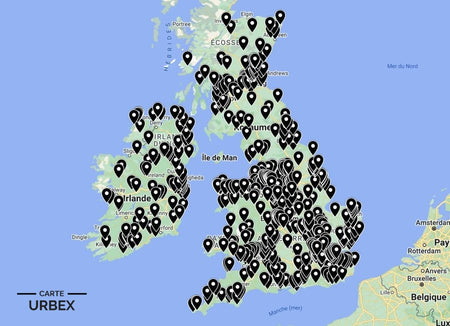
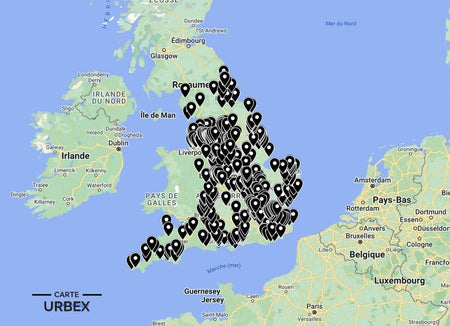
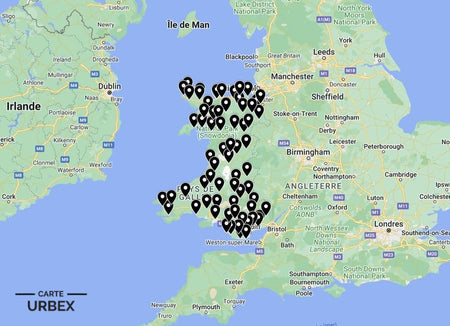
Cornwall's abandoned landscape is defined by one industry above all others — the tin and copper mining that made the Cornish coast one of the most intensively industrialised landscapes in the world from the 18th century until the mines finally closed in the 20th. The engine houses perched on cliff edges above the Atlantic, the arsenic calciner stacks in their valley cwms and the collapsed buddle pits on the moorland create an abandoned industrial landscape unlike anywhere else in Britain. Here are 5 of the best abandoned places in Cornwall, selected from our Abandoned Places Map UK — 640+ GPS locations across England, Scotland, Wales and Ireland.
Why Cornwall Is a Hidden Gem for Urban Exploration
Cornwall's mining heritage is UNESCO World Heritage listed — but the listing covers only the most famous sites. Beyond Botallack and Levant, hundreds of smaller engine houses, arsenic works, clay processing plants and mine complex buildings decay across the Penwith peninsula and the mid-Cornwall uplands, largely undocumented outside the local urbex community. The combination of dramatic coastal and moorland settings makes every site photogenic; the sheer density of abandonment makes Cornwall one of the most rewarding counties in England for a week's exploration.
1. Botallack Mine – Botallack, West Penwith — 19th-Century Tin and Copper Mine, Crowns Engine Houses Perched on the Atlantic Cliff Face, UNESCO World Heritage (Known Location)
Botallack Mine on the West Penwith clifftop is Cornwall's most dramatically sited industrial ruin — the two Crowns engine houses perched on a ledge above the Atlantic, the lower house almost in the surf line. Botallack worked tin and copper from the 16th century through to 1914; at its peak the miners worked submarine shafts extending 500 yards under the ocean. The clifftop engine house complex, the arsenic calciner and the wider mine infrastructure make Botallack the most photographically extraordinary abandoned mine in England. Part of the Cornwall and West Devon Mining Landscape UNESCO World Heritage Site.
🔗 Learn more: Wikipedia – Botallack Mine
2. Wheal Coates – St Agnes, Cornwall — 1872 Towanroath Engine House on the Atlantic Clifftop, Most Photographed Mine in Cornwall, UNESCO World Heritage (Known Location)
Wheal Coates at St Agnes is the most photographed tin mine in Cornwall — the Towanroath engine house perched on the clifftop above the Atlantic, the winding engine house above it and the processing floors cut into the coastal slope. Working from 1802 to 1889, the mine is now managed by the National Trust as part of the UNESCO World Heritage landscape. The clifftop setting, the golden hour light on the engine house stonework and the ocean backdrop make Wheal Coates one of the most iconic abandoned industrial images in England.
🔗 Also read: Top 5 Abandoned Places in England →

3. Levant Mine – Pendeen, Cornwall — 1820s Steam Beam Engine Still In Situ, Oldest Operational Beam Engine in the World When Restored, UNESCO Heritage, Grade I Listed (Known Location)
Levant Mine at Pendeen has the most extraordinary survival of any Cornish mine — the original 1840 Harvey's of Hayle whim engine still in its engine house, the oldest beam engine in the world still in its original location. The mine was the site of the 1919 Levant Mine Disaster when the man engine collapsed killing 31 miners; it worked from 1820 to 1930. The National Trust manages the site and runs the engine periodically; the engine house, the clifftop mine complex and the extraordinary survival of the original machinery make Levant the most technically significant abandoned mine in Cornwall. Historic England Grade I listed.
🔗 Learn more: Historic England – Levant Mine
4. Abandoned Cornwall China Clay Works – 1900s-1940s Clay Processing Plant, Pan Kiln Drying Sheds and Settling Tanks Still Intact, Mid-Cornwall Clay Country (Off the Radar — Our Map Only)
A 1900s-1940s china clay processing plant in the mid-Cornwall clay country — the original pan kiln drying sheds where clay slurry was dried into blocks, the settling tank series still traceable across the site and the engine house chimney rising above the white waste tips. The St Austell clay country is an extraordinary industrial landscape of azure settling ponds, white spoil tips and abandoned processing complexes; the smaller works progressively closed as the industry consolidated. Discover its exact location on our England Urbex Map.
5. Abandoned Cornish Georgian Manor House – Late 18th-Century Country House, Grand Staircase and Library Intact, Stable Block and Walled Garden, Rural Cornwall (Exclusively on Our Map)
A late 18th-century country house in rural Cornwall — the original grand staircase still intact, the library with period shelving and the estate outbuildings still standing in the overgrown grounds. Cornwall's landed gentry built estates across the county during the prosperity of the mining boom; when death duties and agricultural decline made them unviable, several were simply abandoned. One of the most atmospherically complete abandoned country houses in Cornwall. GPS coordinates available with our England Urbex Map.
❓ FAQ
What is the most famous abandoned place in Cornwall?
Botallack Mine — the two Crowns engine houses perched on the Atlantic cliff face above West Penwith, where miners once worked submarine shafts 500 yards under the ocean. Part of the UNESCO World Heritage landscape and the most photographically extraordinary abandoned mine in England.
What happened at Levant Mine in 1919?
The Levant Mine Disaster of 20 October 1919 — the man engine, a reciprocating timber beam used to carry miners up and down the shaft, collapsed killing 31 men. The mine closed in 1930; the original 1840 beam engine remains in its engine house, the oldest beam engine still in its original location anywhere in the world.
What is the Cornwall and West Devon Mining Landscape?
A UNESCO World Heritage Site inscribed in 2006 covering the tin and copper mining landscape of west Cornwall and west Devon — engine houses, arsenic calciners, mine complexes and associated settlements that represent the global spread of Cornish mining technology in the 18th and 19th centuries.
Safety Tips
- Mine shafts: the Cornish peninsula has thousands of mine shafts, many unmarked and uncapped — never approach any depression in the ground near any mine site, and always stay on established coastal paths
- Cliff edges: Botallack and Wheal Coates are on actively eroding clifftops — always stay on the designated paths and never approach the cliff edge
- Never explore alone — mine sites often have no mobile signal; always tell someone your exact location before visiting
The urbex code: "Take nothing but photographs, leave nothing but footprints."
🎯 Summary
Cornwall's abandoned places range from engine houses perched on the Atlantic cliff face at Botallack to the most photographed mine engine house in England at St Agnes and the oldest beam engine still in its original location at Levant. Each of these 5 derelict buildings in Cornwall captures a different layer of the most intensively mined landscape in Britain.

Abandoned Places Map England
- ✓ 400+ GPS locations across England
- ✓ Exclusive locations not found anywhere else
- ✓ Instant access after purchase
- ✓ Free updates forever
14,99€
Explore All Locations →