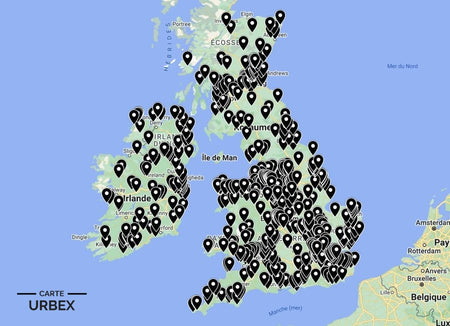
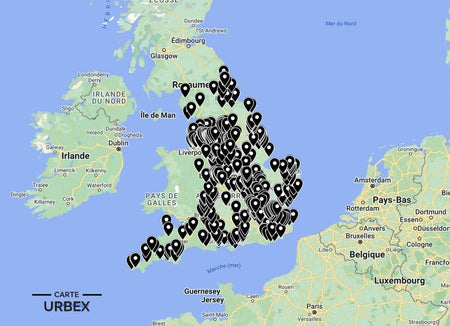
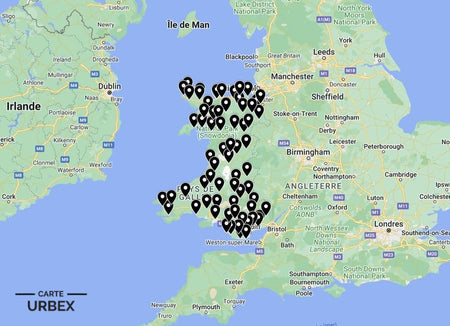
Coventry carries a unique weight in English history — the city bombed almost to destruction in November 1940, rebuilt in modernist concrete and then left to deal with the post-war decline of the car industry that replaced what the Luftwaffe destroyed. Its abandoned places span that extraordinary arc: WWII ruins that were never cleared, brutalist car industry infrastructure and the medieval ecclesiastical heritage that survived the bombing. Here are 5 of the best abandoned places in Coventry, selected from our Abandoned Places Map UK — 640+ GPS locations across England, Scotland, Wales and Ireland.
Why Coventry Is a Hidden Gem for Urban Exploration
Coventry's urbex landscape is unlike any other English city — it layers medieval ruins, WWII bomb damage preserved as memorials, post-war modernist architecture now in its own abandonment cycle and the vast car industry infrastructure of factories that once made the city the Detroit of England. Few places in Britain offer this compressed layering of destruction and abandonment across such a compact geography.
1. Coventry Cathedral Old Ruins – Coventry City Centre — Medieval Cathedral Bombed 14 November 1940, Shell Preserved as a Permanent Memorial, Altar of Reconciliation (Known Location)
The ruined shell of the medieval Coventry Cathedral — bombed on the night of 14 November 1940 during the Coventry Blitz, the most devastating raid on any English city outside London. The decision was made to preserve the ruins as a permanent memorial rather than clear them; the charred stone pillars, the surviving window tracery and the Cross of Nails salvaged from the burned roof beams remain in the open-air roofless shell adjacent to Sir Basil Spence's 1962 replacement cathedral. One of the most historically charged and most emotionally powerful abandoned buildings in England.
🔗 Learn more: Wikipedia – Coventry Cathedral
2. Whitefriars Monastery – Coventry City Centre — 14th-Century Carmelite Friary, Cloister Walls Still Standing, Medieval Tile Floors Intact, English Heritage (Known Location)
Whitefriars in Coventry is a 14th-century Carmelite friary preserved as one of the most complete medieval monastic ruins in the West Midlands — the cloister walls, the chapter house arch and sections of medieval tile floor still intact after the Dissolution of the Monasteries in the 1530s and centuries of subsequent urban development around it. The combination of the medieval architectural fabric and the contrast with the surrounding city centre make Whitefriars one of the most accessible and most atmospherically surprising abandoned places in Coventry.
🔗 Also read: Top 5 Abandoned Places in England →

3. Abandoned Coventry Car Factory – 1950s-1970s Automotive Assembly Plant, Production Line Floor Infrastructure Still in Place, Paint Shop and Press Shop Buildings Intact, Coventry Industrial Belt (Exclusively on Our Map)
A 1950s-1970s automotive assembly plant in Coventry's industrial belt — the original production line floor with its embedded conveyor track housings, the paint shop building with its ventilation infrastructure and the press shop where body panels were stamped. Coventry's car industry made it the wealthiest industrial city in England through the 1950s-1960s; when Japanese competition and the 1970s oil crises ended the boom, the factories closed in rapid succession. Discover its exact location on our England Urbex Map.
4. Abandoned Coventry Edwardian Textile Mill – 1900s-1910s Ribbon Weaving Mill, Original Jacquard Loom Frames Still Mounted, Top-Lit Weaving Floor, City Centre (Only on Our Map)
A 1900s-1910s ribbon weaving mill in Coventry — the original top-lit weaving floor designed to flood the Jacquard loom workroom with natural light, original loom frame mounting points still embedded in the timber floor and the steam-heated drying room for finished ribbon still standing at the rear. Coventry's ribbon weaving industry made it a specialist centre for luxury silk textiles through the 19th century; the mills declined as fashion changed and foreign competition increased. GPS coordinates available with our England Urbex Map.
5. Abandoned Warwickshire Country House – Georgian Mansion, WWI Convalescent Home, Grand Staircase and Library Intact, Walled Garden Returning to Woodland, Rural Coventry Fringe (Our Map Exclusive)
A Georgian country house on the rural Coventry fringe — the original ballroom with ornate plasterwork ceiling, the grand staircase with carved balustrade and the library with period shelving. The house served as a convalescent home during WWI and has been in progressive decay since post-war death duties made the estate unviable. The walled kitchen garden has returned to woodland. Included in our England collection — 400+ locations.
❓ FAQ
What is the most famous abandoned place in Coventry?
The ruined shell of Coventry Cathedral — bombed on 14 November 1940 during the most devastating Blitz raid on any English city outside London. Preserved as a permanent memorial, the charred stone pillars and window tracery stand alongside Sir Basil Spence's 1962 replacement.
What is Whitefriars Coventry?
A 14th-century Carmelite friary with cloister walls and medieval tile floors still intact — one of the most complete medieval monastic ruins in the West Midlands, preserved within the modern city centre despite the Dissolution of the Monasteries and the 1940 Blitz.
Why did Coventry's car industry collapse?
Coventry's dominance in British car manufacturing — Standard, Triumph, Jaguar, Rootes Group — made it the wealthiest industrial city in England through the 1950s-1960s. The combination of Japanese competition, the 1973-74 oil crisis, industrial relations problems and failure to invest in modern production ended the boom within a decade.
Safety Tips
- Industrial contamination: Coventry's car factory sites may contain chemical residues from paint shop and metalworking operations — wear gloves and avoid disturbing any floor sediment in former paint shop buildings
- Asbestos: universal in pre-1980 Coventry factory and institutional buildings — always wear an FFP2 mask in any enclosed space
- Never explore alone — always bring at least one other person
The urbex code: "Respect the decay. It tells the story."
🎯 Summary
Coventry's abandoned places range from the WWII cathedral ruin preserved as a permanent memorial to a 14th-century Carmelite friary with medieval tile floors intact and 1970s car factories whose production line tracks are still embedded in the concrete floor. Each of these 5 derelict buildings in Coventry captures a different layer of a city that has been built, destroyed and rebuilt more dramatically than almost anywhere in England.

Abandoned Places Map England
- ✓ 400+ GPS locations across England
- ✓ Exclusive locations not found anywhere else
- ✓ Instant access after purchase
- ✓ Free updates forever
14,99€
Explore All Locations →