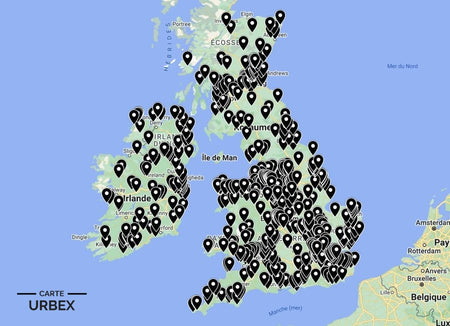
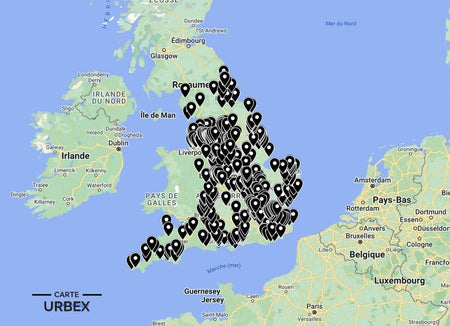
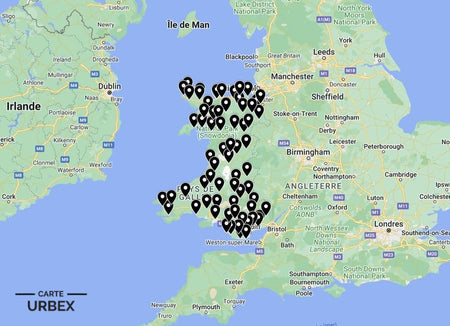
Derbyshire is England's most dramatically varied county — from the Dark Peak's millstone grit moorland to the White Peak's limestone plateau, from the Derwent Valley's pioneer textile mills to the eastern coalfield's Victorian pit villages. Its abandoned places reflect that extraordinary range: a Victorian colliery whose surface infrastructure is among the finest surviving examples in the East Midlands, an 1830s limestone railway whose inclines and engine houses still stand above the Peak District and a Cold War research station on Harpur Hill where the secrets of high-altitude research were kept. Here are 5 of the best abandoned places in Derbyshire, selected from our Abandoned Places Map UK — 640+ GPS locations across England, Scotland, Wales and Ireland.
Why Derbyshire Is a Hidden Gem for Urban Exploration
Derbyshire's urbex landscape is defined by two contrasting zones — the Peak District's pre-industrial lead and limestone heritage, where 18th-century mine shafts and smelt mills decay in the moorland and limestone plateau, and the eastern coalfield's Victorian and 20th-century colliery infrastructure. The Derwent Valley's textile heritage adds a third layer; the valley that witnessed the world's first water-powered cotton spinning mills in 1771 also contains some of England's most historically significant derelict industrial buildings.
1. Pleasley Colliery – Pleasley, Derbyshire — 1875-1983 East Derbyshire Colliery, Headstocks, Winding Engines and Pithead Baths in Remarkable Atmospheric Condition (Known Location)
Pleasley Colliery near Mansfield is one of the most completely surviving Victorian colliery surface complexes in the East Midlands — sunk in 1875 and operating until 1983, the twin headstocks, original winding engine houses, pithead baths and colliery yard buildings have been preserved in remarkable atmospheric condition by a local heritage trust. The combination of the Victorian engineering quality, the completeness of the surviving surface infrastructure and the atmospheric dereliction of the surrounding yard creates one of the most evocative and most historically complete colliery landscapes in England.
🔗 Learn more: Wikipedia – Pleasley Colliery
2. Cromford and High Peak Railway – Derbyshire Peak District — 1830 World's Earliest Mountain Railway, Inclines and Engine Houses Still Standing, Scheduled Ancient Monument (Known Location)
The Cromford and High Peak Railway opened in 1830 as one of the earliest railways in the world — a remarkable piece of engineering that carried limestone across the Peak District plateau using a system of rope-worked inclines and stationary steam engines at the top of each gradient. The incline engine houses, the inclined plane trackbeds and the railway's characteristic limestone dry-stone wall borders still stand in atmospheric ruin above the Peak District landscape, listed as a Scheduled Ancient Monument. One of the most historically significant and most dramatically sited pieces of early railway heritage in England.
🔗 Also read: Top 5 Abandoned Places in England →

3. Harpur Hill Research Station – Buxton, Derbyshire — Cold War HSE Research Station, Underground Bunker Infrastructure and Above-Ground Laboratory Buildings, High Peak Setting, Documented on 28DaysLater (Known Location)
The Harpur Hill research station above Buxton is one of the most unusual pieces of Cold War and industrial research heritage in the Peak District — a Health and Safety Executive research facility on the high limestone plateau whose combination of above-ground laboratory buildings and underground bunker infrastructure served British industrial safety research for decades. Documented on 28DaysLater as one of the most unusual and most historically specific derelict research sites in Derbyshire — a Cold War-era research complex whose purpose was distinctly peacetime but whose infrastructure was built to wartime standards of survivability.
🔗 Learn more: 28DaysLater – Derbyshire Urbex Reports
4. Peak District Lead Mine – 18th-Century Lead Working, Engine House and Smelt Mill, White Peak Limestone Plateau (Only on Our Map)
An 18th-century lead mine in the White Peak — the engine house where a beam engine pumped water from the mine shaft, the smelt mill where lead ore was smelted and the buddle pit where ore was washed. The Peak District's lead mining industry created a landscape of shafts, engine houses and smelt mills across the limestone plateau that is among the most archaeologically rich and most atmospherically dramatic pieces of pre-industrial industrial heritage in England. GPS coordinates available with our England Urbex Map.
5. Derwent Valley Cotton Mill – 1780s-1800s Early Industrial Cotton Mill, Water Wheel Pit and Multi-Storey Mill Frame, UNESCO World Heritage Corridor (Our Map Exclusive)
An 1780s-1800s cotton spinning mill in the Derwent Valley — the original water wheel pit, the multi-storey Arkwright-era mill frame and the millrace still channelling water from the Derwent. The Derwent Valley Mills UNESCO World Heritage Site corridor contains the world's first water-powered industrial cotton spinning operations; the derelict examples outside the main heritage corridor are the rarest and most atmospherically dramatic pieces of early industrial archaeology in England. Included in our England collection — 400+ locations.
❓ FAQ
What is the most famous abandoned place in Derbyshire?
Pleasley Colliery — a Victorian colliery sunk in 1875 whose twin headstocks, winding engine houses and pithead baths survive in remarkable atmospheric completeness. One of the finest surviving examples of a complete Victorian colliery surface complex in the East Midlands.
What was the Cromford and High Peak Railway?
An 1830 railway that crossed the Peak District plateau using rope-worked inclines and stationary steam engines — one of the earliest railways in the world and a Scheduled Ancient Monument. The incline engine houses and trackbeds still stand in atmospheric ruin above the Peak District landscape.
Why is Derbyshire important for industrial history?
The Derwent Valley near Matlock and Cromford was the birthplace of the factory system — Richard Arkwright's 1771 Cromford Mill was the world's first successful water-powered cotton spinning factory, establishing the template for the Industrial Revolution. The valley is now a UNESCO World Heritage Site; its derelict mill examples outside the main heritage corridor are among the most historically significant abandoned buildings in England.
Safety Tips
- Mine shafts: the Peak District has thousands of open and capped lead mine shafts — never approach any ground depression and always stay on established paths on the White Peak plateau
- Asbestos: endemic in pre-1980 Derbyshire industrial and research buildings — FFP2 mask mandatory in any enclosed space
- Never explore alone — always bring at least one other person
The urbex code: "Leave it as you found it — the next explorer deserves the same experience."
🎯 Summary
Derbyshire's abandoned places range from a Victorian colliery with twin headstocks and original winding engines to an 1830 mountain railway whose incline engine houses are a Scheduled Ancient Monument and a Cold War research bunker on the limestone plateau above Buxton. Each of these 5 derelict buildings in Derbyshire captures a different layer of England's most dramatically varied county.

Abandoned Places Map England
- ✓ 400+ GPS locations across England
- ✓ Exclusive locations not found anywhere else
- ✓ Instant access after purchase
- ✓ Free updates forever
14,99€
Explore All Locations →