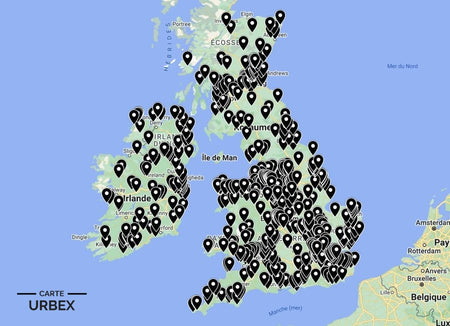
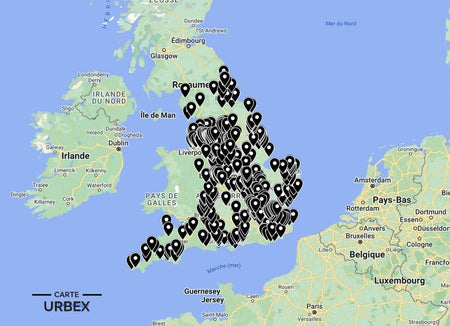
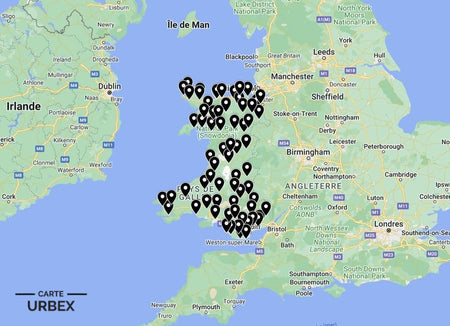
Exeter is Devon's cathedral city — a Roman fortress, a medieval trading centre and a WWII bombing target whose Blitz destroyed much of the Georgian city centre in a single night in May 1942. Its abandoned places range from a Victorian psychiatric hospital on the city's eastern fringe to the derelict gasworks infrastructure of a city that was lit by coal gas for over a century and the WWII airfield whose dispersal pans still break the East Devon farmland. Here are 5 of the best abandoned places in Exeter, selected from our Abandoned Places Map UK — 640+ GPS locations across England, Scotland, Wales and Ireland.
Why Exeter Is a Hidden Gem for Urban Exploration
Exeter's urbex landscape is shaped by three distinct layers — the Victorian institutional heritage of a cathedral city, the WWII military infrastructure of a Devon county centre that was both bombed and used as a military base and the East Devon countryside's abandoned farmstead and estate heritage. The relatively small urbex community in Exeter means sites are less frequently documented than in larger cities.
1. Wonford House Hospital – Heavitree, Exeter — 1869 Devon County Pauper Lunatic Asylum, Victorian Gothic Campus, Sections Derelict After Service Closure (Known Location)
Wonford House Hospital in Heavitree opened in 1869 as the Devon County Pauper Lunatic Asylum — a Victorian Gothic institutional campus whose administrative tower, ward buildings and chapel served Exeter's psychiatric population for over a century before service rationalisation progressively emptied sections of the original campus. The combination of the Victorian Gothic architecture, the East Devon setting and the progressive dereliction of the original institutional fabric make Wonford one of the most atmospherically significant abandoned hospital sites in the south-west.
🔗 Learn more: Wikipedia – Wonford House Hospital Exeter
2. RAF Exeter – Clyst Honiton, Devon — 1940s Fighter Station, Battle of Britain and D-Day Support, Control Tower and Technical Buildings, East Devon Setting (Known Location)
RAF Exeter at Clyst Honiton was established in 1940 as a fighter station — defending the south-west coast through the Battle of Britain and supporting the D-Day naval operations from Exeter's strategic position above the English Channel. Decommissioned after WWII and progressively returned to other uses, the original control tower and technical site buildings retain their 1940s character in atmospheric dereliction across the East Devon farmland.
🔗 Also read: Top 5 Abandoned Places in England →

3. Exeter Gasworks – Haven Road, Exeter — Victorian Coal Gas Works, Gasholder Frame and Retort House Infrastructure, Exe Estuary Setting, Listed by Historic England (Known Location)
Exeter's former gasworks on Haven Road represents the Victorian utility infrastructure that lit and heated the cathedral city for over a century — the gasholder frame, the retort house where coal was processed into gas and the canal-side infrastructure of a works whose Exe estuary setting made it both practical and visually dramatic. Listed by Historic England as a significant example of Victorian utility industrial heritage; the gasholder frame above the Haven Banks waterfront is one of the most distinctive derelict industrial structures in Devon.
🔗 Learn more: Historic England – Exeter Gasworks
4. East Devon Georgian Country House – 18th-Century Mansion, Grand Staircase and Library Intact, Walled Garden and Stable Block, Devon Red Soil Setting (Hidden Gem — Our Map Only)
An 18th-century country house in the East Devon red soil countryside — the original grand staircase still intact, the library with period shelving and the servants' wing. The stable block and walled kitchen garden still stand in the overgrown grounds. East Devon's agricultural gentry built extensively in the Georgian era; post-war death duties and the decline of the landed estate emptied several within a decade. GPS coordinates available with our England Urbex Map.
5. Devon Red Sandstone Farmstead – 17th-18th Century Longhouse, Cob Walls and Thatch Base, East Devon Red Soil Agriculture (Off the Radar — Our Map Only)
A 17th-18th century Devon longhouse in the East Devon red soil countryside — the original cob-walled farmhouse with its characteristic Devon red sandstone quoins, the shippon where cattle were housed through winter under the same roof as the family and the outbuildings of a farming unit that worked the red Devon soil for centuries. Devon's traditional cob and thatch farmstead is among the most fragile and most rapidly disappearing building typologies in England. Included in our England collection — 400+ locations.
❓ FAQ
What is the most famous abandoned place in Exeter?
Wonford House Hospital — an 1869 Victorian Gothic psychiatric campus in Heavitree whose administrative tower, ward buildings and chapel served Devon's most vulnerable residents for over a century. Sections remain in atmospheric dereliction as the NHS has rationalised services on the modern Royal Devon and Exeter Hospital site.
Was Exeter bombed in WWII?
The Exeter Blitz of May 1942 was one of the most devastating Baedeker Raids — German bombing attacks deliberately targeting British cultural and historic cities listed in the Baedeker tourist guide. The raid destroyed much of Exeter's Georgian city centre; the postwar rebuild replaced the Georgian fabric with 1950s modernism that itself is now in progressive dereliction.
What is a Devon longhouse?
A traditional Devon farmhouse form in which the family's living quarters and the cattle shippon share a single roof under one continuous structure — allowing farmers to tend livestock in winter without going outside. The combination of cob walls, red Devon sandstone dressings and thatch creates a building typology unique to Devon and rapidly disappearing as cob structures require continuous maintenance to survive.
Safety Tips
- Gasworks contamination: former gasworks sites have residual coal tar and benzene in the soil — wear gloves and never disturb ground surfaces near former retort buildings
- Cob buildings: Devon cob farmsteads that have lost their roof are extremely unstable — never enter a cob building without a roof; the walls begin to dissolve once rainfall reaches them
- Never explore alone — always bring at least one other person
The urbex code: "Respect the decay. It tells the story."
🎯 Summary
Exeter's abandoned places range from an 1869 Victorian Gothic asylum on the city's eastern fringe to the gasholder frame of the Victorian gasworks above the Exe estuary and a WWII fighter station whose control tower still stands in the East Devon farmland. Each of these 5 derelict buildings in Exeter captures a different layer of Devon's cathedral city.

Abandoned Places Map England
- ✓ 400+ GPS locations across England
- ✓ Exclusive locations not found anywhere else
- ✓ Instant access after purchase
- ✓ Free updates forever
14,99€
Explore All Locations →