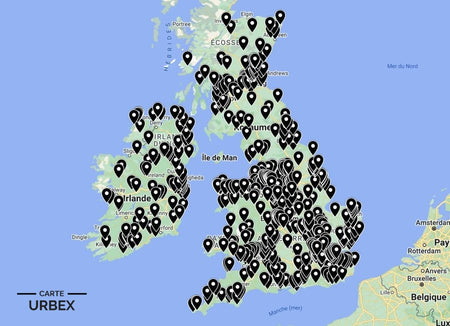
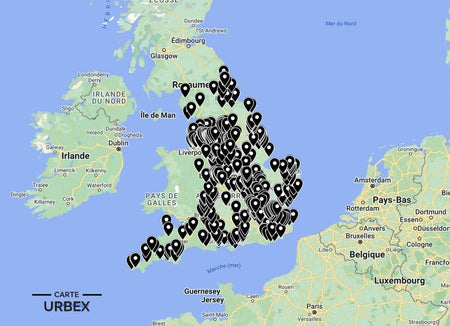
Ipswich is Suffolk's county town — an ancient port on the Orwell estuary whose medieval wool trade built the grandest merchant houses in East Anglia, whose Victorian engineering industry made the agricultural machinery that opened up the American prairies and whose 20th-century dock decline left a waterfront dereliction that is only now being transformed. Its abandoned places carry that extraordinary historical depth: a Victorian agricultural engineering factory whose machines fed the world, a medieval dock warehouse in atmospheric decay and the Orwell estuary's military heritage. Here are 5 of the best abandoned places in Ipswich, selected from our Abandoned Places Map UK — 640+ GPS locations across England, Scotland, Wales and Ireland.
Why Ipswich Is a Hidden Gem for Urban Exploration
Ipswich's urbex landscape is largely undocumented by the national community — the combination of Victorian agricultural engineering heritage, medieval dock infrastructure and the Orwell estuary's WWII coastal defence network creates a layered abandonment geography that rewards the explorer who moves beyond the town centre regeneration area. Suffolk's relative isolation from the national urbex mainstream means significant sites remain undiscovered.
1. Cranfield Mills – Ipswich Waterfront — Victorian Flour Mill, Orwell Waterfront Setting, Derelict Mill Buildings, Grade II Listed (Known Location)
Cranfield's Mills on the Ipswich waterfront is a Victorian flour milling complex whose buildings still stand in various states of atmospheric dereliction above the Orwell — a Grade II listed industrial waterfront structure that represents the Victorian milling industry that processed grain from East Anglia's agricultural hinterland for the British market. The mill's waterfront setting, the original Victorian industrial architecture and the contrast between the derelict mill buildings and the developing Ipswich waterfront make Cranfield's one of the most photographically and historically rewarding abandoned industrial sites in Suffolk.
🔗 Learn more: Wikipedia – Cranfield Mills Ipswich
2. Ransomes Sims & Jefferies Works – Nacton Road, Ipswich — 1789-1980s Agricultural Engineering Factory, Ploughmakers to the World, Derelict Factory Buildings (Known Location)
Ransomes Sims and Jefferies on Nacton Road is the engineering works that made the ploughs and agricultural machinery that opened up the American prairies and the Australian outback — established in Ipswich in 1789 and at its Victorian and Edwardian peak the world's leading agricultural implement manufacturer. Progressive closure of the Nacton Road works left significant derelict factory infrastructure that represents one of the most historically specific and most globally significant pieces of abandoned industrial heritage in East Anglia.
🔗 Also read: Top 5 Abandoned Places in England →

3. Ipswich Victorian Dock Warehouse – Wet Dock, Ipswich — 1840s Dock Warehouse, Cast-Iron Columns and Loading Hoists, Orwell Waterfront, Listed by British Listed Buildings (Known Location)
An 1840s warehouse in Ipswich's Wet Dock — the original cast-iron structural columns, loading hoist mechanisms and multi-storey bonded warehouse layout of a building that served the Ipswich Wet Dock, one of the largest enclosed dock systems in Britain when it opened in 1842. The combination of the Victorian dock engineering significance, the cast-iron interior architecture and the Orwell waterfront setting make the Wet Dock warehouse complex one of the most historically distinguished and most atmospherically distinctive pieces of abandoned industrial heritage in Suffolk. Listed by British Listed Buildings.
🔗 Learn more: British Listed Buildings – Ipswich Heritage
4. Suffolk WWII Airfield – 1940s Heavy Bomber Station, Control Tower and Hardstandings, East Suffolk Farmland (Our Map Exclusive)
A 1940s heavy bomber station in the flat East Suffolk countryside near Ipswich — the original control tower still standing above the surrounding farmland, B-17 or Lancaster dispersal hardstandings and Nissen hut technical site buildings in atmospheric dereliction. Suffolk's flat agricultural landscape was ideal for heavy bomber construction; the county had more USAAF heavy bomber stations than any other in England. GPS coordinates available with our England Urbex Map.
5. Suffolk Georgian Country House – 18th-Century Mansion, Grand Staircase and Library Intact, Stable Block and Parkland, East Suffolk (Hidden Gem — Our Map Only)
An 18th-century country house in the East Suffolk countryside — the original grand staircase still intact, the library with period shelving and the servants' wing. Suffolk's agricultural wealth created a dense landscape of Georgian and Regency country houses; post-war death duties and the decline of the landed estate emptied several within a decade. Find it on our map — with access rating and condition report.
❓ FAQ
What is the most famous abandoned place in Ipswich?
Cranfield's Mills on the Ipswich waterfront — a Grade II listed Victorian flour milling complex above the Orwell estuary, one of the most historically distinctive and most photographically rewarding pieces of derelict industrial heritage in Suffolk.
What did Ransomes Sims and Jefferies make?
Ploughs and agricultural machinery — established in Ipswich in 1789 and at their Victorian and Edwardian peak the world's leading agricultural implement manufacturer, their ploughs opening up the American prairies and the Australian outback. One of the most globally significant engineering companies to emerge from East Anglia.
Why does Ipswich have a Victorian Wet Dock?
Ipswich's Wet Dock opened in 1842 as one of the largest enclosed tidal dock systems in Britain — a response to the tidal Orwell's large rise and fall, which made conventional quay loading impractical. The enclosed dock allowed ships to load and unload at any state of the tide; the warehouse infrastructure that served it is now among the most distinctive pieces of Victorian dock heritage in eastern England.
Safety Tips
- Waterfront hazards: Ipswich's dock and mill sites have tidal estuary exposure — never approach water edges and always check tidal conditions before visiting any waterfront site
- Asbestos: endemic in pre-1980 Suffolk industrial buildings — FFP2 mask mandatory in any enclosed space
- Never explore alone — always bring at least one other person
The urbex code: "Leave it as you found it — the next explorer deserves the same experience."
🎯 Summary
Ipswich's abandoned places range from a Victorian flour mill on the Orwell waterfront to the engineering works that made the ploughs that opened the American prairies and a Victorian Wet Dock warehouse with cast-iron columns still intact. Each of these 5 derelict buildings in Ipswich captures a different layer of East Anglia's most important port town.

Abandoned Places Map England
- ✓ 400+ GPS locations across England
- ✓ Exclusive locations not found anywhere else
- ✓ Instant access after purchase
- ✓ Free updates forever
14,99€
Explore All Locations →