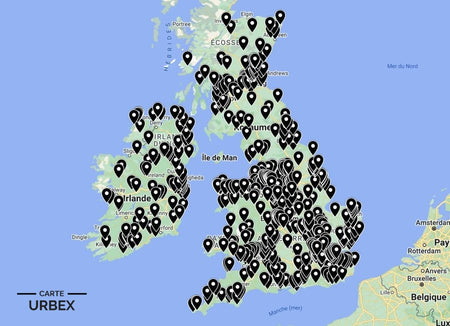
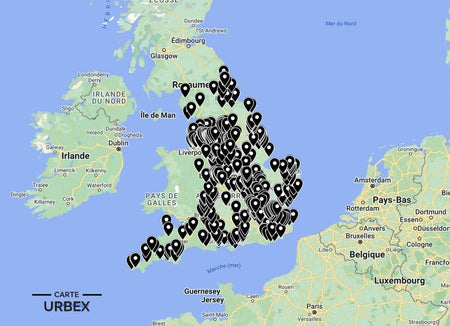
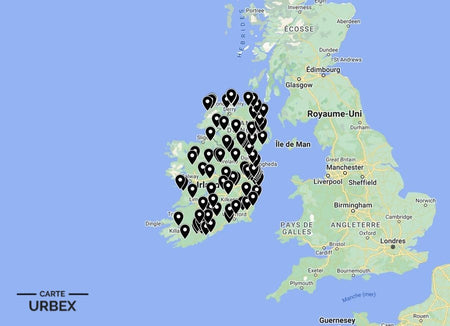
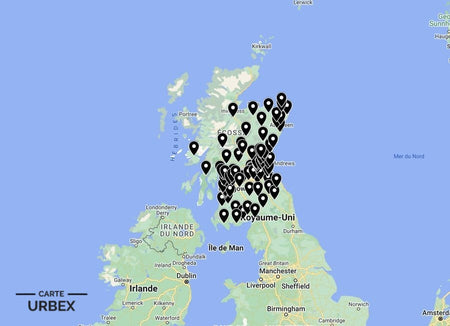
Kent is England's oldest county — the gateway through which the Romans, the Normans and every subsequent wave of traders and invaders entered Britain. Its abandoned places carry three thousand years of that gateway heritage: Roman coastal ruins, medieval monastery fragments, Napoleonic sea forts and WWII anti-aircraft infrastructure that turned the North Downs into Britain's most defended landscape. Here are 5 of the best abandoned places in Kent, selected from our Abandoned Places Map UK — 640+ GPS locations across England, Scotland, Wales and Ireland.
Why Kent Is a Hidden Gem for Urban Exploration
Kent's urbex landscape is defined by its strategic position — every century of English military history left defensive infrastructure along the coast from the Thames Estuary to Folkestone. Roman Saxon Shore forts, medieval castles, Napoleonic Martello towers, Victorian sea forts and WWII sound mirrors and bunkers create a compressed timeline of abandonment that no inland county can match. The Isle of Sheppey and the North Kent marshes alone contain more military dereliction than most entire counties.
1. Reculver Towers – Reculver, Kent — 12th-Century Twin Towers on a Roman Shore Fort, Abandoned After Coastal Erosion, Trinity House Maritime Landmark (Known Location)
Reculver Towers on the north Kent coast are the twin towers of a 12th-century church built on the site of a Roman Saxon Shore fort — the towers were deliberately preserved by Trinity House in the 1820s as a navigation landmark for Thames shipping after the rest of the church was demolished when the village was abandoned due to coastal erosion. The Roman fort earthworks are still visible beneath the towers; the twin Norman towers stand on the eroding clifftop above the North Sea, one of the most dramatically sited and most historically layered abandoned sites in Kent.
🔗 Learn more: Wikipedia – Reculver
2. Fort Amherst – Chatham, Kent — 1756 Napoleonic Fortification, Largest Surviving Napoleonic Fort in Britain, Tunnels and Caponiers Still Intact (Known Location)
Fort Amherst in Chatham is the largest and best-preserved Napoleonic fortification in Britain — a 1756 artillery fort expanded through the Napoleonic Wars into a complex of gun bastions, deep chalk tunnels, caponiers and a complete defensive ditch system. Protecting the vital Chatham Naval Dockyard from land attack, it was progressively decommissioned after the Napoleonic threat receded and left in various states of atmospheric semi-abandonment. The chalk tunnel network, the powder magazines and the gun bastions overlooking the Medway make Fort Amherst one of the most atmospherically extraordinary military heritage sites in England.
🔗 Also read: Top 5 Abandoned Places in England →

3. Sheerness Dockyard – Isle of Sheppey, Kent — 1665 Royal Navy Dockyard, Original Georgian Boat Store Grade I Listed, Derelict Since 1960 Closure (Known Location)
Sheerness Dockyard on the Isle of Sheppey was established in 1665 as a Royal Navy facility — one of the oldest naval dockyards in England, whose centrepiece is the extraordinary 1826 Boat Store, a prefabricated cast-iron and brick structure that is Grade I listed as one of the earliest examples of iron-framed construction in the world. Closed by the Royal Navy in 1960 and converted partly into a commercial port, significant original Georgian and Victorian dockyard structures remain in atmospheric dereliction within the working port complex. Documented by Historic England as one of the most significant industrial heritage sites in the UK.
🔗 Learn more: Historic England – Sheerness Dockyard Boat Store
4. Abandoned North Kent WWII Sound Mirror – 1920s-1930s Acoustic Early Warning System, Concrete Parabolic Dish Still Intact, Romney Marsh (Off the Radar — Our Map Only)
A 1920s-1930s acoustic sound mirror on the Kent coast — a large concrete parabolic dish built to detect the sound of approaching enemy aircraft before radar made the technology obsolete. The Romney Marsh and Dungeness area contains some of the best-preserved sound mirrors in England; the structures stand in the marsh landscape as extraordinary monuments to a pre-radar early warning technology that was superseded within a decade of construction. Discover its exact location on our England Urbex Map.
5. Abandoned Kent Georgian Country House – Late 18th-Century Mansion, Grand Staircase and Library Intact, Stable Block and Walled Garden, Rural Kent Weald (Exclusively on Our Map)
A late 18th-century country house in the Kent Weald — the original grand entrance hall with sweeping staircase, ornate plasterwork ceiling medallions visible through the decay and the estate outbuildings of stables and walled kitchen garden still standing. Vacated when death duties and agricultural decline made the estate unviable after WWII; in progressive decay since. Included in our England collection — 400+ locations.
❓ FAQ
What is the most famous abandoned place in Kent?
Reculver Towers — the twin 12th-century church towers preserved on a Roman Saxon Shore fort site on the north Kent coast. Deliberately kept as a navigation landmark by Trinity House in the 1820s; Roman earthworks still visible beneath the medieval towers.
What is Fort Amherst?
The largest surviving Napoleonic fortification in Britain — a 1756 artillery fort in Chatham expanded through the Napoleonic Wars into a complex of gun bastions, chalk tunnels and caponiers protecting the Chatham Naval Dockyard. One of the most atmospherically extraordinary military heritage sites in England.
What are Kent's sound mirrors?
Acoustic early warning structures built in the 1920s-1930s on the Kent coast — large concrete parabolic dishes designed to focus the sound of approaching enemy aircraft onto a microphone before radar made them obsolete. The Romney Marsh area contains some of the best-preserved examples in England.
Safety Tips
- Coastal erosion: Reculver's clifftop is actively eroding — never approach the cliff edge and check coastal erosion maps before visiting any north Kent coastal site
- Military tunnels: Fort Amherst's chalk tunnels have restricted sections — only enter with official tours and never explore unmarked tunnel extensions independently
- Never explore alone — always bring at least one other person
The urbex code: "Respect the decay. It tells the story."
🎯 Summary
Kent's abandoned places range from Roman Saxon Shore fort ruins with 12th-century towers to the largest Napoleonic fortification in Britain, 1920s acoustic sound mirrors and a 1665 Royal Navy dockyard with the world's earliest iron-framed building. Each of these 5 derelict buildings in Kent captures a different layer of England's most historically defended county.

Abandoned Places Map England
- ✓ 400+ GPS locations across England
- ✓ Exclusive locations not found anywhere else
- ✓ Instant access after purchase
- ✓ Free updates forever
14,99€
Explore All Locations →