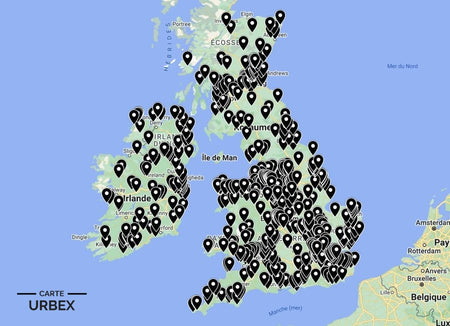
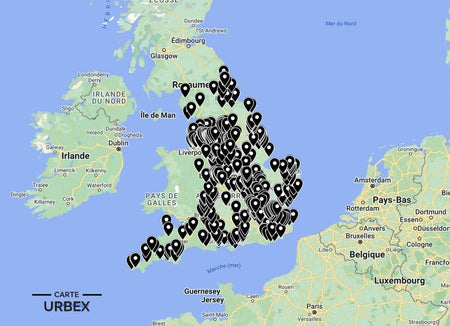
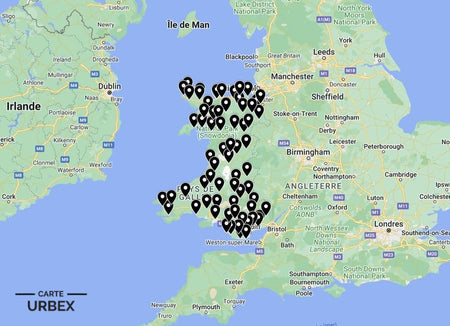
Middlesbrough is the town that steel built — founded in 1830 as a coal staithes settlement on the Tees, it grew within fifty years to become one of the most important steel and iron-making centres on earth. The Dorman Long steelworks that built the Sydney Harbour Bridge and the Tyne Bridge were here; ICI Wilton created the largest chemical works in Britain on the Teesside shore. The collapse of both industries left Teesside with one of the most dramatic post-industrial landscapes in England — abandoned blast furnaces, derelict chemical plant and the ghost infrastructure of an economy that shaped the 20th century. Here are 5 of the best abandoned places in Middlesbrough, selected from our Abandoned Places Map UK — 640+ GPS locations across England, Scotland, Wales and Ireland.
Why Middlesbrough Is a Hidden Gem for Urban Exploration
Middlesbrough's urbex landscape is uniquely industrial in scale — the Teesside steelworks, chemical works and dock infrastructure created a post-industrial geography that has no equivalent in England outside the Black Country. The Tees estuary's flat landscape means derelict structures are visible for miles; the concentration of large-scale industrial abandonment in a relatively small geographic area makes Teesside one of the most rewarding single-day urbex destinations in the north-east.
1. Dorman Long Steelworks – Lackenby/Redcar, Teesside — 1917-2010 Steel Production, Built the Sydney Harbour Bridge and Tyne Bridge, Blast Furnaces and Rolling Mills Abandoned (Known Location)
Dorman Long and its successors on Teesside built the steel that shaped the 20th century — the company's steel fabricated the Sydney Harbour Bridge, the Tyne Bridge and the Lambeth Bridge, becoming synonymous with the structural steel of the inter-war era. The Lackenby and Redcar steelworks that continued the tradition finally closed in 2010 and again in 2015; the blast furnace infrastructure, rolling mill buildings and dock loading facilities of what was Britain's last major integrated steelworks represent the most significant piece of large-scale industrial heritage abandonment in England in the last decade. One of the most extraordinary and most historically charged abandoned industrial landscapes in Britain.
🔗 Learn more: Wikipedia – Dorman Long Steelworks
2. ICI Wilton Chemical Works – Wilton, Teesside — 1945-2000s Largest Chemical Works in Britain, Derelict Plant Buildings and Reactor Infrastructure, Tees Estuary Setting (Known Location)
ICI Wilton was established in 1945 as the Imperial Chemical Industries' main production site on Teesside — becoming the largest chemical works in Britain and one of the largest in Europe, employing up to 10,000 workers at its peak producing plastics, fertilisers and industrial chemicals. Progressive closures from the 1980s onwards left vast sections of the Wilton site in dereliction; the decommissioned reactor buildings, distillation columns and pipeline infrastructure of a works that manufactured industrial chemicals for post-war Britain represent one of the most extraordinary pieces of abandoned 20th-century industrial heritage in England. Documented on 28DaysLater as one of the most dramatically scaled and most technically complex derelict industrial sites in the north-east.
🔗 Also read: Top 5 Abandoned Places in England →

3. Middlesbrough Victorian Hospital – 1870s-1890s General Hospital Campus, Ward Buildings and Chapel Derelict, North Riding Setting (Known Location)
A Victorian general hospital campus in Middlesbrough — the original ward buildings with their characteristic Nightingale layout, the hospital chapel and the administrative block in various states of atmospheric dereliction since closure. The rapid growth of Victorian Middlesbrough's industrial population created an urgent need for hospital provision; the surviving derelict hospital infrastructure documents the social history of a working-class steel town's approach to public health. Documented by the Yorkshire and north-east urbex community as one of the most atmospherically complete derelict hospital campuses in the Teesside area.
🔗 Learn more: 28DaysLater – North East Urbex Reports
4. Teesside Iron Works Ruins – 1850s-1900s Blast Furnace Complex, Casting House Walls and Furnace Stacks, Tees Valley Industrial Corridor (Hidden Gem — Our Map Only)
An 1850s-1900s ironworks complex in the Tees Valley — the casting house walls where molten iron was poured into pig iron moulds, the blast furnace stack still standing above the surrounding brownfield landscape and the tramway infrastructure that connected the works to the Tees dock system. The Tees Valley's early ironworks predated the steel era; their ruins are among the most archaeologically significant and least-documented pieces of early Victorian industrial heritage in the north-east. GPS coordinates available with our England Urbex Map.
5. North Yorkshire Moorland Alum Works – 17th-19th Century Alum Production, Jetty Ruins and Processing Platform, North Yorkshire Coast (Off the Radar — Our Map Only)
A 17th-19th century alum works on the North Yorkshire coast near Middlesbrough — the processing platform cut into the cliff face, the jetty ruins from which alum was loaded onto coastal vessels and the characteristic reddish-brown alum shale spoil heaps still visible above the shore. North Yorkshire's alum industry predated the Teesside steel era by two centuries; the cliff-face works are some of the most visually dramatic and most historically unusual pieces of industrial heritage in the north-east. Included in our England collection — 400+ locations.
❓ FAQ
What is the most famous abandoned place in Middlesbrough?
The Dorman Long steelworks at Lackenby and Redcar — the works that built the Sydney Harbour Bridge and Tyne Bridge, finally closed in 2010 and 2015, leaving the most dramatically scaled abandoned industrial landscape in the north-east of England.
What did Dorman Long build?
Dorman Long of Middlesbrough fabricated the structural steel for some of the 20th century's most iconic engineering projects — the Sydney Harbour Bridge (1932), the Tyne Bridge (1928) and the Lambeth Bridge (1932) were all built with Teesside steel. The company's name became synonymous with large-scale structural steel in the inter-war era.
What was ICI Wilton?
The Imperial Chemical Industries' main Teesside production site — established in 1945 and at its peak the largest chemical works in Britain, employing up to 10,000 workers producing plastics, fertilisers and industrial chemicals. Progressive closures from the 1980s left vast sections of the site in atmospheric dereliction.
Safety Tips
- Chemical contamination: ICI Wilton and steelworks sites may have residual industrial contamination — never disturb soil or any contained liquid; wear gloves and wash hands thoroughly after any visit
- Structural scale: blast furnace infrastructure operates at a scale where falling components are extremely dangerous — always assess overhead hazards and maintain safe distances from any unsupported structural elements
- Never explore alone — always bring at least one other person
The urbex code: "Take nothing but photographs, leave nothing but footprints."
🎯 Summary
Middlesbrough's abandoned places range from the blast furnace gantries of the steelworks that built the Sydney Harbour Bridge to the derelict reactor buildings of the largest chemical works in Britain and 17th-century alum works cut into the North Yorkshire cliffs. Each of these 5 derelict buildings in Middlesbrough captures a different layer of a town that built the modern world in steel and chemistry.

Abandoned Places Map England
- ✓ 400+ GPS locations across England
- ✓ Exclusive locations not found anywhere else
- ✓ Instant access after purchase
- ✓ Free updates forever
14,99€
Explore All Locations →