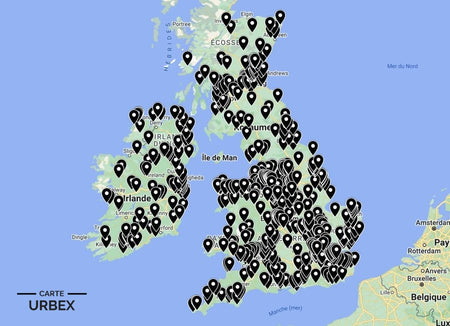
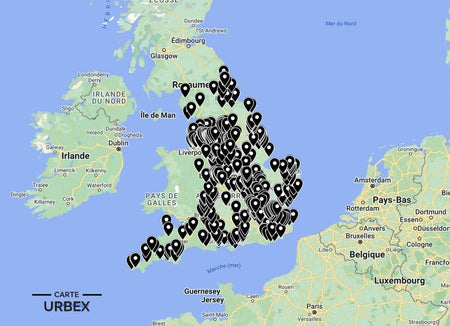
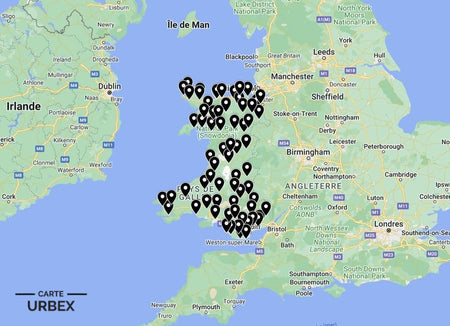
Plymouth is one of Britain's great naval and maritime cities — the port from which Drake sailed against the Armada, the Pilgrim Fathers left for America and D-Day convoys assembled for Normandy. Its abandoned places carry four centuries of that military and maritime heritage: a Victorian Palmerston fort on the Plymouth heights, a Tudor house shell surviving the Plymouth Blitz and the extraordinary naval dockyard infrastructure of Devonport. Here are 5 of the best abandoned places in Plymouth, selected from our Abandoned Places Map UK — 640+ GPS locations across England, Scotland, Wales and Ireland.
Why Plymouth Is a Hidden Gem for Urban Exploration
Plymouth's urbex landscape spans five centuries of military and maritime history in a single city — the Tudor Citadel, the Victorian Palmerston forts on the heights, the Devonport Naval Dockyard's 18th-century infrastructure and the post-war modernist city centre built over the Plymouth Blitz ruins. Combined with the South Devon and Dartmoor hinterland's rural abandonment, Plymouth rewards the explorer who looks beyond the famous Hoe.
1. Crownhill Fort – Crownhill, Plymouth — 1872 Palmerston Fort, Largest Palmerston Fort in England, Underground Magazines and Casemates Intact, Landmark Trust (Known Location)
Crownhill Fort on the Plymouth heights is the largest Palmerston Fort in England — a vast 1872 defensive earthwork with underground magazines, brick-vaulted casemates, a dry moat and the full range of Palmerston defensive infrastructure built to protect Plymouth from landward attack. Now in the care of the Landmark Trust with guided access, the fort's extraordinary scale — the ramparts alone are over half a mile in circumference — and the completeness of its underground infrastructure make it one of the most impressive abandoned military structures in the south-west.
🔗 Learn more: Wikipedia – Crownhill Fort Plymouth
2. Devonport Dockyard Historic Buildings – Devonport, Plymouth — 18th-Century Naval Dockyard, Ropery, Boat Store and Column Building, Oldest Naval Dockyard Infrastructure in England (Known Location)
The historic core of Devonport Naval Dockyard contains some of the oldest surviving naval dockyard infrastructure in England — the 18th-century ropery, the Georgian boat store and the extraordinary Column Building from the 1690s. Significant sections of the historic dockyard are derelict or in progressive atmospheric decay as the Ministry of Defence has progressively consolidated its active footprint. The combination of the extraordinary historical depth and the scale of the Georgian and Victorian naval architecture make Devonport one of the most significant abandoned heritage landscapes in the south-west.
🔗 Also read: Top 5 Abandoned Places in England →

3. Maker Heights Fort – Rame Peninsula, Cornwall — 1862 Victorian Fort, Casemates and Gun Emplacements Intact, Plymouth Sound Views, Fully Abandoned (Known Location)
Maker Heights Fort on the Rame Peninsula commands the finest panoramic view of Plymouth Sound — an 1862 Victorian fortification built to defend the western approach to Plymouth Harbour, with original casemate gun emplacements, underground magazine chambers and barrack buildings still largely intact in atmospheric dereliction above the water. Abandoned since decommissioning, the fort's extraordinary completeness and its position above the Sound make it one of the most rewarding abandoned military sites accessible from Plymouth. Documented by Atlas Obscura as one of the most atmospheric and least-visited Victorian forts in the south-west.
🔗 Learn more: Atlas Obscura – Maker Heights Fort
4. South Devon WWII Coastal Battery – 1940-1944 Gun Positions on the Plymouth Sound Approaches, Casemates and Magazine Tunnels, Devon Coastline (Only on Our Map)
A 1940-1944 coastal defence battery on the Plymouth Sound approaches — the original casemate gun positions with their seaward-facing apertures, the underground magazine tunnels cut into the Devon limestone and the crew accommodation bunkers. Plymouth Sound was one of the most heavily defended anchorages in Britain; the battery sites around the Sound combine extraordinary military heritage with dramatic coastal scenery. GPS coordinates available with our England Urbex Map.
5. Dartmoor Tin Mine – 16th-18th Century Blowing House and Stamping Mill, Granite Walls and Mould Stone Still Intact, Dartmoor National Park (Our Map Exclusive)
A 16th-18th century Dartmoor tin streaming and blowing house — the original granite wall structure where tin ore was smelted, the mould stone where tin ingots were cast and the wheel pit where the water-powered stamps crushed the ore. Dartmoor's medieval and post-medieval tin industry left a landscape of blowing houses, leats and streaming works across the high moor; the granite construction preserves them for centuries. Find it on our map — with access rating and condition report.
Safety Tips
- Underground magazines: Crownhill Fort's underground chambers have restricted access — only enter through the Landmark Trust's managed access programme and never explore sealed tunnel sections independently
- Dartmoor mines: Dartmoor's tin streaming sites have unfenced open shaft workings — never approach any ground depression on the moor and always stay on established paths
- Never explore alone — always bring at least one other person
The urbex code: "Respect the decay. It tells the story."
❓ FAQ
What is the most famous abandoned place in Plymouth?
Crownhill Fort — the largest Palmerston Fort in England, built in 1872 with underground magazines, brick-vaulted casemates and a dry moat. The ramparts alone are over half a mile in circumference; one of the most impressive military structures in the south-west.
What is Maker Heights Fort?
An 1862 Victorian fortification on the Rame Peninsula commanding Plymouth Sound — casemate gun emplacements, underground magazines and barrack buildings intact in atmospheric dereliction. One of the most completely surviving and least-visited Victorian forts in the south-west, documented by Atlas Obscura.
What were the Palmerston Forts?
A network of coastal and inland forts built in the 1860s-1880s following a Royal Commission warning of French naval threat — ring-fencing Plymouth and Portsmouth from both sea and land attack. Nicknamed "Palmerston's Follies" because France never attacked, the forts are now among the most intact Victorian military structures in Britain.
🎯 Summary
Plymouth's abandoned places range from the largest Palmerston Fort in England to the oldest surviving naval dockyard infrastructure in Britain and a Tudor mansion bombed in 1941 and left as a roofless shell for twenty years. Each of these 5 derelict buildings in Plymouth captures a different layer of the city that sent Drake against the Armada and the Pilgrim Fathers to America.

Abandoned Places Map England
- ✓ 400+ GPS locations across England
- ✓ Exclusive locations not found anywhere else
- ✓ Instant access after purchase
- ✓ Free updates forever
14,99€
Explore All Locations →