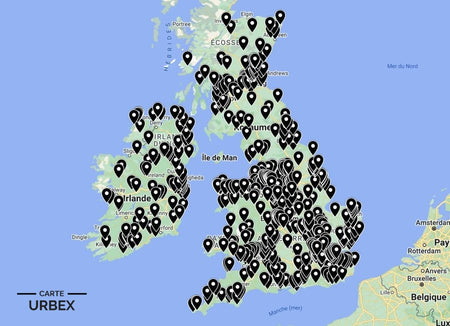
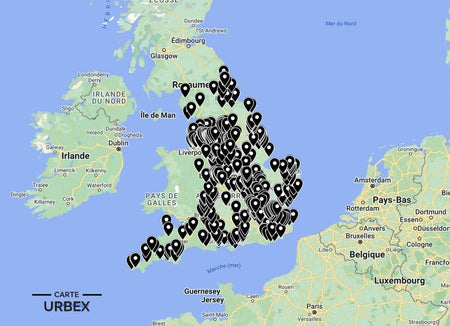
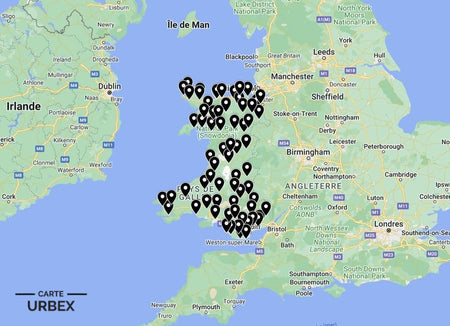
South Wales carries one of the most powerful industrial histories in the world — the coalfield that powered the Royal Navy's steam fleet, the ironworks of Merthyr Tydfil that lit up the valleys at night and the pit communities whose entire social fabric was built around the colliery. The closures of the 1980s and 1990s left an extraordinary abandoned landscape: colliery sites with winding towers still standing, pithead baths with locker bays intact and the valley landscapes of communities that lost their economic reason for existing. Here are 5 of the best abandoned places in South Wales, selected from our Abandoned Places Map UK — 640+ GPS locations across England, Scotland, Wales and Ireland.
Why South Wales Is One of the Most Powerful Urbex Landscapes in Britain
The South Wales coalfield closures happened within living memory — people who worked these pits are still alive, and the communities that surrounded them are still processing what was lost. This gives the abandoned colliery landscape of the Rhondda, the Cynon Valley and the Ebbw Vale a weight and an immediacy that older industrial ruins cannot have. The valley geography — narrow, steep-sided and intimate — means that every colliery site is surrounded by the terraced housing that housed its workforce, creating an abandoned industrial landscape that is inseparable from the living community around it.
1. Navigation Colliery – Crumlin, Caerphilly — Last Major Colliery to Close in South Wales, 1990, Winding Tower and Headframe Still Standing (Known Location)
Navigation Colliery at Crumlin was one of the last major collieries to close in South Wales — the pit that sank its first shaft in 1907 and worked continuously until 1990, its closure marking the effective end of large-scale coal mining in the Ebbw Vale corridor. The winding tower and headframe still stand above the valley, one of the most complete surviving examples of 20th-century Welsh colliery infrastructure. The combination of the industrial scale, the valley setting and the living community that still surrounds the site make Navigation one of the most historically charged abandoned places in South Wales.
🔗 Learn more: Wikipedia – Navigation Colliery
2. Maerdy Colliery – Maerdy, Rhondda Fach — Last Pit of the Rhondda, Closed 1990, Pithead Baths and Lamp Room Still Standing, Rhondda Fach Valley (Known Location)
Maerdy Colliery in the Rhondda Fach was the last working pit in the Rhondda Valley — known as Little Moscow for its strong communist and union traditions, its closure in 1990 marked the symbolic end of the Rhondda coal industry that had made the valley the most productive coalfield in the world at its Victorian peak. The pithead baths, the lamp room and the colliery infrastructure still stand in the upper Rhondda Fach; the combination of the extraordinary industrial and political history and the valley setting make Maerdy one of the most emotionally significant abandoned sites in Wales.
🔗 Also read: Top 5 Abandoned Places in Wales →

3. Hafodyrynys Colliery – Hafodyrynys, Pontypool — Pithead Baths Intact, Winding Gear and Lamp Room, Cwm Gwyddon Valley, Documented by Coflein (Known Location)
Hafodyrynys Colliery in the Cwm Gwyddon valley near Pontypool is one of the best-preserved colliery sites in South Wales — the original pithead baths building with its locker bays still largely intact, the winding gear infrastructure and the lamp room where miners collected and returned their lamps. Documented by Coflein, the National Historic Assets of Wales database, as a significant industrial heritage site. One of the most completely surviving and most atmospherically authentic abandoned colliery complexes in the South Wales coalfield.
🔗 Learn more: Coflein – National Historic Assets of Wales
4. Cynon Valley Ironworks Ruins – 1820s-1870s Ironworks Complex, Furnace Stack and Casting House Walls Still Standing, South Wales Valleys (Exclusively on Our Map)
An 1820s-1870s ironworks complex in the Cynon Valley — the original furnace stack still standing above the valley floor, the casting house walls and the charging platform infrastructure of a works that produced iron for Victorian Britain's railways and construction industry. The South Wales ironworks of the early 19th century predated and fuelled the coalfield's development; when cheaper steel replaced iron, they closed before the collieries and their ruins have been decaying longer. GPS coordinates available with our Wales Urbex Map.
5. Rhondda Valley Welsh Nonconformist Chapel – 1870s-1890s Chapel, Grand Interior with Gallery and Pipe Organ Still Intact, Terraced Housing Setting, Rhondda Valley (Only on Our Map)
An 1870s-1890s Welsh Nonconformist chapel in the Rhondda Valley — the original timber gallery running three sides of the interior, the pipe organ still in position above the pulpit and the chapel's characteristic external rendered facade facing the valley terraces. The Nonconformist chapel was the social and spiritual heart of every South Wales pit community; when the collieries closed and the population fell, the congregations that maintained them collapsed within a generation. Find it on our map — with access rating and condition report.
❓ FAQ
What is the most famous abandoned place in South Wales?
Navigation Colliery at Crumlin — one of the last major collieries to close in South Wales in 1990, with winding tower and headframe still standing above the Ebbw Vale valley. One of the most complete surviving examples of 20th-century Welsh colliery infrastructure.
Why was Maerdy called "Little Moscow"?
Maerdy's miners had a strong communist and union tradition stretching back to the early 20th century — the village consistently elected communist and hard-left candidates and was known for its solidarity during the 1984-85 miners' strike. Its closure in 1990 marked the symbolic end of the Rhondda coal industry.
Why did the South Wales coalfield close?
The 1984-85 miners' strike ended in defeat for the National Union of Mineworkers; the National Coal Board's subsequent rationalisation programme closed virtually every remaining South Wales pit within a decade. The combination of cheaper imported coal, declining demand and political will to end the industry eliminated the coalfield that had powered the Royal Navy for over a century.
Safety Tips
- Mine shafts: the South Wales coalfield has thousands of capped and uncapped shafts — never approach any ground depression near colliery sites and always stay on established paths
- Asbestos: endemic in post-1930s pithead baths and colliery buildings — FFP2 mask mandatory in any enclosed colliery structure
- Never explore alone — valley colliery sites can be isolated; always tell someone your destination
The urbex code: "Respect the decay. It tells the story."
🎯 Summary
South Wales' abandoned places range from the last pit of the Rhondda Valley closed in 1990 to the pithead baths at Hafodyrynys frozen in time and Nonconformist chapels with pipe organs still intact above empty pews. Each of these 5 derelict buildings in South Wales carries the weight of a coalfield community that lost everything within a decade.

Abandoned Places Map Wales
- ✓ 60+ GPS locations across Wales
- ✓ Exclusive locations not found anywhere else
- ✓ Instant access after purchase
- ✓ Free updates forever
9,99€
Explore All Locations →