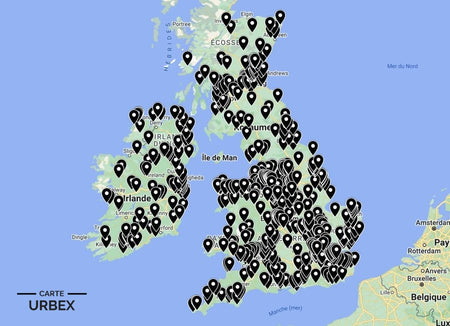
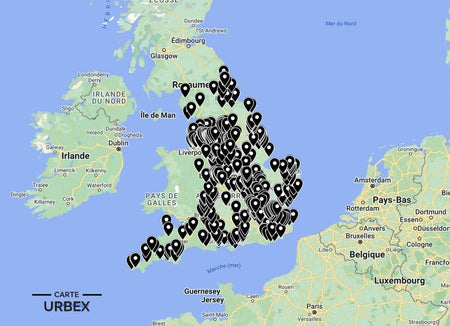
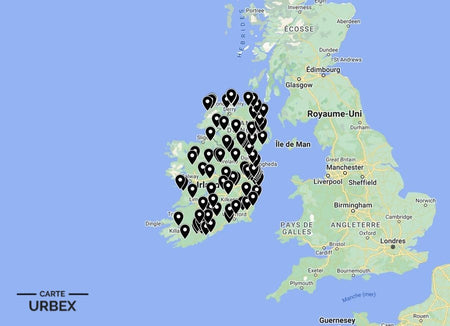
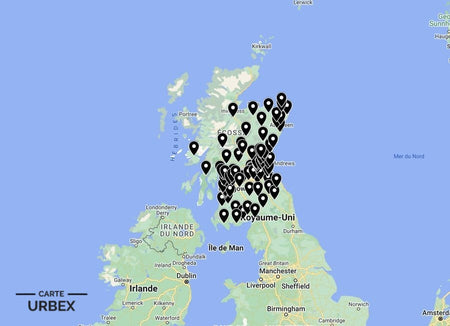
Swansea was Copperopolis — the city that processed more copper than anywhere else on earth in the 19th century, whose Lower Swansea Valley was described by contemporaries as the most industrially devastated landscape in Britain. The copper and zinc works that lined the Tawe river left behind a remarkable industrial archaeology: furnace buildings, copper slag walls and refinery structures whose dereliction spans four decades. Combined with the city's music hall heritage and the rural railway infrastructure of the Gower hinterland, Swansea offers a Welsh urbex landscape of extraordinary industrial depth. Here are 5 of the best abandoned places in Swansea, selected from our Abandoned Places Map UK — 640+ GPS locations across England, Scotland, Wales and Ireland.
Why Swansea Is a Hidden Gem for Urban Exploration
Swansea's urbex landscape is defined by the Lower Swansea Valley's copper and zinc industrial legacy — a concentration of abandoned smelting and refining infrastructure that has no equivalent anywhere else in Wales. The Tawe riverside corridor between the city centre and the M4 contains the derelict remains of the industry that made Swansea the copper capital of the world; combined with the city's Victorian entertainment heritage and the Gower railway trackbed's atmospheric tunnels and bridges, Swansea rewards the explorer who leaves the Marina behind.
1. Hafod-Morfa Copperworks – Lower Swansea Valley — 1810-1980 Copper Smelting Complex, Largest Copper Producer in the World at Victorian Peak, Furnace Buildings and Slag Walls Abandoned Since 1980 (Known Location)
The Hafod-Morfa Copperworks in the Lower Swansea Valley is the most historically significant piece of abandoned industrial heritage in Wales — established in 1810 by John Vivian and expanded through the 19th century to become the largest copper production facility in the world, the works operated until 1980. The derelict furnace buildings, the extraordinary copper slag block walls and the refinery infrastructure of a complex that once processed copper from Chile, Cuba and Cornwall still stand in atmospheric abandonment along the Tawe riverside. Documented on Derelict Places as one of the most historically extraordinary and most architecturally distinctive abandoned industrial sites in Britain.
🔗 Learn more: Wikipedia – Hafod-Morfa Copperworks
2. Palace Theatre – High Street, Swansea — 1888 Victorian Music Hall, Abandoned Since Early 2000s, Original Stage and Auditorium Decaying (Known Location)
The Palace Theatre on Swansea's High Street opened in 1888 as a Victorian music hall — hosting major variety acts through the late 19th and early 20th centuries before its progressive decline and abandonment in the early 2000s. The original stage infrastructure, the crumbling auditorium plasterwork and the faded decor of a music hall that once represented Swansea's entertainment ambitions decay in one of the most characterfully abandoned Victorian theatres in South Wales.
🔗 Also read: Top 5 Abandoned Places in Wales →

3. Clyne Valley Railway – Clyne Valley, Swansea — 1860s-1960s Mineral Railway, Tunnel, Bridges and Track Bed Abandoned in Woodland Setting, Documented by Coflein (Known Location)
The Clyne Valley Railway was built in the 1860s to carry coal from the Gower collieries to Swansea Docks — running through the Clyne Valley in an atmospheric tunnel and over a series of stone bridges before the line closed in the 1960s. The original trackbed, the brick-lined railway tunnel and the stone viaduct structures are now overgrown and abandoned in the Clyne Valley woodland, creating one of the most atmospherically beautiful abandoned railway landscapes in South Wales. Documented by Coflein, the National Historic Assets of Wales database, as a significant piece of post-medieval industrial heritage.
🔗 Learn more: Coflein – National Historic Assets of Wales
4. Swansea Zinc Works Ruins – Lower Swansea Valley — 1840s-1970s Zinc Smelting Plant, Retort House and Processing Buildings, Tawe Riverside (Off the Radar — Our Map Only)
A 19th-20th century zinc smelting works in the Lower Swansea Valley — the retort house where zinc ore was processed, the chimney stack and the processing buildings of a works that formed part of the extraordinary concentration of non-ferrous metal smelting that made the Lower Swansea Valley the most industrially toxic landscape in Victorian Britain. GPS coordinates available with our Wales Urbex Map.
5. Gower Peninsula Farm Settlement – 18th-19th Century Farmstead, Longhouse and Stone Outbuildings, Gower AONB (Exclusively on Our Map)
An 18th-19th century Gower Peninsula farmstead — the original limestone longhouse with its combination of living quarters and cattle stalls under one roof, the field barn and the drystone wall boundaries of the original enclosed pasture. Gower's farming consolidation progressively emptied smaller holdings through the 20th century; the local limestone construction preserves them in the peninsula's relatively sheltered climate. Find it on our map — with access rating and condition report.
❓ FAQ
What is the most famous abandoned place in Swansea?
Hafod-Morfa Copperworks — established in 1810 and operating until 1980, the works was at its Victorian peak the largest copper production facility in the world. The derelict furnace buildings and extraordinary copper slag block walls are the most historically significant piece of abandoned industrial heritage in Wales.
Why was Swansea called Copperopolis?
At its Victorian peak, the Lower Swansea Valley processed more copper than anywhere else on earth — importing ore from Chile, Cuba and Cornwall and shipping finished copper around the world. The valley's air was so polluted by sulphur dioxide that vegetation was killed for miles around; contemporary accounts described it as one of the most industrially devastated landscapes on the planet.
What is the Clyne Valley Railway?
An 1860s coal-carrying mineral railway through the Clyne Valley behind Swansea — closed in the 1960s and now an atmospheric overgrown trackbed with a brick-lined tunnel and stone bridges, documented by Coflein as significant post-medieval industrial heritage.
Safety Tips
- Industrial contamination: the Lower Swansea Valley copperworks sites have residual heavy metal contamination in soil — never disturb ground surfaces and wash hands thoroughly after any visit
- Railway tunnels: the Clyne Valley Railway tunnel is unlit and has uneven floor — always carry two independent light sources and never enter alone
- Never explore alone — always bring at least one other person
The urbex code: "Respect the decay. It tells the story."
🎯 Summary
Swansea's abandoned places range from the world's largest Victorian copper works to a 1888 music hall decaying on the High Street and an 1860s coal railway's tunnel and bridges buried in Clyne Valley woodland. Each of these 5 derelict buildings in Swansea captures a different layer of Copperopolis — the city that processed the world's copper and is still reckoning with the landscape it left behind.

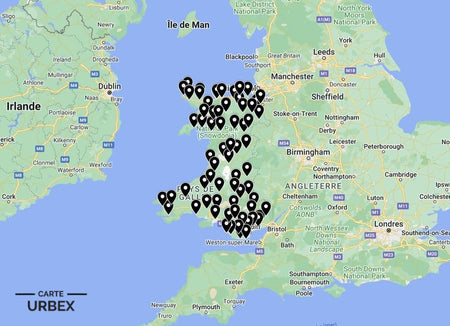
Abandoned Places Map Wales
- ✓ 60+ GPS locations across Wales
- ✓ Exclusive locations not found anywhere else
- ✓ Instant access after purchase
- ✓ Free updates forever
9,99€
Explore All Locations →