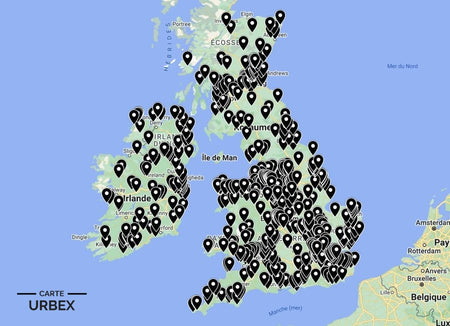
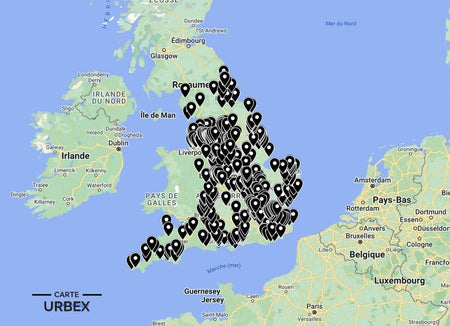
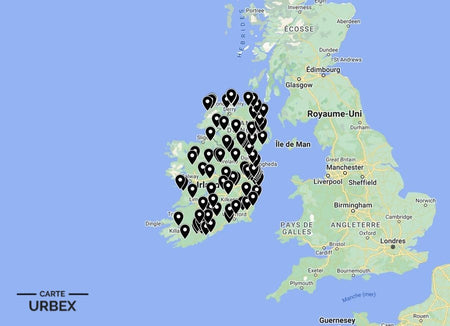
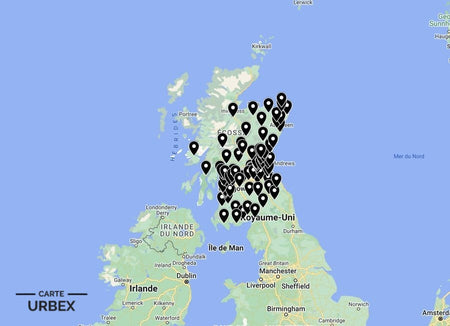
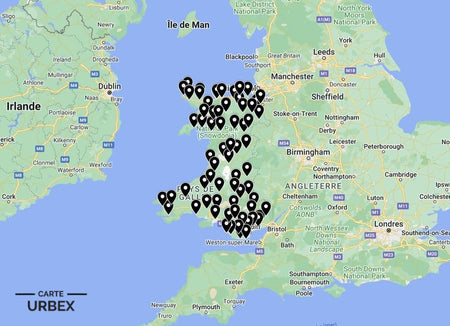
The British Isles contains the greatest concentration of ruined medieval ecclesiastical architecture in the world — a consequence of Henry VIII's dissolution of the monasteries between 1536 and 1541, the upheavals of the Civil War and the progressive rural depopulation that has emptied parish churches from the Scottish Highlands to the Welsh valleys for three centuries. From Whitby Abbey's Gothic skeleton above the North Sea to the forest church of Llanwonno where a 18th-century Welsh running legend is buried, these are the most atmospheric abandoned churches and abbeys in the UK, selected from our Abandoned Places Map UK — 640+ GPS locations across England, Scotland, Wales and Ireland.
🏴 England – Dissolution, Blitz and Rural Abandonment
England's abandoned ecclesiastical landscape was shaped by three distinct waves of destruction — Henry VIII's dissolution of the monasteries which stripped 800 abbeys, priories and friaries of their wealth and roofs in five years; the Civil War bombardments that gutted cathedral and church alike; and the slow rural depopulation of the 18th-20th centuries that closed thousands of parish churches when their congregations left for the towns.
Whitby Abbey — Whitby, North Yorkshire
The most dramatically sited abbey ruin in England — a 13th-century Gothic church skeleton standing on the clifftop above the North Sea that inspired Bram Stoker's Dracula and has been photographed more than any other ruined church in Britain. Founded in 657 AD, dissolved in 1539, bombarded by German warships in 1914 — Whitby Abbey's layered history gives its Gothic arches an atmospheric charge that no managed heritage site can diminish. The clifftop position, the North Sea light and the 199 steps below make this one of the most cinematically powerful pieces of medieval ruins in England.
🔗 Source: Historic England – Whitby Abbey Listed Entry
Coventry Old Cathedral — Coventry, West Midlands
The shell of St Michael's Cathedral — bombed by the Luftwaffe on 14 November 1940 and left as a deliberate ruin beside the new Basil Spence cathedral as a monument to the destruction and reconciliation of WWII. The roofless nave, the preserved altar cross made from charred roof timbers and the "Cross of Nails" have made Coventry Cathedral the most internationally recognised piece of deliberately preserved wartime ruin in Britain. The juxtaposition of the medieval Gothic ruin with Epstein's bronze St Michael above the new cathedral entrance is one of the most powerful architectural statements of the 20th century.
🔗 Source: Historic England – Coventry Cathedral Ruins
Godstow Nunnery — Oxford, Oxfordshire
A 12th-century Benedictine nunnery on the Thames floodplain north of Oxford — established in 1138 and famous as the burial place of Fair Rosamund, Henry II's mistress, whose tomb became a medieval pilgrimage destination. Dissolved by Henry VIII in 1539 and subsequently used as a Civil War garrison, the chapel walls and gatehouse still rise above the Thames water meadows in one of the most romantically situated and most historically layered medieval ruins in Oxfordshire.
🔗 Also read: Top 5 Abandoned Places in England →

🏴 Scotland – Reformation Destruction and Coastal Abbeys
Scotland's Reformation was more violent than England's — the popular iconoclasm of 1559-1560 stripped and burned the major abbeys of the Borders and Fife in a matter of weeks. What survived did so by accident or remoteness; the ruins that remain are among the most dramatically atmospheric ecclesiastical ruins in Europe.
Crossraguel Abbey — Maybole, Ayrshire
A 13th-century Cluniac abbey on the Ayrshire coast — one of the most completely surviving medieval monastic complexes in Scotland, whose chapter house, sacristy, abbot's tower and dovecot stand in remarkable atmospheric completeness in the south Ayrshire landscape. The Cluniac plan, the quality of the surviving medieval stonework and the abbot's residential tower give Crossraguel an architectural richness that few Scottish abbeys can match. Documented by Historic Environment Scotland as one of the finest surviving medieval monastic sites in the country.
🔗 Source: Historic Environment Scotland – Crossraguel Abbey
Sweetheart Abbey — New Abbey, Dumfries and Galloway
Founded in 1273 by Lady Devorgilla of Galloway in memory of her husband John Balliol — whose embalmed heart she carried in a casket for 22 years and was buried with at the abbey's high altar. The roofless nave and tower of Sweetheart Abbey rise from the Galloway landscape in one of the most romantically motivated and most emotionally resonant foundation stories of any abbey in Scotland. The red sandstone construction glows at sunset in a landscape that has changed little since 1273.
🔗 Also read: Top 5 Abandoned Places in Scotland →
🏴 Wales – Forest Churches and Cistercian Ruins
Wales has an ecclesiastical abandoned landscape of extraordinary variety — Cistercian abbeys dissolved by Henry VIII in the river valleys of the south, pre-Norman church sites on the Atlantic headlands of Pembrokeshire and the eerie forest churches of the coalfield valleys whose congregations left for the cities and never came back.
Llanwonno Church — Rhondda, Mid Glamorgan
A medieval parish church hidden in the forest above the Rhondda Valley — surrounded by overgrown graves and crumbling walls, its churchyard containing the grave of Guto Nyth Brân, the legendary 18th-century Welsh long-distance runner who collapsed and died after winning a race at 37. The forest setting, the emotional resonance of the runner's grave and the atmosphere of a church abandoned when its Rhondda mining congregation moved to the valley towns create one of the most quietly powerful pieces of abandoned ecclesiastical heritage in Wales.
🔗 Source: carte-urbex.com – Top Abandoned Places in Wales
St Dogmaels Abbey — St Dogmaels, Pembrokeshire
A 12th-century Tironensian abbey on the Teifi estuary — the only Tironensian house in Wales, established in 1115 and notable for the Sagranus Stone whose ogham and Latin inscriptions provided the key to deciphering ogham script in the 19th century. The abbey ruins, the adjacent parish church built into the medieval structure and the Teifi estuary setting create one of the most historically layered and most archaeologically significant pieces of ecclesiastical heritage in west Wales. Documented by Cadw as a key piece of Welsh medieval monastic heritage.
🔗 Also read: Top 5 Abandoned Places in Wales →
🇮🇪 Ireland – Dissolution, Famine and the Penal Era
Ireland's abandoned ecclesiastical landscape is the most emotionally charged in the British Isles — shaped not just by Henry VIII's dissolution and the Reformation, but by the Penal Laws that criminalised Catholic worship for two centuries and the Great Famine that emptied entire parishes in five years. The ruined churches of the west of Ireland carry a weight of history that goes beyond architecture.
Rock of Cashel — Cashel, Co Tipperary
The most dramatic ecclesiastical ruin in Ireland — a 12th-century Romanesque chapel, a 13th-century Gothic cathedral and a round tower rising from a volcanic rock above the Tipperary plain that served as the seat of the Kings of Munster for centuries. Abandoned as a cathedral in 1749 when the Archbishop ordered the roof removed (to reduce costs), the Rock's dramatic silhouette and extraordinary concentration of medieval ecclesiastical architecture of different periods on a single volcanic outcrop make it Ireland's most recognisable and most photographed medieval heritage site.
🔗 Also read: Top 5 Abandoned Places in Ireland →
❓ FAQ – Abandoned Churches and Abbeys in the UK
Why did Henry VIII dissolve the monasteries?
Henry VIII dissolved England and Wales's 800+ monasteries, priories and friaries between 1536 and 1541 primarily to seize their wealth — the monasteries owned approximately a quarter of all cultivated land in England. The theological justification of the Reformation provided cover for what was essentially the largest property transfer in English history. The dissolution's architectural legacy — roofless abbeys across England, Wales and Ireland — defines the British medieval ruin landscape to this day.
What is the most atmospheric abandoned abbey in the UK?
Whitby Abbey in North Yorkshire — a 13th-century Gothic skeleton on the clifftop above the North Sea, bombed by German warships in 1914 and associated with Bram Stoker's Dracula. The combination of the clifftop setting, the North Sea light and the layered history of destruction gives Whitby an atmospheric charge that no other UK abbey ruin can match.
Why does Ireland have so many ruined churches?
Ireland's ruined church landscape was shaped by multiple waves of destruction — Viking raids that burned early Christian monasteries, the Norman Conquest, the Dissolution, the Cromwellian campaign of 1649-1653, the Penal Laws that suppressed Catholic worship and the Great Famine that emptied entire parishes. The combined result is the densest concentration of ruined ecclesiastical buildings in Europe.
What was the Sagranus Stone at St Dogmaels?
A 5th-6th century memorial stone bearing both ogham script and Latin inscriptions that was found at St Dogmaels Abbey — because the Latin translation of the ogham text was readable, the stone provided the crucial bilingual key that allowed 19th-century scholars to decipher ogham script for the first time. A single stone in a ruined Welsh abbey unlocked the earliest writing system of the Celtic world.
Safety – Abandoned Churches UK
- Unstable masonry: medieval church ruins have centuries of weathering — always assess overhead stability before approaching any tower, arch or gable wall, and stay well back from any leaning masonry
- Clifftop sites: Whitby and other coastal church ruins have actively eroding cliff edges — never approach the cliff edge and always stay on established paths
- Uneven ground: churchyards have concealed vaults, sunken graves and uneven rubble — always watch your footing, especially in overgrown sites
- Never explore alone
The urbex code: "Take nothing but photographs, leave nothing but footprints."
🎯 Summary – Best Abandoned Churches in the UK
From Whitby Abbey's Dracula clifftop to Sweetheart Abbey's heart-burial foundation story, Llanwonno's forest graveyard and the Rock of Cashel rising from the Tipperary plain, the UK's abandoned churches and abbeys carry more history per stone than almost any other category of derelict heritage. Every site in this guide is GPS-mapped in our UK collection.

Abandoned Places Map UK
- ✓ 640+ GPS locations — England, Scotland, Wales & Ireland
- ✓ Abandoned churches, abbeys, asylums, castles & more
- ✓ Instant access after purchase
- ✓ Free updates forever
19,99€
Explore All 640+ Locations →