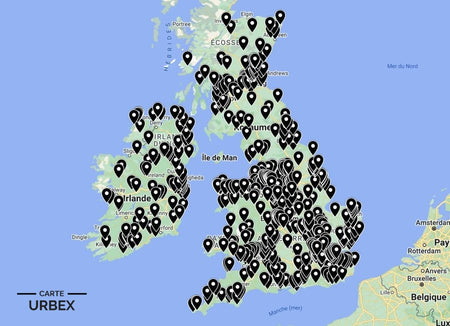
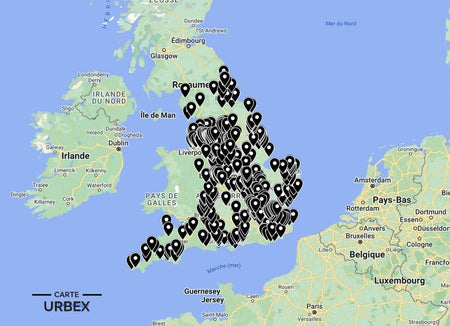
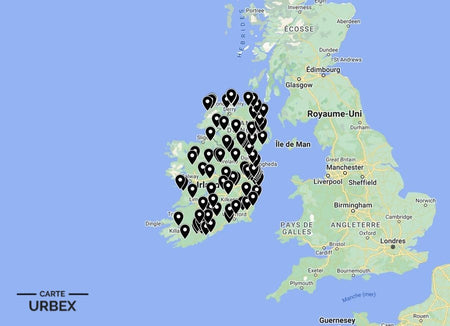
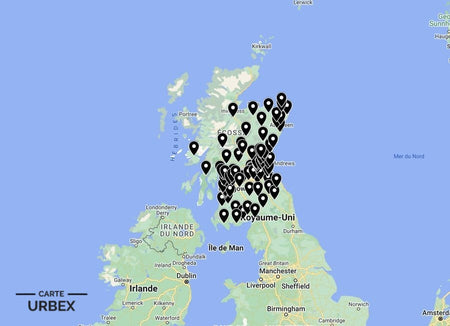
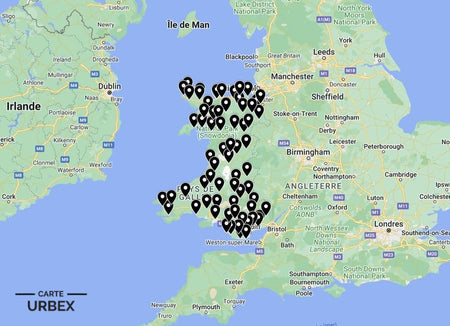
Ireland's abandoned landscape is unlike anywhere else in the British Isles — shaped by the Great Famine that emptied entire townlands overnight, the Penal Laws that left Catholic churches in ruins, the Anglo-Irish Ascendancy whose country houses were burned in the Civil War and the medieval castle heritage of a country that fought invasion for five centuries. Here are 5 of the best abandoned places in Ireland, selected from our Abandoned Places Map UK — 640+ GPS locations across England, Scotland, Wales and Ireland.
Why Ireland Is One of the Most Atmospheric Countries for Urban Exploration
Ireland's urbex landscape is defined by three distinct layers that exist nowhere else in combination: medieval castles abandoned to the Atlantic weather, Famine-era townlands whose lazy bed potato ridges are still visible on the hillside and Anglo-Irish Big Houses burned in the Civil War and left as roofless shells in their demesnes. The Irish climate — mist, rain and a particular quality of green light — gives every ruin a photographic quality unavailable in drier landscapes.
1. Dunluce Castle – County Antrim, Northern Ireland — 13th-Century Clifftop Castle, Kitchen Wing Collapsed Into the Sea 1634, Abandoned Late 17th Century (Known Location)
Dunluce Castle on the County Antrim coast is the most dramatically sited medieval ruin in Ireland — a 13th-century castle perched on a basalt sea stack above the North Atlantic. In 1634 the kitchen wing collapsed into the sea during a storm, killing several servants; the Countess of Antrim refused to live there again and the castle was progressively abandoned through the late 17th century. The wind-battered walls and the Antrim coastline stretching toward the Giant's Causeway make Dunluce one of the most photographically extraordinary abandoned places in the British Isles.
🔗 Learn more: Wikipedia – Dunluce Castle
2. Hellfire Club – Montpelier Hill, County Dublin — 1725 Hunting Lodge, Meeting Place of the Notorious Hellfire Club, Burned Roof, Accessible by Forest Walk (Known Location)
The Hellfire Club on Montpelier Hill above Dublin was built in 1725 as a hunting lodge for William Conolly, Speaker of the Irish Parliament. It gained its dark reputation as the meeting place of the Hellfire Club — a secretive group of Anglo-Irish aristocrats whose reputedly blasphemous gatherings made the building notorious. The roof was burned during one of the Club's meetings; the roofless stone shell stands on the hilltop, accessible by a forest walk from the Massey Woods car park. One of the most atmospherically charged and most historically sinister abandoned places in Ireland.
🔗 Also read: Top 5 Abandoned Places in Ireland →

3. Abandoned Irish Famine-Era Townland – 1840s Stone Cottages, Lazy Bed Field Systems Still Visible, Atlantic Coastline Setting, Connacht (Exclusively on Our Map)
A Famine-era abandoned townland on the Atlantic coast of Connacht — stone cottages with characteristic low rooflines and hearth openings still standing, the lazy bed potato ridge systems of the families who lived here still traceable across the hillside and the communal well and small chapel ruin in the townland centre. The Great Famine of 1845-1852 emptied hundreds of Irish townlands permanently; the families who survived emigrated to America and never returned. One of the most emotionally powerful abandoned places in Ireland. Discover its exact location on our Ireland Urbex Map.
4. Abandoned Anglo-Irish Big House – Georgian Country House Burned During Irish Civil War 1922-23, Roofless Shell with Grand Staircase Intact, Leinster (Hidden Gem — Our Map Only)
A Georgian country house in Leinster burned during the Irish Civil War of 1922-23 — the roofless stone shell with its grand staircase still rising to the open sky, plasterwork ceiling medallions visible through the weather-bleached decay and the walled kitchen garden and stable block still standing in the overgrown demesne. Over 200 Anglo-Irish country houses were burned during the Civil War; the shells left behind are the most haunting category of Irish abandoned building. GPS coordinates available with our Ireland Urbex Map.
5. Abandoned Irish Workhouse – 1840s Famine Workhouse, Stone Administrative Block and Dormitory Wings Still Standing, Burial Ground Adjacent (Off the Radar — Our Map Only)
An 1840s Irish Poor Law workhouse — the original stone administrative block and dormitory wings in atmospheric decay, the entrance arch through which destitute Famine families passed on surrender of their land still visible and the adjacent burial ground where workhouse paupers were buried without headstones. Ireland's 163 Poor Law workhouses were built to a standard design; during the Famine they were overwhelmed with hundreds of thousands of destitute families. Part of our exclusive Ireland urbex database.
Safety Tips
- Coastal clifftops: Dunluce Castle sits on an unfenced sea stack with sheer drops — never approach the cliff edge and always supervise children strictly at coastal castle sites
- Burned buildings: Civil War-burned Big Houses have fire-weakened stone structures — always assess walls carefully before approaching and never enter roofless buildings after heavy rain
- Never explore alone — always bring at least one other person
The urbex code: "Respect the decay. It tells the story."
❓ FAQ
What is the most famous abandoned place in Ireland?
Dunluce Castle on the County Antrim coast — a 13th-century clifftop castle whose kitchen wing collapsed into the sea in 1634 and which was progressively abandoned through the late 17th century. The most dramatically sited medieval ruin in the British Isles.
What was the Hellfire Club?
A secretive group of Anglo-Irish aristocrats who met at the Montpelier Hill hunting lodge in the 1730s-1740s. Their gatherings had a reputation for blasphemy and debauchery; the roof was burned during one of the Club's meetings. The roofless stone shell is now accessible via forest walk above Dublin.
Why were so many Irish country houses burned?
During the Irish Civil War of 1922-23, anti-Treaty IRA forces burned over 200 Anglo-Irish country houses as acts of political reprisal. The campaign destroyed an extraordinary concentration of Georgian and Victorian architectural heritage within eighteen months.
🎯 Summary
Ireland's abandoned places range from a 13th-century clifftop castle whose kitchen fell into the sea, to a Hellfire Club lodge burned by its own notorious members and Famine-era townlands where potato ridges are still visible on the Atlantic hillside. Each of these 5 abandoned places in Ireland carries the weight of a country shaped by famine, faith and fire.

Abandoned Places Map Ireland
- ✓ 100+ GPS locations across Ireland
- ✓ Exclusive locations not found anywhere else
- ✓ Instant access after purchase
- ✓ Free updates forever
9,99€
Explore All Locations →