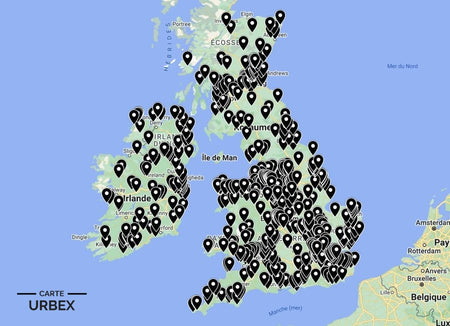
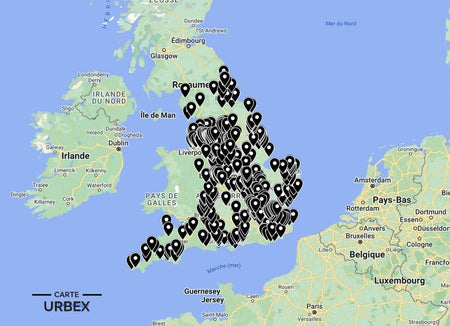
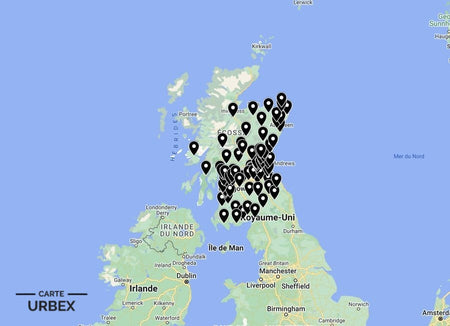
Belfast is a city shaped by linen mills, shipyards and the Troubles — a Victorian industrial powerhouse that built the Titanic, the largest linen mill in the world and the legal infrastructure of a divided society. Its abandoned places carry all of that: a Victorian courthouse connected by tunnel to a gaol, a 1930s Art Deco dance hall in the zoo grounds and the extraordinary industrial heritage of a city that made ships for the world. Here are 5 of the best abandoned places in Belfast, selected from our Abandoned Places Map UK — 640+ GPS locations across England, Scotland, Wales and Ireland.
Why Belfast Is a Hidden Gem for Urban Exploration
Belfast's urbex landscape is compact and layered in a way that rewards a full day on foot — the Victorian institutional buildings, the linen mill heritage of the east side and the Troubles-era physical geography are all within a walkable city. The Crumlin Road area alone combines a courthouse, a gaol and the social history of a divided community within a single streetscape that no other British city can replicate.
1. Crumlin Road Courthouse – Belfast — 19th-Century Victorian Courthouse, Connected to Crumlin Road Gaol by Underground Tunnel, Closed 1998 (Known Location)
The Crumlin Road Courthouse was built in the 19th century as Belfast's primary judicial centre — a grand Victorian building connected to the equally imposing Crumlin Road Gaol across the street by an underground tunnel through which prisoners were walked from cell to dock. Closed in 1998 after court reorganisation, the building's decaying Victorian courtrooms, empty judge's chambers and the underground tunnel to the gaol create one of the most atmospherically charged abandoned legal buildings in Britain.
🔗 Learn more: Wikipedia – Crumlin Road Courthouse
2. Floral Hall – Belfast Zoo, Belfast — 1930s Art Deco Dance Hall, Big Band Venue, Closed 1970s, Peeling Paint and Empty Dance Floor Above the City (Known Location)
The Floral Hall at Belfast Zoo was built in the 1930s as a glamorous Art Deco dance hall hosting big band performances through the WWII era. Closed in the 1970s and left to decay within the zoo grounds, the Floral Hall's faded Art Deco style, peeling paint and empty sprung dance floor create one of the most nostalgically atmospheric abandoned places in Belfast.
🔗 Also read: Top 5 Abandoned Places in Ireland →

3. Abandoned Belfast Linen Mill – 1870s-1890s Victorian Spinning Mill, Cast-Iron Columns and Overhead Shaft Drive System Still Intact, East Belfast (Exclusively on Our Map)
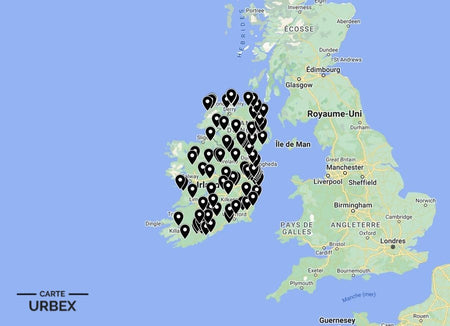
An 1870s-1890s linen spinning mill in East Belfast — the original multi-storey brick mill with cast-iron structural columns, the overhead lineshaft drive system that transmitted power to every machine still mounted along the ceiling and the rope race holes in the floor where drive belts descended to the machinery below. Belfast was the linen capital of the world through the 19th century; when synthetic fabrics ended the trade, the mills closed progressively. Discover its exact location on our Ireland Urbex Map.
4. Abandoned Belfast Victorian Public Baths – 1890s Municipal Swimming Baths, Cast-Iron Gallery and Changing Cubicles Still Intact, Terrazzo Pool Surround, North Belfast (Off the Radar — Our Map Only)
An 1890s Belfast Corporation swimming baths — the original cast-iron gallery still running around the pool hall perimeter, the terrazzo pool surround and original ceramic tile wainscoting still lining the walls. Belfast built magnificent municipal baths as part of its Victorian public health programme; when modern leisure centres superseded them, several originals were simply closed. GPS coordinates available with our Ireland Urbex Map.
5. Abandoned Belfast Edwardian Cinema – 1910s-1920s Picture Palace, Original Auditorium with Ornate Plasterwork and Balcony Intact, Period Projection Booth, South Belfast (Exclusively on Our Map)
A 1910s-1920s Edwardian picture palace in South Belfast — the original auditorium with ornate plasterwork ceiling, curved balcony and period projection booth with original equipment above the stalls. Belfast's Edwardian cinema boom left several purpose-built picture palaces; when multiplexes replaced them, several were simply locked and left. Included in our Ireland collection — 100+ locations.
❓ FAQ
What is the most famous abandoned place in Belfast?
The Crumlin Road Courthouse — a 19th-century Victorian courthouse connected to Crumlin Road Gaol by an underground tunnel, closed in 1998. The decaying courtrooms and the prisoner tunnel make it the most atmospherically charged abandoned legal building in Northern Ireland.
What was the Floral Hall?
A 1930s Art Deco dance hall in Belfast Zoo hosting big band performances through the WWII era. Closed in the 1970s; the sprung dance floor, balcony and Art Deco exterior are still largely intact.
Why was Belfast the linen capital of the world?
Belfast's damp climate was ideal for spinning linen yarn — the moisture prevented fibres breaking during spinning. Combined with the power of the River Lagan and cheap Scottish coal, Belfast developed the world's most concentrated linen industry through the 19th century.
Safety Tips
- Asbestos: endemic in pre-1980 Belfast linen mills, baths and cinema buildings — FFP2 mask mandatory before entering any enclosed space
- Structural instability: Belfast's damp brick buildings have been subject to prolonged water ingress — always test floors and assess external walls before entering any derelict mill or civic building
- Never explore alone — always bring at least one other person
The urbex code: "Take nothing but photographs, leave nothing but footprints."
🎯 Summary
Belfast's abandoned places range from a Victorian courthouse connected to a gaol by underground tunnel to a 1930s Art Deco dance hall above the city and Victorian linen mills with overhead drive systems still intact. Each of these 5 derelict buildings in Belfast captures a different layer of a city shaped by linen, ships and a divided history.

Abandoned Places Map Ireland
- ✓ 100+ GPS locations across Ireland
- ✓ Exclusive locations not found anywhere else
- ✓ Instant access after purchase
- ✓ Free updates forever
9,99€
Explore All Locations →