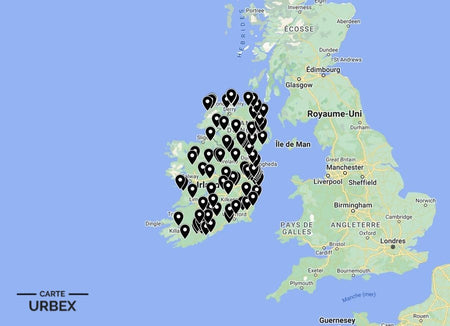
Derry/Londonderry is Northern Ireland's second city — a walled city on the River Foyle whose medieval walls are the most completely surviving in the British Isles and whose 20th-century history has been defined by political conflict, industrial decline and the complex process of peace. Its abandoned places carry the full range of that history: the vast former British Army base on the Waterside that was handed back to the community after 85 years of military occupation, a Victorian railway station abandoned as the Foyle Valley line progressively closed and a Georgian country house in the Derry hinterland whose family connection to the plantation era ended in the 20th century. Here are 5 of the best abandoned places in Derry, selected from our Abandoned Places Map Ireland — 100+ GPS locations across Ireland.
Why Derry Is a Hidden Gem for Urban Exploration
Derry's urbex landscape is defined by the city's unusual history — the British military presence, the Troubles-era dereliction and the post-peace redevelopment have left an urban landscape of unusual historical depth. The Foyle valley and the Derry hinterland add a layer of country house, agricultural and pre-plantation heritage that the city's political narrative often overshadows.
1. Ebrington Barracks – Waterside, Derry — 1841-2003 British Army Barracks, Occupied Continuously for 85 Years on the Foyle Waterside, Derelict After Army Withdrawal, Significant Regeneration Site (Known Location)
Ebrington Barracks on the Foyle Waterside was one of the most significant British Army garrisons in Northern Ireland — occupied continuously from 1841 until the army's 2003 withdrawal, the barracks occupying a prime riverside site that had been closed to the Derry community for 85 years. The army's departure left the Victorian and Edwardian barrack buildings, the parade ground and the Foyle frontage in atmospheric dereliction as regeneration plans were progressively developed. The combination of the 85-year community exclusion, the military architecture and the Foyle river setting make Ebrington one of the most historically charged pieces of derelict military heritage in Northern Ireland.
🔗 Learn more: Wikipedia – Ebrington Barracks Derry
2. Foyle Valley Railway Station – Waterside, Derry — Victorian Great Northern Railway Station, Closed as Foyle Valley Line Progressively Wound Down, Atmospheric Dereliction (Known Location)
The Foyle Valley Railway infrastructure at Waterside represents the Victorian railway ambition that connected Derry to the wider Irish rail network — a Great Northern Railway station and associated infrastructure whose progressive closure as the Foyle Valley line wound down left Victorian railway architecture in atmospheric dereliction on the Derry Waterside. The combination of the Victorian railway architecture, the Foyle valley setting and the historical significance of a railway that connected Derry to the north-west Irish hinterland make the Waterside station dereliction one of the most historically specific pieces of Victorian transport heritage in the north-west of Ireland.
🔗 Also read: Top 5 Abandoned Places in Ireland →

3. Lisnagelvin House – Lisnagelvin, Derry — Georgian Country House Abandoned in the Foyle Hinterland, Plantation-Era Estate, Derry Countryside Setting, Documented on discover.re (Known Location)
Lisnagelvin House in the Derry hinterland is a Georgian country house whose plantation-era estate connection links it directly to the 17th-century settlement of the north of Ireland — a house whose progressive dereliction in the Foyle valley countryside has been documented on discover.re as one of the Derry area's most atmospheric pieces of abandoned domestic heritage. The combination of the Georgian architectural quality, the plantation-era estate history and the Foyle valley setting make Lisnagelvin one of the most historically layered pieces of abandoned residential heritage accessible from Derry city.
🔗 Learn more: discover.re – Derry Abandoned Places
4. Derry Linen Mill – Victorian Linen Manufacturing Complex, Weave Shed and Engine House, Foyle Valley Industrial Heritage (Off the Radar — Our Map Only)
A Victorian linen mill in the Foyle valley — the weave shed with its characteristic north-light sawtooth roof, the engine house and the bleachfield infrastructure of a mill that produced the Irish linen that clothed the British Empire. The Derry and north-west Ulster linen industry made the Foyle valley one of the most important textile manufacturing landscapes in Ireland; the derelict examples are among the least documented and most historically specific pieces of Victorian textile industrial heritage in Northern Ireland. GPS coordinates available with our Ireland Urbex Map.
5. Derry Plantation-Era Tower House – 17th Century Planter's Tower, Bawn Wall and Gate Tower, Inishowen or Foyle Hinterland Setting (Exclusively on Our Map)
A 17th-century Plantation-era tower house in the Derry hinterland — the characteristic planter's tower with its bawn enclosure wall and gate tower, built during the Ulster Plantation of the 1610s-1630s to provide the settler community with a defensible residence in a landscape where the dispossessed Irish population posed a constant threat. The Ulster Plantation created a distinctive tower house and bawn typology unique to the north of Ireland; the abandoned examples in the Foyle valley and Inishowen hinterland are among the most atmospherically complete pieces of Plantation-era defensive heritage in Ireland. Find it on our map — with access rating and condition report.
Safety Tips
- Asbestos: endemic in pre-1980 Derry military and industrial buildings — FFP2 mask mandatory in any enclosed space at Ebrington or any mill building
- Foyle tidal conditions: the Foyle is a fast-flowing tidal river — never approach unguarded riverbank edges near derelict dockside or riverside infrastructure
- Never explore alone — always bring at least one other person
The urbex code: "Take nothing but photographs, leave nothing but footprints."
❓ FAQ
What is the most famous abandoned place in Derry?
Ebrington Barracks — a British Army garrison that occupied the Foyle Waterside continuously from 1841 to 2003, excluding the Derry community from 85 years of their own riverfront. The Victorian and Edwardian barrack buildings and parade ground are the most historically charged pieces of derelict military heritage in Northern Ireland.
What was the Ulster Plantation?
A systematic programme of colonisation of the nine counties of Ulster by English and Scottish settlers between 1610 and the 1630s — the most extensive colonial project in British history, which dispossessed the Gaelic Irish landowner class and replaced them with Protestant settlers. The Plantation created the political and religious divisions that defined the north of Ireland through the 20th century; its physical legacy survives in the tower houses, bawn walls and plantation towns of the Ulster landscape.
Are Derry's city walls actually medieval?
Yes — Derry's city walls were built between 1613 and 1619 as part of the Ulster Plantation, making them among the best-preserved 17th-century city walls in Europe rather than the Middle Ages. The walls have never been breached; they stand to their full original height and circuit. Derry is one of the last walled cities built in the British Isles.
🎯 Summary
Derry's abandoned places range from a British Army barracks that excluded a city from its riverfront for 85 years to a Victorian railway station abandoned as the Foyle Valley line wound down and a Plantation-era Georgian house in the Foyle hinterland whose history runs from the 17th-century dispossession to the 20th-century peace process. Each of these 5 derelict buildings in Derry captures a different layer of Northern Ireland's most historically complex city.

Abandoned Places Map Ireland
- ✓ 100+ GPS locations across Ireland
- ✓ Exclusive locations not found anywhere else
- ✓ Instant access after purchase
- ✓ Free updates forever
9,99€
Explore All Locations →