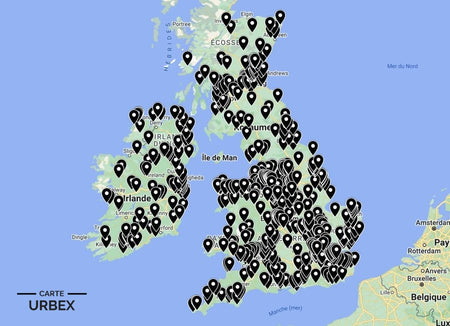
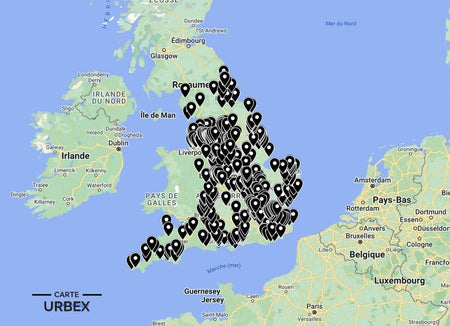
Brighton has always been England's most theatrical seaside city — a place that reinvented itself from a fishing village to a Regency royal playground to a Victorian resort to a countercultural capital in the space of two centuries. Its abandoned places carry the faded glamour of each of those incarnations: a Victorian pleasure pier reduced to a rusting skeleton in the sea, a Regency-era baths complex decaying on the seafront and WWII coastal defences cut into the chalk cliffs above the Channel. Here are 5 of the best abandoned places in Brighton, selected from our Abandoned Places Map UK — 640+ GPS locations across England, Scotland, Wales and Ireland.
Why Brighton Is a Hidden Gem for Urban Exploration
Brighton's urbex landscape is defined by the tension between the city's celebrated creative identity and the dereliction that underlies it. Behind the Lanes and the seafront, Victorian entertainment infrastructure, Regency buildings and post-war commercial spaces decay in various states of abandonment. The chalk cliffs and Downs behind the city contain WWII infrastructure and ancient trackways that most visitors never discover. The Brighton urbex community is active and well-documented on platforms including Obsidian Urbex Photography.
1. West Pier – Brighton Seafront — 1866 Victorian Pleasure Pier, Damaged by Storms and Fires, Rusting Skeleton Still Standing in the Sea, Grade I Listed (Known Location)
Brighton's West Pier is one of the most iconic abandoned structures in England — a Grade I listed 1866 Victorian pleasure pier that was damaged by storms in 1975, closed and then progressively destroyed by arson fires in 2003. The rusting skeleton of the pier head still stands in the sea off Brighton's western seafront, the decorative ironwork silhouetted against the Channel sky. The combination of the Victorian architectural ambition, the dramatic destruction and the extraordinary visual presence of the pier skeleton makes West Pier one of the most photographically compelling abandoned structures in Britain.
🔗 Learn more: Wikipedia – West Pier Brighton
2. Black Rock – Brighton Marina Area — Former Bathing Pool Complex, 1930s Lido Infrastructure, Sea Wall Terracing Still Visible, East Brighton Seafront (Known Location)
Black Rock at the eastern end of Brighton seafront was the site of a 1930s outdoor sea bathing pool — a lido complex whose terraced sea wall infrastructure, changing room blocks and pool surrounds remained in atmospheric dereliction for decades after the pool was closed and drained. The combination of the 1930s municipal leisure architecture, the Brighton seafront setting and the progressive decay of the bathing complex make Black Rock one of the most nostalgically atmospheric pieces of abandoned resort infrastructure on the south coast.
🔗 Also read: Top 5 Abandoned Places in England →

3. Shoreham Cement Works – Shoreham-by-Sea, West Sussex — Victorian Cement Works, Bottle Kilns and Processing Buildings Still Standing, Adur Riverside Setting (Known Location)
Shoreham Cement Works on the River Adur near Brighton is one of the most characterful pieces of Victorian industrial heritage on the south coast — the original bottle kiln structures, the processing buildings and the riverside infrastructure of a cement works that exploited the local chalk geology. One of the most distinctive and most consistently photographed abandoned industrial sites in the Brighton and Sussex area. Documented by Atlas Obscura and the Sussex urbex community as a rare survival of Victorian cement industry infrastructure.
🔗 Learn more: Atlas Obscura – Shoreham Cement Works
4. South Downs WWII Radar Station – 1940s Chain Home Radar Mast Base and Operations Building, South Downs Clifftop, Sussex (Exclusively on Our Map)
A 1940s Chain Home radar station on the South Downs above Brighton — the concrete mast base platforms where the 360-foot wooden radar masts stood, the operations building and the receiver hut still traceable in the downland landscape. Chain Home was Britain's early warning radar network that provided the RAF with advance notice of German raids during the Battle of Britain; the South Downs stations were among the most critically important in the system. GPS coordinates available with our England Urbex Map.
5. Sussex Georgian Country House – 18th-Century Downland Mansion, Grand Staircase and Library Intact, Stable Block and Walled Garden, Rural East Sussex (Only on Our Map)
An 18th-century country house on the East Sussex Downs — the original grand staircase still intact, the library with period shelving and the servants' wing with its bells and call board. The stable block and walled kitchen garden still stand in the overgrown grounds. Death duties and the agricultural depression of the 1920s-1930s emptied it before WWII completed the process. Included in our England collection — 400+ locations.
❓ FAQ
What is the most famous abandoned place in Brighton?
West Pier — an 1866 Grade I listed Victorian pleasure pier destroyed by storms in 1975 and fires in 2003, whose rusting skeleton still stands in the sea off Brighton's western seafront. One of the most photographically iconic abandoned structures in England.
What happened to West Pier?
Closed in 1975 after storm damage severed the pier from the shore. Despite repeated restoration plans, two arson fires in January and March 2003 destroyed the pier head structures. The skeletal remains are now a permanent feature of Brighton's western seafront, Grade I listed despite being structurally unreachable.
What were Chain Home radar stations?
Britain's first operational radar network — built from 1937 along the south and east coasts using 360-foot wooden transmitter masts and receiver arrays to detect approaching German aircraft. Chain Home gave RAF Fighter Command the advance warning that made the Battle of Britain possible; the South Downs stations were among the most critically positioned in the system.
Safety Tips
- Coastal structures: never attempt to access West Pier — the structure is unstable, tidal and inaccessible; always observe from the beach only
- Chalk cliff paths: the South Downs clifftop paths above Brighton erode rapidly — always stay on marked paths and well back from any cliff edge
- Never explore alone — always bring at least one other person
The urbex code: "Leave it as you found it — the next explorer deserves the same experience."
🎯 Summary
Brighton's abandoned places range from the rusting skeleton of an 1866 Victorian pleasure pier standing in the sea to Victorian cement kilns on the Adur and WWII Chain Home radar stations on the South Downs. Each of these 5 derelict buildings in Brighton captures a different layer of England's most theatrical seaside city.

Abandoned Places Map England
- ✓ 400+ GPS locations across England
- ✓ Exclusive locations not found anywhere else
- ✓ Instant access after purchase
- ✓ Free updates forever
14,99€
Explore All Locations →