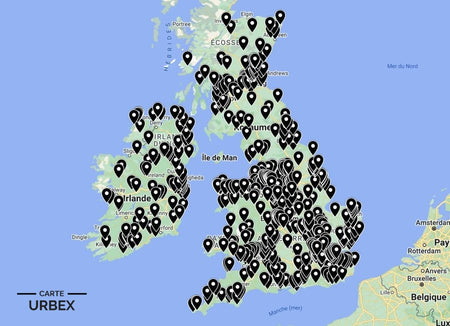
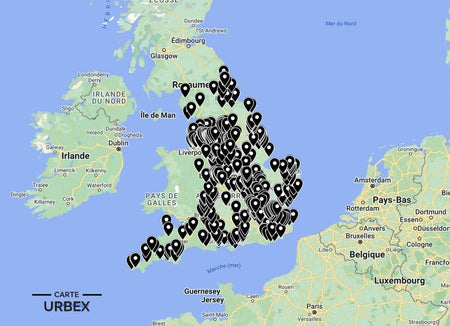
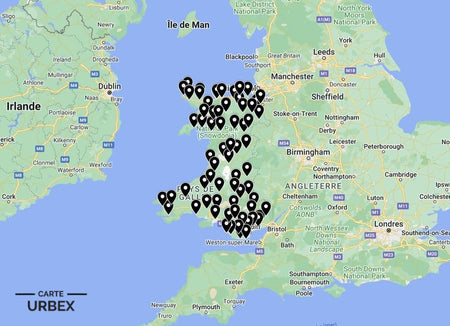
Milton Keynes is Britain's most deliberately planned city — a 1960s new town built on a grid of dual carriageways across the Buckinghamshire landscape. Yet beneath the modern grid lies a landscape saturated with medieval history: a 12th-century Benedictine priory, an Elizabethan mansion's ghost in the fields and the industrial heritage of a limestone quarrying district that predates the new town by centuries. Here are 5 of the best abandoned places in Milton Keynes, selected from our Abandoned Places Map UK — 640+ GPS locations across England, Scotland, Wales and Ireland.
Why Milton Keynes Is a Hidden Gem for Urban Exploration
Most people are surprised by Milton Keynes' urbex potential — the new town absorbed over a dozen medieval villages, ancient manors and industrial sites into its grid. The pre-new-town landscape survives in pockets the planners simply built around: a Benedictine priory in an industrial estate, an Elizabethan manor's earthworks in a field, a Victorian asylum tower visible for miles. All within easy reach of the centre by bike.
1. Bradwell Abbey – Bradwell, Milton Keynes — 12th-Century Benedictine Priory Chapel Still Standing in an Industrial Estate (Known Location)
Bradwell Abbey is a 12th-century Benedictine priory whose original chapel still stands in remarkable completeness — a rare survival of pre-Dissolution monastic architecture now surrounded incongruously by the industrial estate and residential development of modern Milton Keynes. The ancient chapel with its medieval stonework and the remnants of the original priory walls make Bradwell Abbey one of the most atmospherically incongruous and most historically significant abandoned places in the area.
🔗 Learn more: Wikipedia – Bradwell Abbey
2. Salden House – Mursley, Buckinghamshire — Late 16th-Century Elizabethan Mansion, Overgrown Stone Foundations and Garden Earthworks Still Readable in the Fields (Known Location)
Salden House near Mursley was a grand Elizabethan mansion built in the late 16th century, associated with Sir John Fortescue, Elizabeth I's Chancellor of the Exchequer. The house fell into ruin over centuries; the overgrown stone foundations, garden earthworks and the landscape features of the original Elizabethan formal garden are still readable in the Buckinghamshire countryside. An Elizabethan manor's ghost in the fields — one of the most historically interesting abandoned sites near Milton Keynes.
🔗 Also read: Top 5 Abandoned Places in England →

3. Abandoned Buckinghamshire Victorian Asylum – 1850s-1870s Kirkbride Campus, Gothic Tower Visible for Miles, Chapel with Stained Glass and Airing Courts Intact (Exclusively on Our Map)
An 1850s-1870s Kirkbride-plan psychiatric asylum in Buckinghamshire — the Gothic administrative tower still visible for miles across the flat Buckinghamshire landscape, the ornate chapel with original stained glass and timber pews and the enclosed airing courts where patients exercised year-round. The bat-wing ward corridor and self-sustaining farm campus complete a Victorian institutional landscape closed by deinstitutionalisation. Discover its exact location on our England Urbex Map.
4. Abandoned Great Linford Limestone Quarry – 18th-19th Century Quarry, Crane Bases and Tramway Trackbed Still Visible, Grand Union Canal Arm Adjacent (Only on Our Map)
An 18th-19th century limestone quarry in Great Linford — original crane base platforms on the quarry face, the narrow gauge tramway trackbed traceable from the quarry floor to the Grand Union Canal arm where stone was loaded onto barges. Limestone quarrying here supplied building material for the expanding canal-era towns of the Midlands. GPS coordinates available with our England Urbex Map.
5. Abandoned Northamptonshire Country House – Georgian Manor, WWI Convalescent Hospital, Grand Staircase and Library Intact, Walled Garden and Stable Block (Our Map Exclusive)
A Georgian country house on the Buckinghamshire-Northamptonshire border — the grand staircase still intact, the library with period shelving and the servants' wing with its bells and call board. Served as a WWI convalescent hospital; post-war death duties ended its residential use. The walled kitchen garden has returned to woodland. Included in our England collection — 400+ locations.
Safety Tips
- Quarry edges: old limestone quarries have unstable faces and sudden collapse risk — always maintain distance from any quarry lip and never enter unfenced working areas
- Medieval fabric: Bradwell Abbey's stonework is 900 years old and fragile — never touch or lean against any medieval wall section
- Never explore alone — always bring at least one other person
The urbex code: "Take nothing but photographs, leave nothing but footprints."
❓ FAQ
What is the most famous abandoned place in Milton Keynes?
Bradwell Abbey — a 12th-century Benedictine priory whose original chapel still stands within an industrial estate. One of the most incongruous and most historically significant medieval survivals in any British new town.
What was Salden House?
A late 16th-century Elizabethan mansion near Mursley associated with Elizabeth I's Chancellor of the Exchequer. Demolished over centuries; the overgrown foundations and garden earthworks are still readable in the Buckinghamshire countryside.
Why was Milton Keynes built?
Designated as a New Town in 1967 to relieve London overcrowding, built on a grid across a dozen existing villages — absorbing medieval farmsteads, manors and industrial sites into its planned landscape.
🎯 Summary
Milton Keynes' abandoned places range from a 12th-century Benedictine priory in an industrial estate to an Elizabethan mansion's earthwork ghost in the fields and a Victorian asylum tower visible for miles across Buckinghamshire. Each of these 5 derelict buildings in Milton Keynes reveals the medieval and industrial landscape the new town was built on top of.

Abandoned Places Map England
- ✓ 400+ GPS locations across England
- ✓ Exclusive locations not found anywhere else
- ✓ Instant access after purchase
- ✓ Free updates forever
14,99€
Explore All Locations →