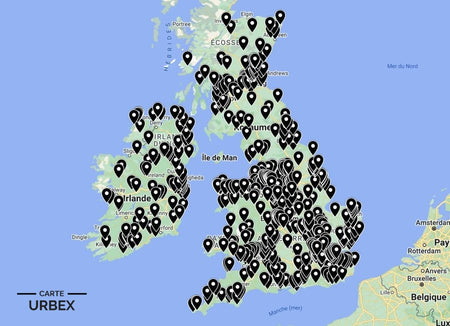
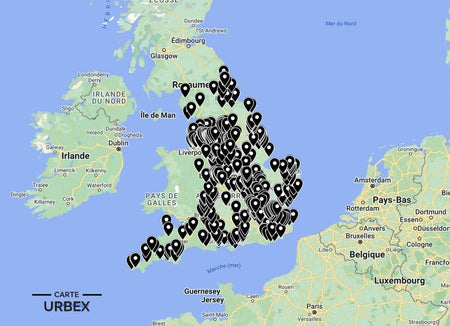
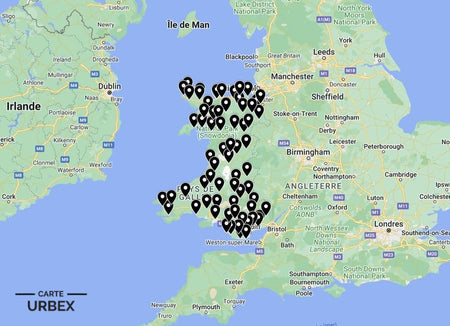
Blackburn is East Lancashire's cotton capital — a mill town that drove the Industrial Revolution's textile engine, where the power loom was perfected, where the first cotton mills of the modern era were built and where the wealth generated by weaving clothed the world for a century. Its abandoned places carry that extraordinary industrial weight: a Victorian hospital built for the town's textile workers, a cotton mill whose weave shed still stands above the East Lancashire roofline and the derelict pub and commercial heritage of a town that has contracted steadily since the 1970s. Here are 5 of the best abandoned places in Blackburn, selected from our Abandoned Places Map UK — 640+ GPS locations across England, Scotland, Wales and Ireland.
Why Blackburn Is a Hidden Gem for Urban Exploration
Blackburn's urbex landscape is defined by the extraordinary density of Victorian cotton mill heritage in the Blakewater and Darwen valleys — stone-built weave sheds, engine houses and spinning mills in various states of atmospheric dereliction concentrated within a few miles of the town centre. Combined with the Victorian institutional heritage of an East Lancashire county borough and the derelict pub and commercial fabric of a town whose population and economy have contracted since the 1960s, Blackburn offers a Lancashire urbex landscape that is underrated compared to neighbouring Preston or Burnley.
1. Queen's Park Hospital – Blackburn — 1886 Blackburn Infirmary, Victorian Hospital Campus, Sections in Dereliction After NHS Consolidation (Known Location)
Queen's Park Hospital in Blackburn opened in 1886 as the Blackburn Infirmary — a Victorian hospital campus built to serve the town's cotton textile workforce at the height of the East Lancashire weaving boom. Progressive NHS service consolidation has progressively emptied sections of the original Victorian campus; the ward buildings, the Victorian administrative block and the chapel remain in various states of atmospheric dereliction. One of the most consistently documented and most characteristically Victorian hospital campuses in East Lancashire.
🔗 Learn more: Wikipedia – Queen's Park Hospital Blackburn
2. Jubilee Mill – Blackburn — 1890s-1900s Victorian Cotton Weaving Mill, Weave Shed and Engine House Still Standing, East Lancashire Setting (Known Location)
Jubilee Mill is a late Victorian cotton weaving mill in Blackburn — built in the 1890s-1900s at the height of East Lancashire's weaving boom, the original weave shed with its characteristic north-light sawtooth roof and the engine house with its ornate brick chimney still standing in atmospheric dereliction above the East Lancashire roofline. The cotton mill weave shed — the defining building typology of industrial Blackburn — is the most architecturally specific and most historically distinctive piece of abandoned heritage in East Lancashire.
🔗 Also read: Top 5 Abandoned Places in England →

3. Witton Park Bleachworks – Witton Park, Blackburn — Victorian Textile Finishing Works, Bleach Croft Infrastructure and Process Buildings, Blakewater Valley, Documented on 28DaysLater (Known Location)
The Witton Park area of Blackburn retains derelict structures from the Victorian textile finishing industry — bleachworks, dye houses, and cloth finishing infrastructure that served the East Lancashire cotton weaving industry in the valley of the Blakewater. Documented on 28DaysLater by the East Lancashire urbex community as one of the most historically specific and atmospherically unusual pieces of derelict textile heritage accessible from Blackburn — the finishing processes that completed the work of the weaving mill are rarely preserved in this atmospheric state.
🔗 Learn more: 28DaysLater – Lancashire Urbex Reports
4. East Lancashire Spinning Mill – 1870s-1890s Ring-Spinning Mill, Spinning Floors and Shaft Drive Mountings, Darwen Valley (Our Map Exclusive)
An 1870s-1890s ring-spinning cotton mill in the Darwen Valley — the original spinning floors with their cast-iron column grid, the overhead shaft drive mounting brackets still attached to the ceiling, and the engine house and chimney of a mill that spun the cotton yarn that Blackburn's weavers then converted into cloth. East Lancashire's spinning mills are architecturally distinct from the weaving sheds — taller, with larger windows for the higher-precision work. GPS coordinates available with our England Urbex Map.
5. Blackburn Victorian Mill Owner's House – 1870s-1890s Villa, Original Marble Fireplaces and Tiled Hallway Intact, Mill Hill or Feniscowles (Hidden Gem — Our Map Only)
A Victorian cotton mill owner's villa on the East Lancashire hillside — the original marble fireplaces, encaustic tiled hallway, and ornate plasterwork of a house built by a man who made his fortune in weaving and spent it on architecture. The East Lancashire mill owner's villa is a building typology as distinctive as the mills themselves — built in the 1870s-1890s hillside suburbs of Blackburn, Bolton, and Accrington by men who wanted distance from the noise and smoke they had created. Find it on our map — with access rating and condition report.
Safety Tips
- Asbestos: endemic in pre-1980 Blackburn industrial and hospital buildings — FFP2 mask mandatory in any enclosed space
- Textile contamination: bleachworks sites may have residual chemical contamination in soil — wear gloves and never disturb ground surfaces near former process areas
- Never explore alone — always bring at least one other person
The urbex code: "Take nothing but photographs, leave nothing but footprints."
❓ FAQ
What is the most famous abandoned place in Blackburn?
Queen's Park Hospital — the 1886 Victorian Blackburn Infirmary whose ward buildings, administrative block and chapel remain in atmospheric dereliction as NHS services have been consolidated on the Royal Blackburn Teaching Hospital site.
Why does Blackburn have so many abandoned mills?
Blackburn's cotton weaving industry collapsed under pressure from cheaper overseas production through the 1950s-1980s. The stone-built East Lancashire weave sheds and spinning mills were too expensive to convert and too solidly built to demolish easily; many remain in atmospheric dereliction across the Blakewater and Darwen valley landscapes.
What made Blackburn important in the Industrial Revolution?
Blackburn was the birthplace of the power loom age — James Hargreaves invented the spinning jenny nearby in 1764, and Blackburn became one of the first towns to mechanise cotton weaving at industrial scale. By the Victorian era, East Lancashire's weaving economy centred on Blackburn was the most concentrated textile manufacturing district in the world.
🎯 Summary
Blackburn's abandoned places range from the 1886 Victorian infirmary built for cotton workers to a weave shed whose north-light roof still catches the East Lancashire sky and a bleachworks whose finishing chemistry completed the industry's value chain. Each of these 5 derelict buildings in Blackburn captures a different layer of the town that powered the Industrial Revolution's textile engine.

Abandoned Places Map England
- ✓ 400+ GPS locations across England
- ✓ Exclusive locations not found anywhere else
- ✓ Instant access after purchase
- ✓ Free updates forever
€14.99
Explore All Locations →