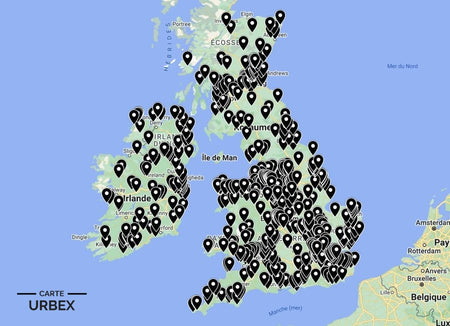
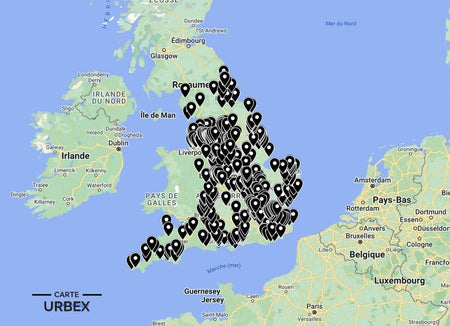
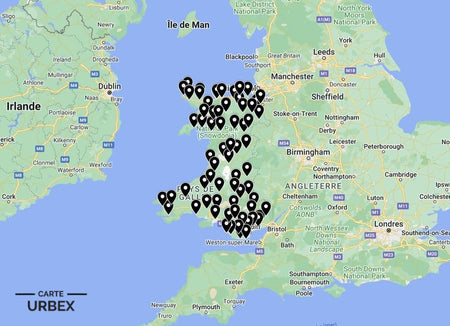
Bristol is a city of contradictions — Georgian merchant wealth built on the slave trade, a Victorian industrial port, and one of England's most creative post-industrial cities. Its abandoned places carry that layered history: a Victorian asylum that served the city for over a century, a 1930s international airport abandoned since the 1950s and the extraordinary aircraft hangar at Filton that was built for a plane too ambitious to ever fly commercially. Here are 5 of the best abandoned places in Bristol, selected from our Abandoned Places Map UK — 640+ GPS locations across England, Scotland, Wales and Ireland.
Why Bristol Is a Hidden Gem for Urban Exploration
Bristol's urbex landscape spans a remarkable range of building types within a compact geography — Victorian asylums, Edwardian factories, WWII infrastructure, Cold War aviation heritage and the extraordinary industrial archaeology of the Avon Gorge. The city's creative culture means its derelict buildings are often documented, campaigned for and fiercely defended before they disappear — which means the urbex community here is active and informed.
1. Glenside Hospital – Fishponds, Bristol — 1861 Victorian Psychiatric Hospital, Original Kirkbride Ward Buildings Still Standing, Gothic Chapel Intact, Campus in Atmospheric Decay (Known Location)
Glenside Hospital in Fishponds opened in 1861 as the Bristol Pauper Lunatic Asylum — a complete Kirkbride-plan campus whose original ward buildings, Gothic chapel and administrative block still stand in various states of atmospheric decay. Serving Bristol's psychiatric patients for over a century, the hospital closed progressively through the deinstitutionalisation process. Parts of the campus have been converted to other uses but significant original structures remain derelict, the Gothic chapel in particular retaining its extraordinary Victorian ecclesiastical character.
🔗 Learn more: Wikipedia – Glenside Hospital Bristol
2. Whitchurch Airfield – Whitchurch, Bristol — 1930 International Airport, Bristol's Main Airport Through WWII, Abandoned 1957, Derelict Hangars and Runway Infrastructure Remaining (Known Location)
Whitchurch Airfield opened in 1930 as Bristol's first civil airport — serving as the city's main international terminal through the 1930s and as a WWII military airfield before losing traffic to Lulsgate (now Bristol Airport) and closing in 1957. The original art deco terminal, derelict hangars and sections of runway infrastructure remain on the site, making it one of the most historically significant pieces of inter-war aviation heritage in the south-west. A popular target for Bristol's urbex community precisely because it represents an entirely forgotten chapter of the city's aviation history.
🔗 Also read: Top 5 Abandoned Places in England →

3. Brabazon Hangar – Filton, South Gloucestershire — 1949 Aircraft Assembly Hangar, Built for the Bristol Brabazon, Largest Covered Space in Britain When Built, Now Derelict (Known Location)
The Brabazon Hangar at Filton was built in 1949 to assemble the Bristol Brabazon — a colossal passenger aircraft designed to cross the Atlantic in luxury, so large that the village of Charlton was demolished to extend the runway. Only two Brabazon prototypes were ever built before the project was cancelled in 1953; the hangar, one of the largest covered spaces ever built in Britain, was left as a monument to over-ambition. Documented extensively on 28DaysLater, the hangar's extraordinary scale and the melancholy of the abandoned aviation dream make it one of the most striking derelict industrial spaces near Bristol.
🔗 Learn more: 28DaysLater – Bristol Urbex Reports
4. Abandoned Avonmouth Victorian Chemical Works – 1880s-1900s Industrial Complex, Brick Processing Buildings and Chimney Stack Still Standing, Bristol Docks Corridor (Our Map Exclusive)
An 1880s-1900s chemical works complex in the Avonmouth industrial corridor — the original brick processing buildings, distillation towers and chimney stack still standing above the Avon estuary. Avonmouth's Victorian chemical industry processed zinc, lead and copper imported through Bristol Docks; when the industry consolidated, the older processing complexes were simply left. One of the most dramatically scaled and most historically specific abandoned industrial places in the Bristol area. Discover its exact location on our England Urbex Map.
5. Abandoned Somerset Country House – Georgian Mansion, WWI Convalescent Hospital, Grand Staircase and Library Intact, Walled Garden and Stable Block, Rural Bristol Fringe (Hidden Gem — Our Map Only)
A Georgian country house on the rural Somerset-Bristol fringe — the original grand staircase still intact, the library with period shelving and the servants' wing with its original bells and call board. The house served as a convalescent hospital during WWI; post-war death duties made the estate unviable and it has been in progressive decay since the 1950s. The walled kitchen garden has returned to woodland. GPS coordinates available with our England Urbex Map.
Safety Tips
- Chemical contamination: Avonmouth industrial sites processed heavy metals for over a century — wear gloves, never disturb soil and wash hands thoroughly after any visit to former chemical works sites
- Asbestos: endemic in pre-1980 Bristol institutional and industrial buildings — FFP2 mask mandatory in any enclosed space
- Never explore alone — always bring at least one other person
The urbex code: "Leave it as you found it — the next explorer deserves the same experience."
❓ FAQ
What is the most famous abandoned place in Bristol?
Glenside Hospital in Fishponds — a complete Victorian psychiatric campus opened in 1861 whose Gothic chapel with original timber roof trusses is one of the most powerful derelict interiors in the city. Parts of the campus remain in atmospheric decay while others have been converted.
What was the Brabazon Hangar?
A 1949 aircraft assembly hangar at Filton built for the Bristol Brabazon — a colossal transatlantic airliner so large that a village was demolished to extend the runway. Only two prototypes were built before the project was cancelled in 1953; the hangar, one of the largest covered spaces ever built in Britain, remains as a monument to aviation over-ambition.
Why did Whitchurch Airfield close?
Bristol's original 1930 international airport lost traffic to the new Lulsgate site (now Bristol Airport) which offered better runway length and approaches; Whitchurch closed in 1957. The original hangars and runway infrastructure remain on site — one of the most significant pieces of inter-war civil aviation heritage in the south-west.
🎯 Summary
Bristol's abandoned places range from a Victorian psychiatric campus with a Gothic chapel to a 1930s international airport abandoned since 1957 and the colossal hangar built for a transatlantic airliner that never flew commercially. Each of these 5 derelict buildings in Bristol captures a different layer of a city shaped by ambition, commerce and the sea.

Abandoned Places Map England
- ✓ 400+ GPS locations across England
- ✓ Exclusive locations not found anywhere else
- ✓ Instant access after purchase
- ✓ Free updates forever
€14.99
Explore All Locations →