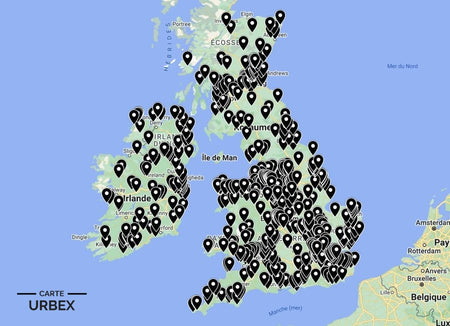
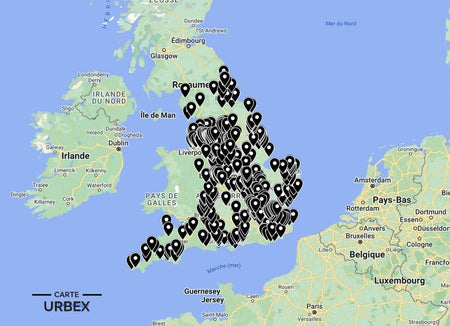
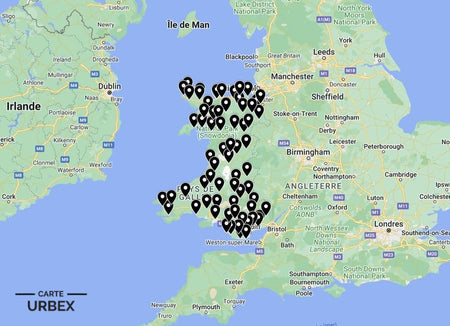
Devon is England's second-largest county — a landscape of dramatic contrasts between the Dartmoor high moor, the deep red-soil farmland of the South Hams, and a coastline of jagged headlands and tucked-away coves. Its abandoned places range from a WWII Spitfire base whose control tower still stands on the Salcombe headland to a Victorian fort above Plymouth Sound and a tungsten mine whose processing plant decays in the Devon countryside. Here are 5 of the best abandoned places in Devon, selected from our Abandoned Places Map UK — 640+ GPS locations across England, Scotland, Wales and Ireland.
Why Devon Is a Hidden Gem for Urban Exploration
Devon's urbex landscape is defined by two distinct zones — the coastal military heritage of the south Devon shore and Plymouth Sound, and the Dartmoor upland archaeology of tin and copper mining that spans five centuries. The WWII coastal defense network of the South Hams created a remarkable concentration of abandoned military infrastructure in a landscape that most visitors know only as holiday country; the Dartmoor mining sites add a layer of industrial archaeology that is among the most atmospherically complete in England.
1. RAF Bolt Head – Salcombe, Devon — 1940 WWII Fighter Station, Battle of Britain and D-Day Role, Control Tower and Blast Pens Still Intact Above Salcombe Estuary (Known Location)
RAF Bolt Head at Salcombe was established in 1940 as a forward fighter station — Spitfires and Hurricanes flew from its cliff-top runways to intercept German attacks on Plymouth and the Western Approaches, and the station played a role in supporting the D-Day invasion fleet in 1944. Decommissioned after WWII, the original control tower still stands above the Salcombe estuary with blast pens for aircraft protection and technical site buildings in atmospheric dereliction across the headland. It is one of the most dramatically located and most completely preserved small WWII fighter stations in the southwest.
🔗 Learn more: Wikipedia – RAF Bolt Head
2. Staddon Heights Fort – Staddon, Plymouth — 1860s Victorian Fort, Casemates and Magazine Infrastructure, Plymouth Sound Views, Fully Abandoned (Known Location)
Staddon Heights Fort above Plymouth Sound is a Victorian Palmerston-era fortification built in the 1860s to defend the eastern approaches to Plymouth Harbour — casemated gun positions, underground magazines and barrack buildings in atmospheric dereliction above the Sound. The views from the gun platforms over Plymouth Harbour, the Breakwater and the Sound make it one of the most visually rewarding abandoned military sites in Devon. Freely accessible on the South Devon coastal path.
🔗 Also read: Top 5 Abandoned Places in England →

3. Hemerdon Mine – Plympton, Devon — Tungsten and Tin Mine, Processing Plant and Headframe Still Standing, Devon Farmland, Documented by Atlas Obscura (Known Location)
Hemerdon Mine near Plymouth is one of the largest tungsten deposits in the world — a mine site with a history of intermittent operation from the 1800s, most recently closed after a period of modern extraction activity left the processing plant and headframe infrastructure in atmospheric dereliction in the Devon countryside. The combination of the extraordinary geological significance — Hemerdon contains the fourth-largest proven tungsten deposit on earth — and the derelict processing infrastructure make it one of the most unusual and most historically specific abandoned industrial sites in Devon. Documented by Atlas Obscura.
🔗 Learn more: Atlas Obscura – Hemerdon Mine Devon
4. Dartmoor Copper Mine – 18th-19th Century Copper Workings, Engine House and Chimney Stack Still Standing, High Dartmoor Moorland (Off the Radar — Our Map Only)
An 18th-19th century copper mine on high Dartmoor — the original engine house with its characteristic Cornish stack still standing above the surrounding moorland, the buddle pit where ore was washed and the tramway incline still traceable across the hillside. Dartmoor's copper mining left a landscape of engine houses and flooded shafts across the high moor; the granite construction preserves them against the Dartmoor weather for centuries. GPS coordinates available with our England Urbex Map.
5. South Devon Georgian Country House – 18th-Century Mansion, Grand Staircase and Library Intact, Stable Block and Walled Garden, South Hams (Exclusively on Our Map)
An 18th-century country house in the South Hams — the original grand staircase still intact, the library with period shelving and the servants' wing with its bells and call board. The stable block and walled kitchen garden still stand in the overgrown grounds. Post-war death duties and the agricultural depression emptied the South Hams estates progressively through the 1950s-1970s. Included in our England collection — 400+ locations.
❓ FAQ
What is the most famous abandoned place in Devon?
RAF Bolt Head at Salcombe — a 1940 cliff-top Spitfire station whose control tower still stands above the Salcombe estuary, with blast pens and technical buildings in atmospheric dereliction on the South Devon headland. One of the most dramatically sited WWII airfield remains in England.
What is Hemerdon Mine?
A tungsten and tin mine near Plymouth containing the fourth-largest proven tungsten deposit on earth — with a history of intermittent operation from the 1800s. The most recently closed processing plant and headframe infrastructure now decay in the Devon countryside, documented by Atlas Obscura.
What were the Palmerston Forts?
A ring of Victorian coastal and hilltop forts built around Plymouth in the 1860s-1880s to defend the naval base from both sea and land attack. Staddon Heights Fort is one of the most accessibly sited and most completely surviving of the ring, with Plymouth Sound panoramas from the gun platforms.
Safety Tips
- Coastal cliff paths: RAF Bolt Head is on an exposed South Devon headland — always stay on established paths and well back from any cliff edge
- Mine shafts: Dartmoor and Devon mining sites have unfenced open shafts — never approach any ground depression and always stay on established tracks
- Never explore alone — always bring at least one other person
The urbex code: "Leave it as you found it — the next explorer deserves the same experience."
🎯 Summary
Devon's abandoned places range from a 1940 Spitfire station with its control tower still intact above the Salcombe estuary to the fourth-largest tungsten deposit on earth whose processing plant decays in the Devon farmland and a Victorian fort commanding Plymouth Sound. Each of these 5 derelict buildings in Devon captures a different layer of England's second-largest county.

Abandoned Places Map England
- ✓ 400+ GPS locations across England
- ✓ Exclusive locations not found anywhere else
- ✓ Instant access after purchase
- ✓ Free updates forever
€14.99
Explore All Locations →