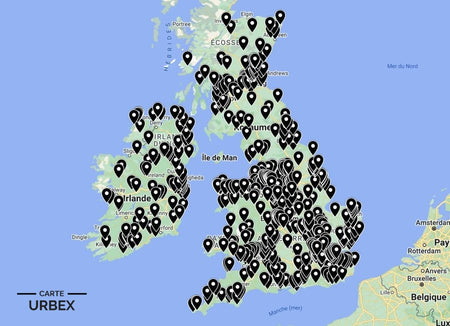
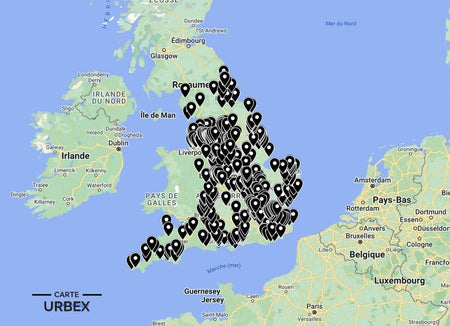
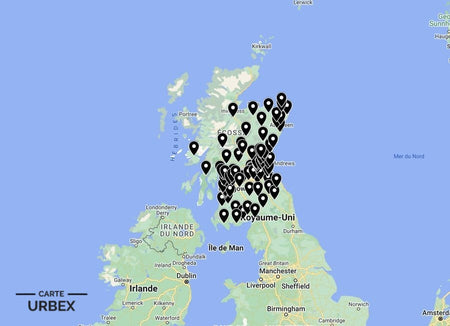
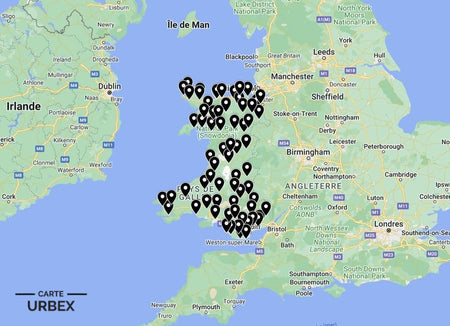
Dundee is Scotland's fourth city — a place built on jute, jam, and journalism, whose Victorian jute industry made it one of the most productive industrial cities in the British Empire and left a legacy of mill buildings, tenements, and civic architecture that is now in various states of abandonment, repurposing, and decay. Its abandoned places carry that extraordinary industrial weight: a Victorian jute mill whose UNESCO World Heritage inscription sits alongside derelict mill buildings, a Georgian country house in the Camperdown estate, and the ruins of the original Tay Bridge that collapsed in 1879. Here are 5 of the best abandoned places in Dundee, selected from our Abandoned Places Map UK — 640+ GPS locations across England, Scotland, Wales, and Ireland.
Why Dundee Is a Hidden Gem for Urban Exploration
Dundee's urbex landscape is dominated by the legacy of the jute industry — the largest concentration of Victorian jute mill architecture in the world, much of it in progressive dereliction as the mills that weren't converted to housing or offices simply decayed. Combined with the Tay estuary's extraordinary industrial waterfront and the surrounding Angus countryside's agricultural abandonment, Dundee offers a surprisingly rich and largely unexplored urbex landscape for a city of its size.
1. Cox's Stack – Lochee, Dundee — 1866 Camperdown Works Chimney, 282 Feet Tall, Sole Surviving Structure of the World's Largest Victorian Jute Mill Complex, Fully Abandoned (Known Location)
Cox's Stack in Lochee is the 282-foot Italian Renaissance chimney built in 1866 for the Camperdown Works — at its Victorian peak the largest jute mill complex in the world, employing over 5,000 workers. While the mills themselves were progressively demolished, Cox's Stack and the derelict fragments of the original Camperdown Works buildings still stand abandoned in Lochee as the most visible and most powerful monument to Dundee's lost jute industry. One of the most dramatically scaled and most historically resonant pieces of abandoned industrial architecture in Scotland — a chimney built to outshine anything in Italy, now standing alone above a demolished empire.
🔗 Learn more: Wikipedia – Cox's Stack Dundee
2. Camperdown House – Camperdown Country Park, Dundee — 1828 Greek Revival Mansion, Partially Abandoned, Original Staterooms in Decay, Accessible Country Park Setting (Known Location)
Camperdown House in Dundee's Camperdown Country Park is a substantial 1828 Greek Revival mansion — built for the Earls of Camperdown and open as a country park since the 1940s, but with significant sections of the house in various states of dereliction as restoration budgets have never been sufficient to address the full extent of the decay. The original staterooms, the service wing, and the outbuildings create an accessible abandoned country house landscape within the public park setting.
🔗 Also read: Top 5 Abandoned Places in Scotland →

3. Tay Bridge Disaster Stumps – River Tay, Dundee — 1879 Bridge Collapse Ruins, Original Pier Stumps Still Visible in the Tay, One of the Most Famous Disasters in British Engineering History (Known Location)
The original Tay Bridge pier stumps are still visible in the River Tay alongside the current bridge — the remains of the 1879 Tay Bridge Disaster, when the central girders collapsed during a storm on 28 December 1879, taking a passenger train and 75 lives into the river. The stumps of the original piers, standing alongside the replacement bridge built in 1887, are one of the most sobering pieces of abandoned Victorian engineering infrastructure in Scotland. Documented by Atlas Obscura as one of the most historically significant disaster sites in the British Isles.
🔗 Learn more: Atlas Obscura – Tay Bridge Disaster
4. Abandoned Dundee Jute Mill – 1860s-1880s Spinning Mill, Overhead Lineshaft Drive System Still Mounted, Original Brick Chimney Stack, Dundee Waterfront Corridor (Off the Radar — Our Map Only)
An 1860s-1880s jute spinning mill in Dundee's waterfront corridor — the original multi-storey brick mill with cast-iron structural columns, the overhead lineshaft drive system still partially mounted along the ceiling, and the distinctive Dundee jute mill chimney stack still standing above the Tay. Dundee's jute industry made it the jute capital of the world through the Victorian era; when synthetic fibers and cheaper Asian production ended the trade, the mills closed progressively through the mid-20th century. GPS coordinates available with our Scotland Urbex Map.
5. Angus Farmstead – 18th-19th Century Pantile Steading, Threshing Barn and Granary on Staddle Stones, Angus Countryside Near Dundee (Exclusively on Our Map)
An 18th-19th century Angus farm steading — the original threshing barn with its pair of opposing cart doors, the granary raised on staddle stones, and the pantile-roofed outbuildings characteristic of east coast Scottish agricultural architecture. Angus farming consolidation through the 20th century emptied smaller steadings; the distinctive red pantile roofing and sandstone construction preserves them in the relatively dry east coast climate. Included in our Scotland collection — 80+ locations.
Safety Tips
- Jute mill floors: Victorian jute mill floors were designed for heavy machinery loads that have since been removed — always test floors before crossing in any derelict mill building
- Tay waterfront: the Tay is a tidal estuary with unstable banks — never approach the river edge and always check tidal conditions before visiting any waterfront site
- Never explore alone — always bring at least one other person
The urbex code: "Take nothing but photographs, leave nothing but footprints."
❓ FAQ
What is the most famous abandoned place in Dundee?
Cox's Stack in Lochee — the 282-foot chimney built in 1866 for the Camperdown Works, the world's largest Victorian jute mill complex. The mills were demolished but the chimney and derelict fragments still stand as the most powerful monument to Dundee's lost jute industry.
What was the Tay Bridge Disaster?
On 28 December 1879 the central girders of the Tay Bridge collapsed during a violent storm as a passenger train crossed, taking 75 lives into the river. The stumps of the original piers are still visible in the Tay alongside the replacement bridge built in 1887 — one of the most sobering disaster sites in British engineering history.
Why was Dundee the jute capital of the world?
Dundee's combination of whale oil (used to soften raw jute fiber), cheap female labor, efficient port access, and proximity to cheap Indian raw jute made it the dominant global center for jute processing through the Victorian era. At its peak, more jute was processed in Dundee than anywhere else on earth.
🎯 Summary
Dundee's abandoned places range from a UNESCO jute mill with Victorian machinery still in situ to the pier stumps of the 1879 Tay Bridge Disaster still visible in the river and a Greek Revival mansion decaying in its own country park. Each of these 5 derelict buildings in Dundee captures a different layer of Scotland's jute city.

Abandoned Places Map Scotland
- ✓ 80+ GPS locations across Scotland
- ✓ Exclusive locations not found anywhere else
- ✓ Instant access after purchase
- ✓ Free updates forever
9,99€
Explore All Locations →