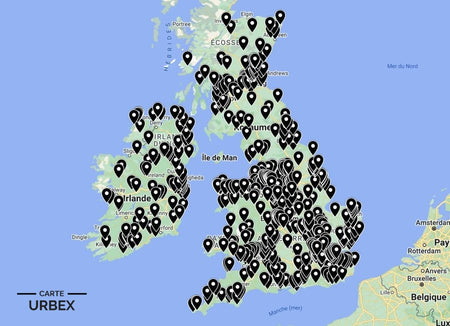
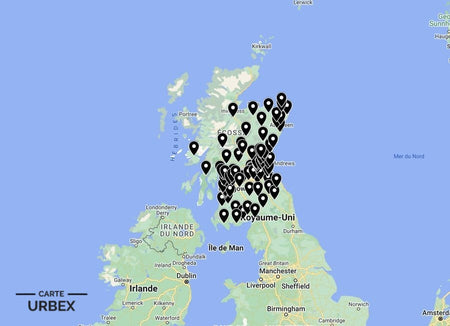
Fife is Scotland's Kingdom — a peninsula between the Forth and the Tay whose coastline was shaped by coal, salt pans and the fishing communities of the East Neuk. Its abandoned places carry the full range of Scottish industrial and medieval history: the last working colliery in Fife closed in 2002, a medieval castle abandoned on the Kirkcaldy shore and the derelict harbour buildings of a Victorian fishing port. Combined with the rural agricultural abandonment of inland Fife and the extraordinary coastal landscape of the Kingdom, Fife offers a Scottish urbex landscape that is largely undocumented outside the local community. Here are 5 of the best abandoned places in Fife, selected from our Abandoned Places Map UK — 640+ GPS locations across England, Scotland, Wales and Ireland.
Why Fife Is a Hidden Gem for Urban Exploration
Fife's urbex landscape is one of the least documented in Scotland — the combination of the coal heritage, the medieval coastal castles and the abandoned fishing village infrastructure creates a layered abandonment landscape that most Scottish urbex photographers have not systematically explored. The coastal setting, the Kingdom's relative isolation and the concentration of post-industrial dereliction in the Kirkcaldy-Dysart corridor make Fife one of Scotland's most rewarding and most underrated urbex destinations.
1. Frances Colliery – Dysart, Fife — Last Working Colliery in Fife, Closed 2002, Winding Gear and Pit-Head Buildings Still Present, Firth of Forth Setting (Known Location)
Frances Colliery at Dysart was the last deep mine working in Fife — closed in 2002 when Scottish Coal's Castlebridge operations ended, marking the final closure of large-scale underground coal mining in the Kingdom. The pit-head infrastructure, winding gear and derelict colliery buildings still stand on the Dysart coastline above the Firth of Forth in various states of atmospheric abandonment. The combination of the coal heritage, the Forth coastal setting and the status as the last working Fife pit give Frances Colliery a weight and significance that is difficult to overstate for the history of Scottish mining.
🔗 Learn more: Wikipedia – Frances Colliery Dysart
2. Ravenscraig Castle – Kirkcaldy, Fife — 15th-Century Royal Castle, Built by James II, Earliest Scottish Castle Designed for Artillery, Abandoned Ruins on the Kirkcaldy Shore (Known Location)
Ravenscraig Castle at Kirkcaldy is one of Scotland's most historically important medieval ruins — built from 1460 by King James II as one of the earliest Scottish castles specifically designed for artillery, with towers constructed to mount cannon rather than to defend against them. Abandoned since the 17th century, the two distinctive D-shaped towers still stand on the rocky Kirkcaldy shore, one of the finest examples of early gunpowder-era castle design in Scotland. Free to access, dramatically sited and almost entirely undocumented by the national urbex community.
🔗 Also read: Top 5 Abandoned Places in Scotland →

3. Dysart Harbour – Dysart, Fife — 17th-Century Harbour, Salt Pan Buildings and Pan House Still Standing, Listed by Historic Environment Scotland, Firth of Forth (Known Location)
Dysart Harbour is one of the best-preserved small historic harbours on the Firth of Forth — a 17th-century coal and salt-pan harbour whose Pan House (where sea salt was produced from coal-fired evaporation pans) and original harbour buildings still stand in various states of atmospheric dereliction. Listed by Historic Environment Scotland and referenced in British Listed Buildings as a significant example of post-medieval industrial harbour heritage. The combination of the 17th-century architecture, the industrial salt-pan heritage, and the Forth coastal setting make Dysart one of the most historically specific and atmospherically distinctive abandoned harbour landscapes in Scotland.
🔗 Learn more: British Listed Buildings – Dysart Heritage
4. Fife Colliery Pithead Baths – 1930s-1950s Miners' Welfare Baths, Locker Bays and Shower Rooms Intact, Fife Coalfield Village (Hidden Gem — Our Map Only)
A 1930s-1950s colliery pithead baths building in a Fife mining village — the Miners' Welfare Committee wash-house with its individual locker bays, shower rooms, and the distinctive double-locker system where miners kept their pit clothes and clean clothes separately. Built by the Miners' Welfare Commission and progressive for their time, these facilities represented a genuine improvement in mining community welfare; when the pits closed, the baths were simply emptied. GPS coordinates available with our Scotland Urbex Map.
5. Fife East Neuk Farmstead – 18th-19th Century Pantile Steading, Threshing Barn and Granary, East Neuk Coastal Agriculture (Off the Radar — Our Map Only)
An 18th-19th century East Neuk farmstead — the original threshing barn with opposing cart doors, the granary raised on staddle stones, and the characteristic red pantile roofing of East Coast Fife agricultural architecture. The East Neuk's small-scale coastal farming was progressively consolidated throughout the 20th century; the distinctive pantile and sandstone construction preserves these steadings in the relatively dry Fife climate. Included in our Scotland collection — 80+ locations.
Safety Tips
- Mine shafts: the Fife coalfield has multiple capped and uncapped shafts — never approach any ground depression near Frances Colliery or any other pit site
- Coastal access: Ravenscraig Castle and Dysart Harbour are on rocky Fife shoreline — always check tidal and weather conditions before visiting exposed coastal sites
- Never explore alone — always bring at least one other person
The urbex code: "Take nothing but photographs, leave nothing but footprints."
❓ FAQ
What is the most famous abandoned place in Fife?
Frances Colliery at Dysart — the last working deep mine in Fife, closed in 2002, marking the end of underground coal mining in the Kingdom. The pit-head infrastructure still stands above the Firth of Forth.
What is Ravenscraig Castle?
A 15th-century royal castle at Kirkcaldy built from 1460 by King James II — one of the earliest Scottish castles specifically designed for artillery, with D-shaped towers constructed to mount cannon. Abandoned since the 17th century and freely accessible on the Kirkcaldy shore.
What was the Dysart salt industry?
Dysart was one of the principal salt-producing towns on the Firth of Forth — coal-fired pan houses evaporated sea water to produce salt for the fishing industry across Scotland. The industry operated from the medieval period until the 19th century; the Pan House at Dysart Harbour is one of the best-surviving examples of this industrial heritage in Scotland.
🎯 Summary
Fife's abandoned places range from the last working colliery in Scotland's Kingdom closed in 2002 to a 15th-century royal castle whose artillery towers still stand on the Kirkcaldy shore and a 17th-century salt-pan harbour listed by Historic Environment Scotland. Each of these 5 derelict buildings in Fife captures a different layer of Scotland's most underrated Kingdom.

Abandoned Places Map Scotland
- ✓ 80+ GPS locations across Scotland
- ✓ Exclusive locations not found anywhere else
- ✓ Instant access after purchase
- ✓ Free updates forever
€9.99
Explore All Locations →