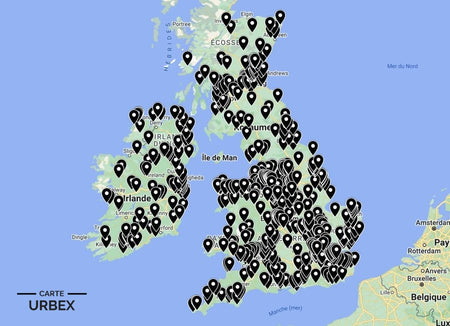
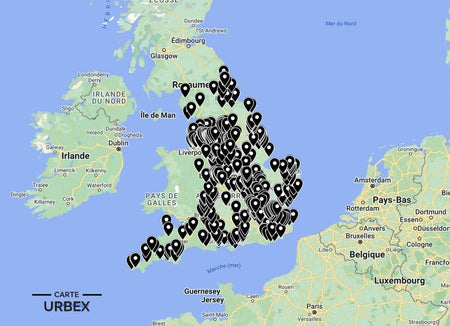
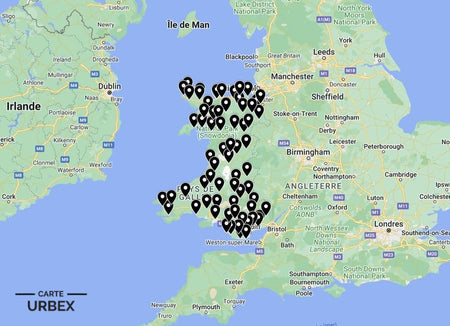
Gloucester is one of England's most historically layered cities — a Roman legionary fortress, a medieval cathedral city, and a Victorian port whose docks connected the Severn Vale to the Atlantic trade. Its abandoned places span that extraordinary chronological range: a Victorian psychiatric hospital whose echelon-plan campus still partially stands, a 19th-century Gloucester Docks warehouse decaying above the Sharpness Canal, and a Cotswold woollen mill that has been atmospheric dereliction since the 1980s. Here are 5 of the best abandoned places in Gloucester, selected from our Abandoned Places Map UK — 640+ GPS locations across England, Scotland, Wales and Ireland.
Why Gloucester Is a Hidden Gem for Urban Exploration
Gloucester's urbex landscape is defined by three distinct layers — the Victorian institutional heritage of a county town, the Georgian dock infrastructure that made it an Atlantic trading port, and the Cotswold and Severn Vale countryside's abandoned mill and farmstead heritage. The relatively small urbex community in Gloucestershire means sites are significantly underdocumented compared to neighboring Bristol or Birmingham.
1. Hucclecote Hospital – Hucclecote, Gloucester — 1883 Second Gloucestershire County Asylum, First Echelon-Plan Asylum in England, Sections Surviving in Dereliction (Known Location)
The Second Gloucestershire County Asylum at Hucclecote opened in 1883 as the first asylum in England to be built in the true echelon plan — a pioneering institutional design intended to maximise natural light and ventilation across the ward wings. The hospital operated until the 1990s when deinstitutionalisation progressively emptied the campus; significant sections of the original Victorian administrative block and ward buildings survive in atmospheric dereliction on the Hucclecote site. The combination of the architectural innovation — the first echelon plan asylum in England — and the Victorian institutional scale make it one of the most historically significant derelict hospital campuses in the West of England.
🔗 Learn more: Wikipedia – Gloucestershire County Asylum Hucclecote
2. Gloucester Docks Victorian Warehouse – Gloucester Docks — 1820s-1870s Canal Dock Warehouse, Cast-Iron Columns and Loading Hoists, Sharpness Canal Setting (Known Location)
Gloucester Docks' Victorian warehouse infrastructure represents the commercial ambition of a canal port that connected the Severn Vale to the Atlantic trade — the original multi-storey bonded warehouses with their cast-iron structural columns, loading hoist mechanisms and the characteristic Gloucester dock red brick rising above the Sharpness Canal basin. While the main dock area has been substantially regenerated, peripheral warehouse buildings retain significant derelict sections in atmospheric decay. One of the most historically distinctive pieces of canal port infrastructure surviving in the West of England.
🔗 Also read: Top 5 Abandoned Places in England →

3. Stanley Mill – Kings Stanley, Stroud — 1813 Five-Storey Woollen Mill, Iron-Framed Construction, Stroud Valley Setting, Documented on 28DaysLater (Known Location)
Stanley Mill at Kings Stanley near Stroud is one of the finest surviving examples of early 19th-century iron-framed industrial mill construction in the Cotswolds — a five-storey woollen cloth mill built in 1813 whose iron-framed construction made it one of the most technically advanced textile mills of its era. Now in long-term dereliction, the Stroud Valley setting and the architectural quality of the iron-framed construction make it one of the most compelling and most consistently discussed abandoned mills in Gloucestershire. Referenced on 28DaysLater with hopes for regeneration that have not materialised since 2018.
🔗 Learn more: 28DaysLater – Gloucestershire Urbex Reports
4. Severn Vale Georgian Country House – 18th-Century Mansion, Grand Staircase and Library Intact, Stable Block and Walled Garden, Gloucestershire (Off the Radar — Our Map Only)
An 18th-century country house in the Severn Vale — the original grand staircase still intact, the library with period shelving and the servants' wing with its bells and call board. The stable block and walled kitchen garden still stand in the overgrown grounds. Gloucestershire's wool gentry built extensively across the Severn Vale; post-war death duties and the agricultural depression emptied several estates within a decade of 1945. GPS coordinates available with our England Urbex Map.
5. Cotswold Cloth Mill – 1780s-1840s Woollen Mill, Millpond and Wheel Pit Still Intact, Cotswold Valley Stream Setting (Exclusively on Our Map)
An 1780s-1840s woollen cloth mill in a Cotswold valley — the original wheel pit where the overshot waterwheel drove the fulling stocks, the millpond and weir still maintaining the water level and the stone mill building decaying above the valley stream. The Stroud and Cotswold valleys' woollen industry created dozens of small mill sites; the earliest stone-built examples are the rarest and the most atmospherically distinctive. Included in our England collection — 400+ locations.
❓ FAQ
What is the most famous abandoned place in Gloucester?
The Second Gloucestershire County Asylum at Hucclecote — opened in 1883 as the first asylum in England built in the true echelon plan, an architectural innovation in asylum design intended to maximise natural light. Sections of the Victorian campus survive in atmospheric dereliction.
What is Stanley Mill?
A five-storey woollen cloth mill at Kings Stanley near Stroud, built in 1813 with iron-framed construction that made it one of the most technically advanced textile mills of its era in the Cotswolds. Now in long-term dereliction in the Stroud Valley, discussed on 28DaysLater as one of Gloucestershire's most compelling abandoned mills.
Why does Gloucester have docks?
Gloucester Docks were built from 1827 as the terminal basin of the Gloucester and Sharpness Canal — bypassing the tidal Severn to allow ocean-going ships to reach Gloucester from the Bristol Channel. At its peak the docks handled grain, timber and general cargo from the Atlantic trade; the Victorian warehouse infrastructure that served the docks is among the most distinctive industrial heritage in the West of England.
Safety Tips
- Waterfront access: Gloucester Docks canal basin has unguarded edges — never approach dock water edges and always assess ground stability near historic quayside structures
- Asbestos: endemic in pre-1980 Gloucestershire institutional and industrial buildings — FFP2 mask mandatory in any enclosed space
- Never explore alone — always bring at least one other person
The urbex code: "Take nothing but photographs, leave nothing but footprints."
🎯 Summary
Gloucester's abandoned places range from England's first echelon-plan asylum to Victorian dock warehouses above the Sharpness Canal and a five-storey iron-framed Cotswold woollen mill decaying in the Stroud Valley. Each of these 5 derelict buildings in Gloucester captures a different layer of a cathedral city built on wool, canal trade and Victorian institutional ambition.

Abandoned Places Map England
- ✓ 400+ GPS locations across England
- ✓ Exclusive locations not found anywhere else
- ✓ Instant access after purchase
- ✓ Free updates forever
€14.99
Explore All Locations →