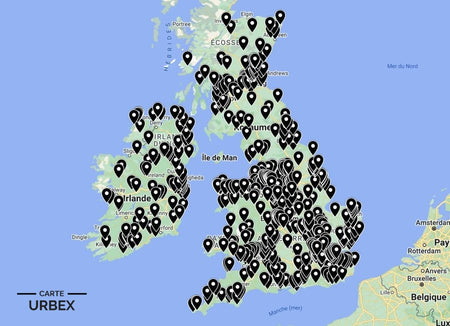
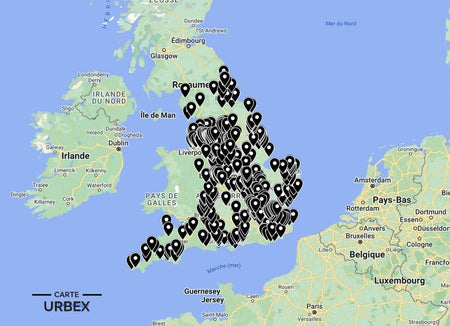
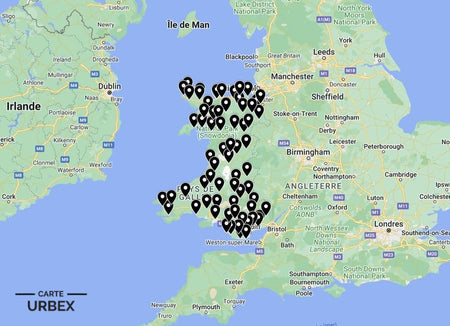
Huddersfield is the Colne Valley wool capital — a West Yorkshire mill town whose Victorian prosperity was built on the finest woollen cloth in England and whose architectural legacy includes one of the most beautiful Victorian railway stations in Britain. Its abandoned places carry that textile and railway weight: a Victorian hotel that was the birthplace of rugby league itself, an 18th-century corn mill in the Colne Valley woodland and the extraordinary Hillhouse coal drop infrastructure of the LNWR. Here are 5 of the best abandoned places in Huddersfield, selected from our Abandoned Places Map UK — 640+ GPS locations across England, Scotland, Wales and Ireland.
Why Huddersfield Is a Hidden Gem for Urban Exploration
Huddersfield's urbex landscape is defined by the extraordinary density of textile mill heritage in the Colne, Holme and Dearne valleys — dozens of stone-built woollen mills, many still standing in various states of atmospheric dereliction, concentrated within a few miles of the town centre. Combined with the Victorian civic heritage of a town that built ambitiously from wool wealth and the remarkable LNWR railway infrastructure, Huddersfield offers a West Yorkshire urbex landscape that is distinct from and complementary to Leeds or Bradford.
1. George Hotel – St George's Square, Huddersfield — 1851 Victorian Railway Hotel, Birthplace of Rugby League 1895, Abandoned, Grade II* Listed (Known Location)
The George Hotel on Huddersfield's St George's Square is one of the most historically significant abandoned buildings in English sport — a Grade II* listed 1851 Victorian railway hotel where 21 northern rugby clubs met on 29 August 1895 to form the Northern Rugby Football Union, the organisation that became rugby league. The hotel stood opposite Huddersfield's magnificent Italianate railway station; now abandoned, its grand staircase and Victorian interior still intact in atmospheric decay. Earmarked as a future rugby league museum but renovation funding has repeatedly stalled.
🔗 Learn more: Wikipedia – George Hotel Huddersfield
2. Greenside Mill – Marsden, Huddersfield — 1770 Colne Valley Corn and Textile Mill, Millpond and Dam Still Intact, Woodland Setting, Documented on 28DaysLater (Known Location)
Greenside Mill at Marsden was built in 1770 by William Marsden — one of the oldest surviving mill buildings in the Colne Valley, its original millstone, millpond and dam infrastructure still intact in atmospheric woodland abandonment. The mill's history spans the full arc of Colne Valley industry from pre-industrial corn milling through to textile manufacturing; its woodland setting and the completeness of the original water-power infrastructure make it one of the most photographically and historically rewarding abandoned mills accessible from Huddersfield. Documented on 28DaysLater as a standout example of pre-industrial mill architecture.
🔗 Also read: Top 5 Abandoned Places in England →

3. Hillhouse Coal Drops – Alder Street, Huddersfield — 1900 LNWR Coal Drop Infrastructure, Elevated Sidings and Drop Chutes, Documented on 28DaysLater (Known Location)
The Hillhouse Coal Drops on Alder Street were built in 1900 by the London and North Western Railway as an interface between the main railway network and Huddersfield's local tramway system — an elevated railway siding from which coal wagons tipped their loads down chutes into tramway vehicles below. The surviving coal drop infrastructure, the elevated railway abutments and the characteristic brick engineering of the LNWR make Hillhouse one of the most unusual and most specifically railway-archaeological abandoned structures in West Yorkshire. Documented on 28DaysLater with drone photography showing the full extent of the surviving elevated structure.
🔗 Learn more: 28DaysLater – Huddersfield Urbex Reports
4. Colne Valley Woollen Mill – 1840s-1860s Stone Mill, Weave Shed and Dyehouse Still Standing, Millpond and Goyt, Holme Valley (Off the Radar — Our Map Only)
An 1840s-1860s woollen mill in the Holme Valley — the original stone-built weave shed with its characteristic north-light sawtooth roof, the dyehouse where raw wool was coloured before weaving and the millpond and goyt that supplied the water-powered machinery. Huddersfield's specialist woollen cloth industry — producing the finest suiting fabrics in England — left a landscape of stone mills whose construction quality has preserved them in the Pennine climate. GPS coordinates available with our England Urbex Map.
5. West Yorkshire Dyes Factory – Huddersfield — 20th-Century Chemical Dye Works, Coloured Residue Still Staining the Walls, Industrial Setting (Exclusively on Our Map)
A 20th-century chemical dye works in Huddersfield — the production building with dye residue still staining the factory walls in extraordinary colours, the mixing vats and the characteristic north-light manufacturing floor of a works that supplied the woollen textile industry with its colour palette. Documented in Yorkshire Live as one of the most visually extraordinary abandoned industrial spaces in West Yorkshire — the walls of different coloured dyes create a photography opportunity unlike anything else in Yorkshire urbex. Find it on our map — with access rating and condition report.
Safety Tips
- Chemical contamination: the Huddersfield dye works may have residual chemical contamination in pigment deposits — wear gloves, FFP2 mask and never disturb powder residues on surfaces
- Mill floors: Victorian stone mill floors were designed for heavy loom loads that have since been removed — always test floor sections and never cross areas with visible sub-floor voids
- Never explore alone — always bring at least one other person
The urbex code: "Leave it as you found it — the next explorer deserves the same experience."
❓ FAQ
What is the most famous abandoned place in Huddersfield?
The George Hotel on St George's Square — a Grade II* listed 1851 Victorian railway hotel where rugby league was born on 29 August 1895, now abandoned with its grand staircase intact, earmarked as a future museum but with renovation repeatedly stalled.
Where was rugby league founded?
In the George Hotel on St George's Square in Huddersfield — 21 northern rugby clubs met here in August 1895 to break away from the Rugby Football Union and form the Northern Rugby Football Union, which became rugby league. The building is Grade II* listed but has been abandoned for years.
Why does Huddersfield have so many abandoned mills?
Huddersfield's woollen textile industry — producing the finest suiting cloth in England — collapsed under pressure from cheaper imports through the 1960s-1980s. The stone-built Pennine mills that housed the industry were too expensive to convert and too solidly built to demolish easily; many remain in atmospheric dereliction in the Colne, Holme and Dearne valley landscapes.
🎯 Summary
Huddersfield's abandoned places range from the birthplace of rugby league decaying opposite the finest provincial station in Britain to an 18th-century woodland mill with its dam intact and a 1900 LNWR coal drop structure documented from the air. Each of these 5 derelict buildings in Huddersfield captures a different layer of a wool town that built ambitiously and left its architecture to outlast its industry.

Abandoned Places Map England
- ✓ 400+ GPS locations across England
- ✓ Exclusive locations not found anywhere else
- ✓ Instant access after purchase
- ✓ Free updates forever
€14.99
Explore All Locations →