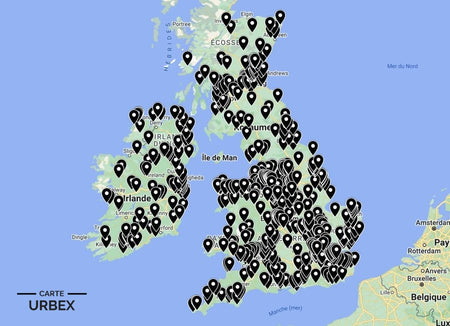
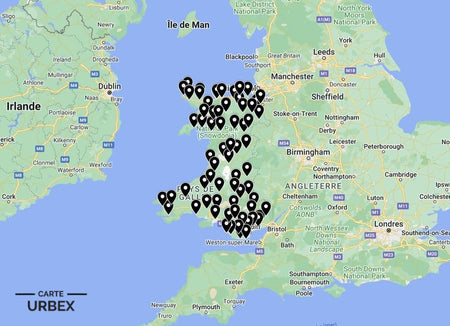
Leeds is the capital of West Yorkshire — a city built on wool, flax and engineering whose Victorian industrial infrastructure is now progressively being abandoned or converted. The Egyptian-revival flax mill that once processed 5,000 tonnes of fibre a year, the decommissioned power station whose turbine hall stands empty by the Aire and the illegally-distilled whisky manor in Roundhay all tell different chapters of the same story. Here are 5 of the best abandoned places in Leeds, selected from our Abandoned Places Map UK — 640+ GPS locations across England, Scotland, Wales and Ireland.
Why Leeds Is a Hidden Gem for Urban Exploration
Leeds sits at the centre of the West Yorkshire urbex corridor — within thirty minutes of Sheffield, Bradford and Wakefield, all of which have their own abandoned industrial landscapes. But Leeds itself is often underexplored; the city's rapid regeneration pushes dereliction to the margins while creating a constantly shifting frontier of newly abandoned sites. The Aire Valley industrial corridor and the suburban manor house belt of north Leeds create two entirely different urbex experiences within the same city.
1. Temple Works – Holbeck, Leeds — 1838 Egyptian Revival Flax Mill, Grade I Listed, Roof Collapsed, One of the Most Extraordinary Industrial Buildings in England (Known Location)
Temple Works in Holbeck is one of the most extraordinary pieces of industrial architecture in England — an 1838 flax spinning mill designed by Joseph Bonomi in Egyptian Revival style, its vast single-storey weaving shed modelled on the Temple of Karnak in Egypt and topped by a roof once grazed by sheep to regulate humidity. Grade I listed and one of only a handful of Egyptian Revival industrial buildings surviving anywhere in the world, the roof has now partially collapsed and the building stands in dramatic semi-ruin — its extraordinary architectural ambition decaying in a Leeds industrial estate.
🔗 Learn more: Wikipedia – Temple Works Leeds
2. Kirkstall Power Station – Kirkstall, Leeds — Early 20th Century Power Station, Turbine Hall and Generator Buildings Still Standing by the River Aire, Closed 1970s (Known Location)
Kirkstall Power Station on the River Aire was Leeds' primary electricity generation facility in the early 20th century — the turbine hall, generator buildings and chimney infrastructure still standing by the river, largely abandoned since closure in the 1970s. Mostly fenced off but the imposing architecture and industrial decay visible from the Kirkstall Road and the river make it a prominent landmark in Leeds urbex. The combination of the riverside setting, the industrial scale and the state of progressive atmospheric decay make Kirkstall one of the most characteristically Leeds abandoned places in the city.
🔗 Also read: Top 5 Abandoned Places in England →

3. Fearnville House – Roundhay, Leeds — 1840 Grade II Listed Manor, Long-Term Derelict, Illegal Whisky Distillery History, Documented on 28DaysLater (Known Location)
Fearnville House in Roundhay is a Grade II listed Victorian manor built around 1840 by a Leeds merchant — a large derelict mansion with a long history of abuse and neglect, documented by the Leeds urbex community on 28DaysLater as one of the most persistently abandoned large buildings in north Leeds. The house gained additional notoriety through its use as an illegal whisky distillery at some point in its abandonment — the combination of the architectural quality, the eccentric history and the persistent dereliction make Fearnville one of Leeds' most discussed abandoned properties. The overgrown grounds and crumbling Victorian facade make for striking photography.
🔗 Learn more: 28DaysLater – Leeds Urbex Reports
4. Abandoned West Yorkshire Woollen Mill – 1850s-1880s Textile Mill, Original Mule Spinning Frames Still Mounted on Cast-Iron Stands, Engine House Intact, Aire Valley (Our Map Exclusive)
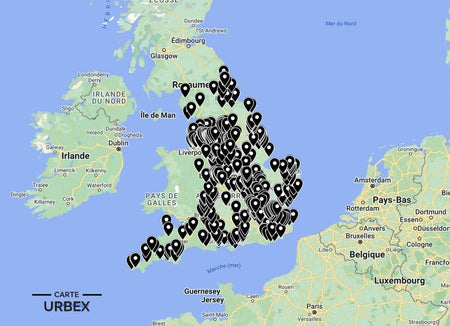
An 1850s-1880s woollen mill in the Aire Valley — the original mule spinning frames still mounted on their cast-iron stands, the engine house where the mill steam engine drove the entire complex and the wool sorting room still equipped with period fittings. The West Yorkshire woollen industry made the Aire and Calder valleys the textile heartland of Victorian England; when cheaper production ended the trade, the mills closed progressively. Discover its exact location on our England Urbex Map.
5. Abandoned Yorkshire Kirkbride Asylum – 1860s-1880s Psychiatric Campus, Gothic Tower Visible Across Leeds, Ornate Chapel and Airing Courts Still Standing, West Yorkshire (Hidden Gem — Our Map Only)
An 1860s-1880s Kirkbride-plan psychiatric asylum in West Yorkshire — the Gothic administrative tower still visible for miles across the Leeds landscape, the ornate chapel with original stained glass and timber pews and the enclosed airing courts where patients exercised year-round. The bat-wing ward corridor and self-sustaining farm campus complete a Victorian institutional landscape closed by deinstitutionalisation. GPS coordinates available with our England Urbex Map.
Safety Tips
- Roof collapse: Temple Works has partial roof failure — never enter the building without checking current access conditions and always stay away from areas showing overhead structural movement
- Asbestos: universal in pre-1980 Leeds textile and industrial buildings — FFP2 mask mandatory in any enclosed space
- Never explore alone — always bring at least one other person
The urbex code: "Respect the decay. It tells the story."
❓ FAQ
What is the most famous abandoned place in Leeds?
Temple Works in Holbeck — an 1838 Grade I listed Egyptian Revival flax mill, one of only a handful of Egyptian Revival industrial buildings surviving anywhere in the world. The roof has partially collapsed; the extraordinary architectural ambition decays in a Leeds industrial estate car park.
What is Kirkstall Power Station?
Leeds' primary early 20th-century electricity generation facility on the River Aire — turbine hall and generator buildings still standing by the river, mostly fenced off since closure in the 1970s. One of the most prominent pieces of derelict industrial architecture visible from Leeds city roads.
What is Fearnville House?
A Grade II listed Victorian manor in Roundhay built around 1840, long-term derelict and documented on 28DaysLater as one of Leeds' most persistently abandoned large buildings. Gained additional notoriety through its alleged use as an illegal whisky distillery during its abandonment.
🎯 Summary
Leeds' abandoned places range from a Grade I listed Egyptian Revival flax mill with a partially collapsed roof to a Victorian power station by the Aire and a Roundhay manor with an illegal whisky distillery past. Each of these 5 derelict buildings in Leeds captures a different layer of a city that built itself on wool and is still working out what to do with what the wool trade left behind.

Abandoned Places Map England
- ✓ 400+ GPS locations across England
- ✓ Exclusive locations not found anywhere else
- ✓ Instant access after purchase
- ✓ Free updates forever
€14.99
Explore All Locations →