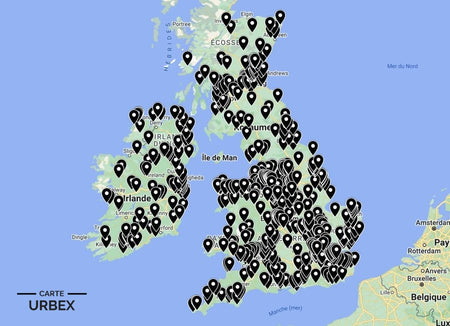
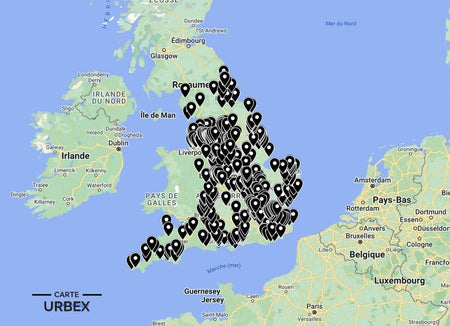
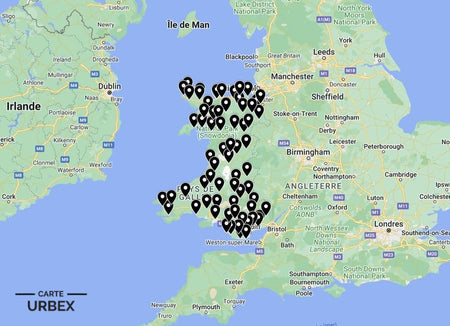
The Rhondda Valley is the most powerfully symbolic landscape of Welsh industrial history — a narrow, steep-sided valley running north from Pontypridd into the Brecon Beacons whose coal seams powered the British navy and fuelled the Victorian world economy. At its peak, the twin valleys of the Rhondda Fawr and Rhondda Fach held over sixty working collieries; today their legacy lives in atmospheric dereliction: a coal and coke works whose ovens went cold in 2002, a colliery whose headstocks still stand above the terraced rooftops and a medieval church abandoned in the Rhondda forest that has been returning to the hillside for decades. Here are 5 of the best abandoned places in the Rhondda Valley, selected from our Abandoned Places Map UK — 640+ GPS locations across England, Scotland, Wales and Ireland.
Why the Rhondda Valley Is a Hidden Gem for Urban Exploration
The Rhondda's urbex landscape is defined by the extraordinary density of coal industry heritage compressed into a narrow valley — colliery headstocks, winding houses, drift mine entrances and coal preparation plants within walking distance of one another along a valley floor already dense with terraced housing. The Welsh urbex community on 28DaysLater is active in the Rhondda; the coal heritage that survives is both historically significant and atmospherically exceptional.
1. Cwm Coke Works – Coedely, Rhondda Valley — Coal and Coke Processing Plant, Closed 2002, Battery of Coke Ovens and Processing Infrastructure, Documented as One of South Wales's Most Atmospheric Derelict Industrial Sites (Known Location)
Cwm Coke Works at Coedely in the Rhondda Valley is one of South Wales's most powerful pieces of derelict industrial heritage — a coal and coke processing plant that closed in 2002, leaving its battery of coke ovens, the by-product recovery infrastructure and the characteristic steel and brick processing architecture in atmospheric abandonment in the valley. The coke works' central role in converting Rhondda coal into the metallurgical coke that fed the South Wales steel furnaces makes it one of the most historically specific and most visually dramatic pieces of derelict industrial infrastructure in the valley.
🔗 Learn more: carte-urbex.com – Top Abandoned Places in South Wales
2. Tylorstown Colliery – Tylorstown, Rhondda Fach — Victorian Coal Colliery in the Rhondda Fach Valley, Headstocks and Surface Infrastructure, Rhondda Heritage (Known Location)
Tylorstown Colliery in the Rhondda Fach is one of the most atmospheric surviving pieces of colliery infrastructure in the valley — a Victorian coal pit whose headstocks and surface buildings still stand above the terraced rooflines of the Rhondda Fach community that grew up entirely in the shadow of the pit. The combination of the Rhondda Fach valley setting, the Victorian colliery architecture and the atmospheric dereliction of a pit that defined a community's entire economic and social identity for generations makes Tylorstown one of the most evocative colliery sites in South Wales.
🔗 Also read: Top 5 Abandoned Places in Wales →

3. Llanwonno Church – Llanwonno, Rhondda — Medieval Parish Church Abandoned in the Rhondda Forest, Associated with Legendary Runner Guto Nyth Brân, Crumbling Walls and Overgrown Graveyard, Featured on carte-urbex.com Top 10 Wales (Known Location)
Llanwonno Church is one of Wales's most hauntingly atmospheric abandoned churches — hidden in the forest above the Rhondda Valley, surrounded by overgrown graves and crumbling walls, its association with Guto Nyth Brân, the legendary 18th-century Welsh long-distance runner who is buried in its churchyard, gives it a cultural resonance unique among abandoned Welsh religious buildings. Featured on carte-urbex.com's Top 10 Abandoned Places in Wales as a genuinely atmospheric and genuinely unusual piece of Welsh heritage — a medieval church returning slowly to the forest that surrounds it.
🔗 Learn more: carte-urbex.com – Top 10 Abandoned Places in Wales
4. Rhondda Drift Mine – 1920s-1960s Level or Drift Mine Entrance, Adit Portal and Ventilation Infrastructure, Rhondda Hillside Setting (Off the Radar — Our Map Only)
A 1920s-1960s drift mine on the Rhondda hillside — the original adit portal where the coal level enters the hillside, the ventilation shaft and the rail track infrastructure of a level mine that extracted coal from the hillside seams without sinking a shaft. The Rhondda's hillside levels and drift mines are the most numerous and most atmospheric pieces of small-scale coal mining heritage in South Wales; the drift mine is a building type unique to the South Wales valleys and the most commonly encountered piece of abandoned coal mining infrastructure in the Rhondda landscape. GPS coordinates available with our Wales Urbex Map.
5. Rhondda Valley Miners' Institute – 1900s-1920s Workmen's Institute and Library, Reading Room and Concert Hall, Valley Terrace Setting (Exclusively on Our Map)
A 1900s-1920s workmen's institute in the Rhondda valley — the reading room where miners educated themselves by the fire, the concert hall where choirs rehearsed and the library whose 2,000-volume collection was the only books many Rhondda families ever owned. The South Wales miners' institute is a building type unique to the coalfield — the most tangible legacy of the self-improvement movement that made the Welsh mining community one of the most politically and culturally sophisticated working-class communities in the world. Find it on our map — with access rating and condition report.
❓ FAQ
What is the most famous abandoned place in the Rhondda Valley?
Cwm Coke Works at Coedely — a coal and coke processing plant closed in 2002 whose battery of coke ovens and by-product recovery infrastructure stand in dramatic atmospheric dereliction in the valley. One of South Wales's most compelling derelict industrial sites, documented as one of the region's most significant pieces of abandoned coal heritage.
Who was Guto Nyth Brân?
Griffith Morgan (1700-1737), known as Guto Nyth Brân ("Crow's Nest Guto"), was a legendary Welsh long-distance runner from the Rhondda whose extraordinary speed made him a folk hero across South Wales. He is buried at Llanwonno Church; his grave is still visited regularly. The tragic story of his death — collapsing after winning a race near Mountain Ash at the age of 37 — gives Llanwonno's already atmospheric abandoned churchyard an additional layer of emotional resonance.
Why did the Rhondda coal industry collapse?
A combination of geological exhaustion, cheaper overseas coal, the 1984-85 miners' strike and the privatisation aftermath closed the Rhondda's remaining collieries through the 1980s-1990s. The coal seams that powered the British navy and fuelled the Victorian world economy proved too thin, too faulted and too expensive to extract at scale in the modern economy. The valley that had supported over 100,000 miners at peak now carries the atmospheric ruins of an industry that lasted barely a century.
Safety Tips
- Mine shafts: the Rhondda has hundreds of capped and uncapped shafts and drift mine adits — never enter any mine adit and never approach any shaft or ground depression on the valley sides
- Industrial contamination: coke works sites have heavy coal tar residues and chemical contamination — wear gloves and FFP2 mask in any enclosed space
- Never explore alone — always bring at least one other person
The urbex code: "Leave it as you found it — the next explorer deserves the same experience."
🎯 Summary
The Rhondda Valley's abandoned places range from a coke processing plant whose ovens went cold in 2002 to a Victorian colliery headstock above the Rhondda Fach terraces and a medieval church returning to the forest where Guto Nyth Brân, Wales's most legendary runner, was buried in 1737. Each of these 5 derelict buildings in the Rhondda Valley captures a different layer of the valley that powered the British Empire and paid for it in lives.

Abandoned Places Map Wales
- ✓ 60+ GPS locations across Wales
- ✓ Exclusive locations not found anywhere else
- ✓ Instant access after purchase
- ✓ Free updates forever
€9.99
Explore All Locations →