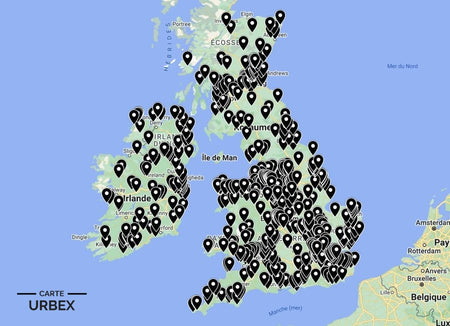
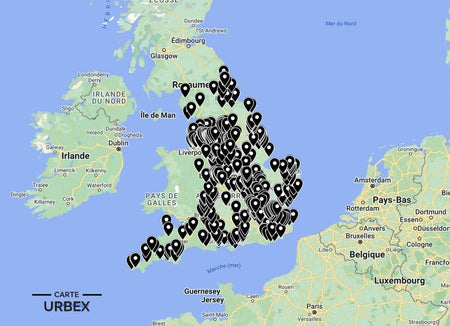
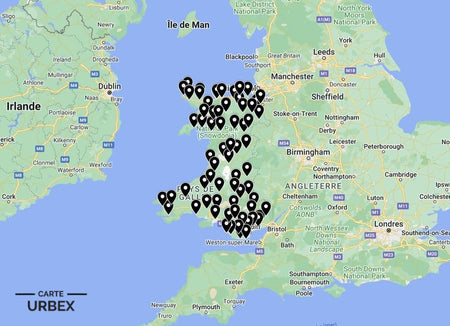
Wakefield is the cathedral city of West Yorkshire's coalfield — a market town whose medieval wealth came from the wool trade, whose Victorian prosperity came from coal, and whose 21st-century identity is defined by the contrast between the Hepworth Gallery's international sculpture program and the derelict colliery infrastructure still visible on the horizon. Its abandoned places range from a Victorian psychiatric hospital that served West Yorkshire for over a century to the extraordinarily atmospheric ruins of a medieval Knights Templar preceptory on the Calder banks. Here are 5 of the best abandoned places in Wakefield, selected from our Abandoned Places Map UK — 640+ GPS locations across England, Scotland, Wales, and Ireland.
Why Wakefield Is a Hidden Gem for Urban Exploration
Wakefield's urbex landscape is shaped by three layers — medieval ecclesiastical heritage, Victorian coal infrastructure, and the institutional legacy of a county town that served West Yorkshire's administrative and healthcare needs. The West Yorkshire coalfield closures left a ring of derelict pit sites around the city; within the cathedral precinct and along the Calder, medieval and post-medieval remains add a depth of historical abandonment rarely found in a Yorkshire market town.
1. Stanley Royd Hospital – Stanley, Wakefield — 1818 West Riding Pauper Lunatic Asylum, One of the Oldest Surviving Asylum Campuses in England, Long-Term Dereliction (Known Location)
Stanley Royd Hospital near Wakefield opened in 1818 as the West Riding Pauper Lunatic Asylum — one of the oldest purpose-built psychiatric hospitals in England, predating the great Victorian asylum-building program by three decades. The original early 19th-century institutional buildings, extended through the Victorian era, have been in various states of dereliction since closure. The combination of the extraordinary age — pre-Victorian institutional architecture is extraordinarily rare — and the scale of the campus make Stanley Royd one of the most historically significant and most atmospherically unusual abandoned hospital sites in Yorkshire.
🔗 Learn more: Wikipedia – Stanley Royd Hospital
2. Newlands Estate – Normanton, Wakefield — 1213 Knights Templar Preceptory, Later Knights Hospitallers, Abandoned Township on the Calder, Medieval Earthworks (Known Location)
The Newlands Estate at Normanton near Wakefield was established in 1213 by King John as a preceptory of the Knights Templars — a medieval agricultural township transferred to the Knights Hospitallers after the Templars' suppression in 1312 and progressively abandoned through the post-medieval period. The surviving earthworks, building remains, and field system boundaries of the medieval preceptory township make Newlands one of the most historically extraordinary and most atmospherically unusual abandoned landscapes near Wakefield — a Crusader-era township decaying on the Calder floodplain.
🔗 Also read: Top 5 Abandoned Places in England →

3. Haw Park Colliery – Crofton, Wakefield — 20th-Century West Yorkshire Colliery, Headstocks and Winding Infrastructure, Rural Setting, Documented by BCD Urbex (Known Location)
Haw Park Colliery near Crofton is a 20th-century West Yorkshire coalfield pit whose headstocks, winding infrastructure, and pit-head buildings remain in atmospheric dereliction in the rural landscape south of Wakefield. One of the most consistently photographed abandoned colliery sites in the Wakefield area by the West Yorkshire urbex community, documented by Behind Closed Doors (bcd-urbex.com) as a well-preserved example of late 20th-century colliery architecture in the process of returning to nature.
🔗 Learn more: BCD Urbex – Yorkshire Reports
4. West Yorkshire Victorian Rhubarb Forcing Shed – 1890s-1910s Rhubarb Forcing Shed, Original Dark Interior and Heating Infrastructure, Wakefield Rhubarb Triangle (Exclusively on Our Map)
A Victorian rhubarb forcing shed in the Wakefield Rhubarb Triangle — the original dark interior where candlelight-forced rhubarb was grown in total darkness to produce the tender pink stems that made Wakefield famous worldwide, the heating flue infrastructure, and the characteristic long low brick shed construction of the Rhubarb Triangle's unique agricultural heritage. Wakefield's rhubarb forcing industry once produced 90% of the world's forced rhubarb in winter; abandoned sheds are among the rarest and most distinctive pieces of agricultural industrial heritage in England. GPS coordinates available with our England Urbex Map.
5. Calder Valley Georgian Mill – 1780s-1800s Corn or Textile Mill, Waterwheel Pit and Millpond Still Intact, Calder and Hebble Navigation Setting (Only on Our Map)
An 1780s-1800s mill in the Calder Valley — the original waterwheel pit where the overshot wheel drove the millstones, the millpond, and the weir on the Calder and Hebble Navigation still controlling the water level, and the stone mill building decaying above the river. The Calder Valley's mill heritage spans the full arc from pre-industrial corn milling to Victorian textile manufacturing; the earliest mill buildings are the rarest and the most atmospherically distinctive. Find it on our map — with access rating and condition report.
❓ FAQ
What is the most famous abandoned place in Wakefield?
Stanley Royd Hospital — opened in 1818 as the West Riding Pauper Lunatic Asylum, one of the oldest purpose-built psychiatric hospitals in England and now one of the most historically significant abandoned institutional sites in Yorkshire.
What is the Newlands Estate?
A 1213 Knights Templar preceptory township near Normanton established by King John — transferred to the Knights Hospitallers after the Templars' suppression in 1312 and progressively abandoned. The medieval earthworks and building remains make it one of the most historically extraordinary abandoned landscapes in West Yorkshire.
What is the Wakefield Rhubarb Triangle?
A nine-square-mile area between Wakefield, Morley, and Rothwell that once produced 90% of the world's forced rhubarb in winter — grown in darkened sheds by candlelight to produce the tender pink stems. The abandoned forcing sheds of the Rhubarb Triangle are among the rarest and most distinctive pieces of agricultural industrial heritage in England.
Safety Tips
- Mine shafts: the Wakefield coalfield has numerous capped and uncapped shafts — never approach any ground depression near colliery sites
- Asbestos: endemic in pre-1980 Wakefield hospital and industrial buildings — FFP2 mask mandatory in any enclosed space
- Never explore alone — always bring at least one other person
The urbex code: "Respect the decay. It tells the story."
🎯 Summary
Wakefield's abandoned places range from the oldest asylum in Yorkshire — open since 1818 — to a 1213 Knights Templar township on the Calder and Victorian rhubarb forcing sheds that once supplied the world's pink winter rhubarb. Each of these 5 derelict buildings in Wakefield captures a different layer of a cathedral city built on wool, coal, and the most distinctive agricultural heritage in England.

Abandoned Places Map England
- ✓ 400+ GPS locations across England
- ✓ Exclusive locations not found anywhere else
- ✓ Instant access after purchase
- ✓ Free updates forever
14.99€
Explore All Locations →