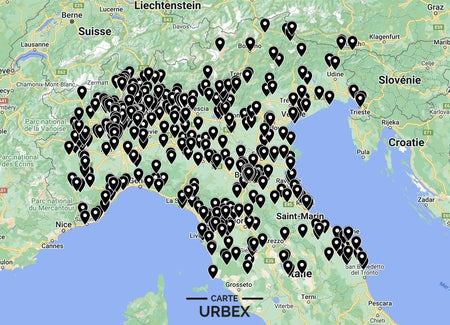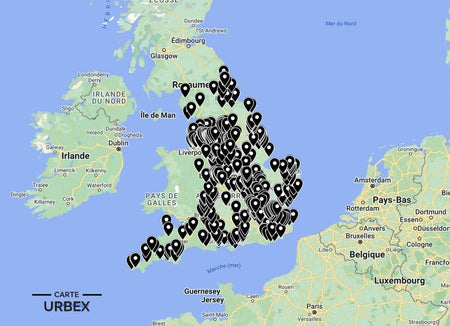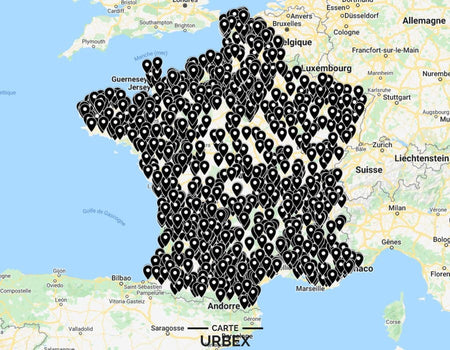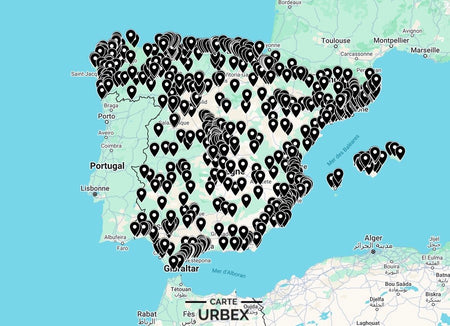


In this article, discover five essential locations selected from our Urbex China Map, which features over 500 abandoned places across China, carefully documented for unique and immersive explorations.
Urbex China in Harbin offers the most historically layered exploration experience in northeast China. Known as the "Moscow of the East," Harbin was founded by Russian engineers in 1898 as the administrative centre of the Chinese Eastern Railway — and its brief but extraordinary cosmopolitan era left behind Russian Orthodox churches, Jewish synagogues, and European colonial architecture now standing in various states of decay. Beneath this Russian heritage lies a darker layer: the ruins of Japan's most secret and most horrific wartime facility.
Why Harbin Is One of the Most Extraordinary Urbex Destinations in China
No other Chinese city has Harbin's combination of abandoned history. Russian Imperial architecture from the 1900s, White Russian refugee churches from the 1920s, Japanese wartime research facilities from the 1930s, and Soviet-influenced industrial infrastructure from the 1950s all coexist in a single city in the Manchurian plains. The extreme winter climate — temperatures regularly reaching -30°C — gives every abandoned structure in Harbin a quality of preservation and atmosphere unlike anything in the rest of China.
📍 All locations below are referenced on our Urbex China Map — GPS coordinates, access notes, condition ratings, and explorer reports included.
1. Unit 731 – Japan's Abandoned Biological Warfare Complex, Pingfang District (Known Location)
The most historically significant and most disturbing abandoned site in northeast China. Unit 731 was a top-secret Japanese biological and chemical warfare research facility that operated in Harbin's Pingfang District from 1936 to 1945. At its peak it occupied 6 square kilometres, employed over 3,000 personnel, and killed an estimated 3,000 prisoners through human experimentation — prisoners infected with plague, anthrax, and cholera, subjected to vivisection without anaesthetic, and used to test frostbite and pressure weapon effects. When the Soviet Union entered Harbin in August 1945, the retreating Japanese forces destroyed and buried most of the facility. The ruins that survived — laboratories, prison cells, animal breeding sheds, and the incinerator smokestacks — were preserved as a museum opened to the public in 2015.
| Architecture | WWII military research complex — ruins and preserved buildings |
| Condition | ⭐⭐⭐☆☆ Medium |
| Access | ⭐⭐⭐⭐⭐ Easy |
| Photo potential | ⭐⭐⭐⭐☆ Very good |
👉 Story: Operated 1936–1945. Japanese forces destroyed most facilities before retreating. Site declassified and opened as museum in 2015. The existence of Unit 731 was covered up for decades, reportedly with US government assistance, in exchange for access to the biological warfare research data.
🔗 More on Unit 731: Atlas Obscura – Unit 731 Museum
2. Holy Iveron Icon Orthodox Church – Derelict Russian Military Church, Central Harbin (Known Location)
The most atmospheric abandoned religious building in Harbin — and one of the least known. The Holy Iveron Icon Orthodox Church on Jihong Street was originally built as a Russian military church in 1908 and became a centre of the city's Eastern Orthodox community. Unlike the famous Saint Sophia Cathedral — now a well-maintained museum — the Holy Iveron Icon Church was left to decay quietly in a back alley in the shadow of the orphanage beside it. Its graceful curves, fine brick carvings, and colourful mosaics remain visible beneath the damage, revealing the architectural ambition of a Russian community that built its faith into the frozen Manchurian plains.
| Architecture | Russian Orthodox military church — 1908, brick |
| Condition | ⭐⭐☆☆☆ Deteriorated |
| Access | ⭐⭐⭐⭐☆ Easy |
| Photo potential | ⭐⭐⭐⭐⭐ Exceptional |
👉 Story: Built 1908 as a Russian military church. Closed during the Cultural Revolution. Too few Orthodox believers remained after the Russian community dispersed to justify restoration. Has stood quietly deteriorating in its alley while Saint Sophia Cathedral became a tourist landmark 200 metres away.
🔗 More on Harbin's Russian churches: Sixth Tone – Orthodox Churches, Unorthodox Histories

3. The Abandoned Chinese Eastern Railway Station – Harbin Outskirts (Exclusive on our Map)
A decommissioned station on the historic Chinese Eastern Railway — the Russian Imperial line built from 1897 that made Harbin possible and connected Manchuria to Vladivostok and Moscow.
| Architecture | Russian Imperial railway station — early 20th century |
| Condition | ⭐⭐☆☆☆ Deteriorated |
| Access | ⭐⭐⭐☆☆ Medium |
| Photo potential | ⭐⭐⭐⭐⭐ Exceptional |
👉 Story: The Chinese Eastern Railway was the foundation of Harbin's existence. As the network was modernised and Soviet influence withdrew, dozens of its original Russian-built stations were left empty — frozen Imperial architecture in the Manchurian countryside.
📍 Exact location available on our Urbex China Map.
4. The Abandoned Soviet-Era Industrial Complex – Harbin Industrial District (Exclusive on our Map)
A derelict heavy industrial facility from Harbin's Soviet-assisted industrialisation in the 1950s — part of the manufacturing infrastructure that earned the city its reputation as "China's industrial cradle."
| Architecture | Soviet-era industrial complex |
| Condition | ⭐⭐⭐☆☆ Medium |
| Access | ⭐⭐⭐☆☆ Medium |
| Photo potential | ⭐⭐⭐⭐☆ Very good |
👉 Story: Harbin was one of China's most important industrial cities in the 1950s, built with Soviet technical assistance. As northeast China's industrial decline accelerated from the 1990s, dozens of facilities were decommissioned — leaving Soviet-style architecture and machinery behind in the Manchurian cold.
📍 Exact location available on our Urbex China Map.
5. The Abandoned White Russian Villa – Former Foreign Concession (Exclusive on our Map)
A decaying early 20th-century villa in what was once Harbin's prosperous foreign concession district — built by Russian merchants, White Russian refugees, or Jewish traders who made Harbin one of the most cosmopolitan cities in Asia between 1900 and 1940.
| Architecture | Russian or European villa — early 20th century |
| Condition | ⭐⭐☆☆☆ Deteriorated |
| Access | ⭐⭐⭐⭐☆ Easy |
| Photo potential | ⭐⭐⭐⭐⭐ Exceptional |
👉 Story: At its peak, Harbin had over 40,000 Russian residents and communities from 33 countries. As the Russian population dispersed after 1945 and the Jewish community left for Israel after 1948, the buildings they left behind were repurposed, neglected, or abandoned — faded yellow mansions with walls covered in vines, hidden in the alleys of the old city.
📍 Exact location available on our Urbex China Map.
Urbex China – Safety & Legal Reminder
Urban exploration in China carries specific risks. Trespassing is illegal, and security has increased significantly around abandoned structures. Always:
- Research each site thoroughly before visiting
- Explore with at least one other person
- Wear protective gear — mask, gloves, and sturdy boots
- In Harbin: prepare for extreme cold — temperatures can reach -30°C from November to March
- Never force access or cause damage to any structure
- Respect the spaces and leave no trace
The urbex code applies everywhere: "Take nothing but photographs, leave nothing but footprints."
❓ FAQ – Urbex Harbin
What is the most famous abandoned place in Harbin?
Unit 731 in Pingfang District is the most internationally known — the largest biological warfare site in the history of global warfare, preserved as a free museum. Take Metro Line 1 to Xinjiang Street (southernmost stop), exit 2, and walk five minutes to the museum entrance.
What is the best time of year to visit abandoned places in Harbin?
Late spring (April–May) and autumn (September–October) offer the most manageable temperatures for extended exploration. Winter visits are extraordinary for atmosphere — snow and ice transform every abandoned structure — but require serious cold-weather preparation. Summer (June–August) is also viable and avoids the extreme cold.
What makes Harbin unique for urbex compared to other Chinese cities?
Harbin is the only major Chinese city where Russian Imperial architecture, Japanese wartime ruins, and Soviet industrial heritage coexist alongside modern property crisis abandonment. The extreme Manchurian climate preserves abandoned structures in a way impossible in southern China — and gives every site here a quality of frozen stillness that no other Chinese city can match.
🎯 Conclusion
Harbin offers the most historically dense experience in urbex China — a city where Russian Imperial churches stand abandoned beside Japanese biological warfare ruins, and where Soviet industrial complexes decay in the shadow of ornate White Russian villas. Every abandoned place in Harbin is a layer of the city's extraordinary cosmopolitan past, frozen by the Manchurian cold.
Thanks to our Urbex China Map, you get access to over 500 unique locations for a safe and immersive exploration experience — with GPS coordinates, access ratings, photos, and explorer reports for every spot.