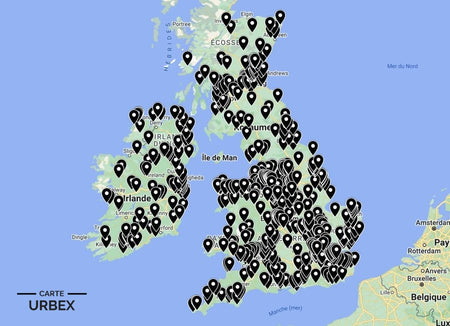
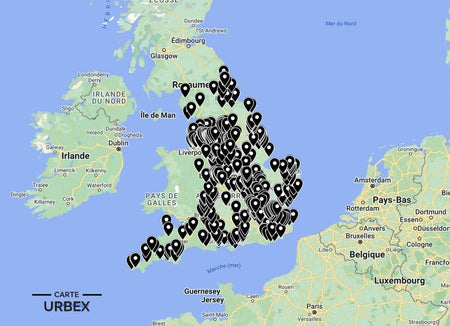
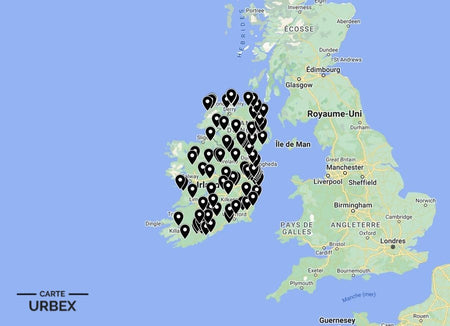
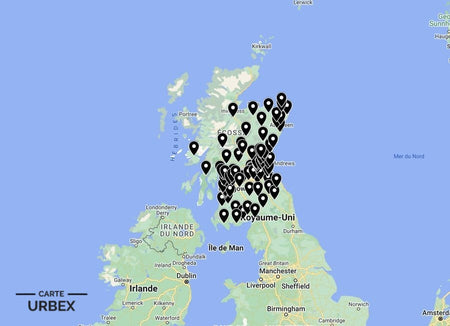
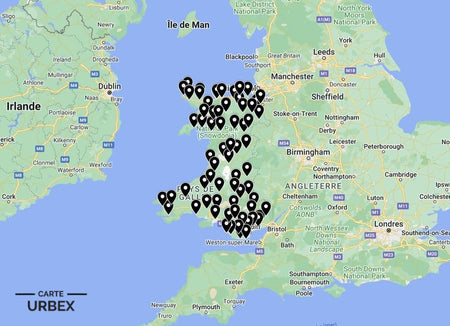
The British country house is the defining architectural achievement of the 18th and 19th centuries — Palladian villas, Baroque palaces and Gothic Revival castles whose construction consumed the agricultural wealth of the English, Scottish, Welsh and Irish countryside for two hundred years. By the mid-20th century, death duties, agricultural decline and the catastrophic cost of maintenance had broken the majority of the families that built them. The result is the most extraordinary concentration of abandoned mansions anywhere in the world — great houses decaying in parkland from the Scottish Highlands to the Irish Atlantic coast. These are the finest, selected from our Abandoned Places Map UK — 640+ GPS locations across England, Scotland, Wales and Ireland.
🏴 England – Death Duties and the Broken Gentry
England lost more country houses between 1945 and 1975 than in any previous period — an estimated 1,200 demolished in those three decades alone. What survived is often the most atmospheric: houses too remote to develop, too costly to demolish, or protected by listed status in mid-collapse.
Ewart Park Mansion — Wooler, Northumberland
Built in the 1780s by Count Horace St Paul, abandoned in 1937 when the inheritor could not pay his father's debts — Grade II listed and decaying in the Till Valley with the Cheviot Hills visible from its principal rooms. Documented extensively on 28DaysLater as one of the most romantically atmospheric abandoned country houses in the north-east. The Northumberland isolation makes the abandonment feel absolute in a way that no southern English house can match.
🔗 Source: British Listed Buildings – Ewart Park Northumberland
Newsham Park Hospital (former Newsham House) — Liverpool
A Victorian mansion converted to hospital use — the grand staircase, ornate plasterwork and period interiors intact beneath decades of institutional overlay. Liverpool's most celebrated urbex destination and one of the most atmospherically complete Victorian interiors surviving in dereliction in England. The city setting makes the decay more urgent than any rural equivalent.
🔗 Source: Derelict Places – Newsham Park Hospital Liverpool
Wentworth Woodhouse — Rotherham, South Yorkshire
The longest country house frontage in England at 606 feet — a Palladian palace built for the Marquesses of Rockingham whose east front remains the most astonishing piece of domestic architecture in Yorkshire. Long in institutional use and dereliction before acquisition by a preservation trust, Wentworth's scale and grandeur are without parallel among partially derelict English country houses.
🔗 Also read: Top 5 Abandoned Places in England →

🏴 Scotland – Gothic Revival and Highland Remoteness
Scotland's country house abandonment has a particular quality — the Highland remoteness that preserved these buildings from redevelopment also makes their decay more profound. The Gothic Revival houses of the Clyde Valley, the Georgian mansions of the Border country and the Victorian shooting lodges of the Highland plateau form three distinct categories of Scottish derelict domestic heritage.
Cambusnethan Priory — Wishaw, North Lanarkshire
James Gillespie Graham's finest surviving country house — a Category A listed Gothic Revival mansion built in 1820 for the Lockharts of Lee, ruinous since fires in 1985 and 1995 and listed on the Buildings at Risk Register for Scotland under "critical" risk. The Lockhart coat of arms — commemorating the family's role in carrying Robert the Bruce's heart back from the Crusades — carved above every balustrade of the main staircase. One of the most historically charged and architecturally significant derelict buildings in Scotland.
🔗 Source: Buildings at Risk – Cambusnethan Priory Scotland
Gartmore House — Stirlingshire
A Victorian country house in the Trossachs foothills — documented on 28DaysLater as one of central Scotland's most romantically isolated abandoned houses, its parkland views extending across the Forth valley to the Highland boundary. The combination of the Highland boundary setting and the Victorian architectural ambition creates an atmosphere unique in Scottish urbex.
🔗 Also read: Top 5 Abandoned Places in Scotland →
🏴 Wales – The Marches and Valley Estates
Kinmel Hall — Abergele, North Wales
One of the most dramatically atmospheric and most frequently photographed abandoned mansions in Wales — a vast Second Empire château built in 1874 for Hugh Robert Hughes, Grade I listed and in catastrophic dereliction on the North Wales coast. The Kinmel Hall fire damage, the scale of the surviving structure and the extraordinary architectural ambition of a house that out-Frenchified any château in France make it the most visually extraordinary derelict mansion in Wales.
🔗 Source: Coflein – Kinmel Hall North Wales
Sundorne Castle — Shrewsbury, Shropshire
An early 19th-century Gothic Revival castle in the Shropshire/Welsh Marches countryside — once one of the largest country houses in Shropshire, progressively abandoned and partially demolished through the 20th century. Listed by British Listed Buildings; the surviving ruins, parkland lake and gatehouse create one of the most dramatically atmospheric abandoned country house sites in the Welsh Marches.
🔗 Also read: Top 5 Abandoned Places in Wales →
🇮🇪 Ireland – The Big House and Its Abandonment
Clifden Castle — Connemara, Co Galway
The 1815 home of John D'Arcy, founder of Clifden town — standing in atmospheric ruin in the Connemara Atlantic landscape, the castle walls and walled garden rising from the bog above the Atlantic horizon. The Connemara setting, the D'Arcy family history and the extraordinary Atlantic coastline visible from the castle ruins make Clifden one of the most romantically situated abandoned country house ruins in Ireland.
🔗 Also read: Top 5 Abandoned Places in Ireland →
❓ FAQ – Abandoned Mansions in the UK
Why did so many UK country houses get abandoned?
A combination of factors destroyed the financial basis of the country house: death duties introduced in 1894 and progressively increased through the 20th century; two World Wars that requisitioned houses and never returned them in functional condition; agricultural depression that eroded the rental income that maintained the estates; and the exodus of domestic servants that made large houses impossible to run. Between 1945 and 1975 an estimated 1,200 English country houses were demolished.
Are abandoned mansions legal to visit?
Most abandoned mansions are on private land — entering without permission is trespassing in England, Wales and Scotland, and a criminal offence in some circumstances. Always research ownership and access before visiting. Some sites are accessible via public footpaths that run through former estate grounds without requiring trespass.
What is the most famous abandoned mansion in the UK?
Kinmel Hall in North Wales is the most photographed and most discussed — a Grade I listed Second Empire château in catastrophic dereliction whose scale and architectural ambition have made it one of the most recognizable abandoned buildings in Britain. In Scotland, Cambusnethan Priory's Category A listing and its association with Robert the Bruce give it historical significance without parallel.
Why does Ireland have so many abandoned country houses?
Irish country houses — known as "Big Houses" — faced an additional layer of abandonment specific to Ireland: many were burned during the War of Independence and the Civil War as symbols of Anglo-Irish landlordism. Those that survived faced the same death duty and agricultural income pressures as their British equivalents, but without the English heritage preservation infrastructure that saved some English houses.
Safety – Abandoned Country Houses
- Roof failure: abandoned mansions frequently have failed or partially failed roofs — entering rooms with roof damage risks collapse of ceiling plaster, rafters or chimney stacks without warning
- Floor decay: timber floors in abandoned buildings decay from below — test each floor carefully and never trust the centre of any room
- Lead paint: pre-1960s country house interiors contain significant lead paint — never sand, disturb or breathe dust from painted surfaces
- Never explore alone
The urbex code: "Respect the decay. It tells the story."
🎯 Summary – Best Abandoned Mansions in the UK
From Northumberland's Georgian mansion abandoned since 1937 to the Gothic tower of Cambusnethan Priory above the River Clyde and the Second Empire château of Kinmel Hall decaying on the North Wales coast, the UK's abandoned country houses are the most atmospheric and historically charged derelict buildings in Europe. Every site in this guide is GPS-mapped in our UK collection.

Abandoned Places Map UK
- ✓ 640+ GPS locations — England, Scotland, Wales & Ireland
- ✓ Abandoned mansions, castles, asylums & more
- ✓ Instant access after purchase
- ✓ Free updates forever
€19.99
Explore All 640+ Locations →