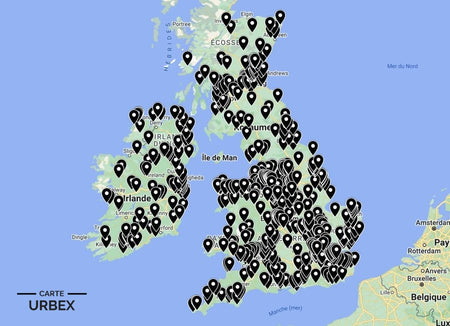
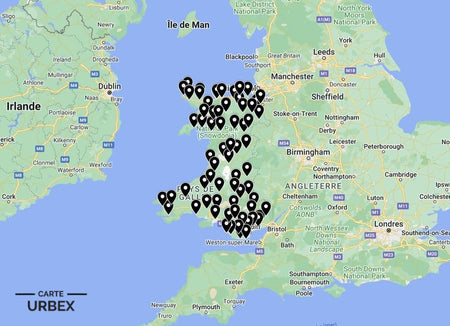
Britain's mining heritage is the most varied and most historically significant in the world — the country that invented the industrial coal mine, perfected the Cornish beam pump and created the Victorian colliery headstock as its defining industrial architectural statement. From the Bronze Age copper mines of Alderley Edge to the 1992 closure of the last Wigan coalfield pit, Britain's abandoned mines span 3,500 years of mineral extraction — and the most atmospheric examples are still accessible, still decaying and still carrying the full weight of the industries that built the modern world. These are the finest, selected from our Abandoned Places Map UK — 640+ GPS locations across England, Scotland, Wales and Ireland.
🏴 England – Collieries, Copper Mines and Industrial Revolution Heritage
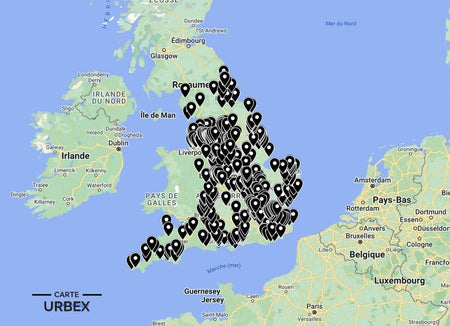
England's mining landscape is defined by three distinct zones — the Pennine and Midlands coalfields whose Victorian collieries powered the Industrial Revolution, the Cornish tin and copper heritage whose beam pump engine houses are the defining image of south-west England, and the Peak District lead mines whose 18th-century shafts and smelt mills created the first industrial landscapes in England.
Pleasley Colliery — Pleasley, Derbyshire
One of the most completely surviving Victorian colliery surface complexes in England — twin headstocks, original winding engine houses, pithead baths and colliery yard buildings preserved in remarkable atmospheric condition by a local heritage trust since closure in 1983. The Victorian engineering quality, the completeness of the surviving surface infrastructure and the atmospheric dereliction of the surrounding yard make Pleasley the definitive English colliery urbex experience.
🔗 Source: Derelict Places – Pleasley Colliery Derbyshire
Alderley Edge Copper Mines — Alderley Edge, Cheshire
Bronze Age to Victorian copper mining in the Cheshire sandstone — shafts and adits driven through the Edge from the Bronze Age to the 1860s, creating one of the most archaeologically extraordinary and most atmospherically unusual mining landscapes in England. Listed by Historic England as a Scheduled Ancient Monument; the sandstone tunnels, Bronze Age tools recovered from the mine and the Edge's legendary associations create a mining experience of unmatched chronological depth.
🔗 Source: Historic England – Alderley Edge Copper Mines
Chatterley Whitfield Colliery — Stoke-on-Trent, Staffordshire
The first British colliery to produce one million tonnes of coal in a single year — a North Staffordshire colliery whose headstocks, winding engine houses and pithead baths in atmospheric dereliction represent the most complete surviving Victorian colliery campus in the English Midlands. The combination of the world record coal production history, the Victorian engineering quality and the atmospheric completeness make Chatterley Whitfield one of England's most significant derelict industrial heritage sites.
🔗 Also read: Top 5 Abandoned Places in England →

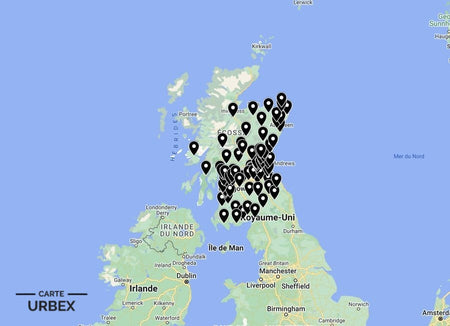
🏴 Scotland – Granite, Coal and North Sea Energy
Rubislaw Quarry — Aberdeen
The largest man-made hole in Europe — a granite quarry 142 metres deep that operated from 1740 to 1971, providing the stone that built every major Victorian building in Aberdeen. Now flooded, the quarry face, crane infrastructure and engine house ruins stand in atmospheric dereliction at the crater's edge. The combination of the 231-year operational history, the record depth and the fact that the city above was built entirely from what was extracted below makes Rubislaw one of the most historically specific pieces of industrial heritage in Britain.
🔗 Source: Atlas Obscura – Rubislaw Quarry Aberdeen
Frances Colliery — Dysart, Fife
A Fife coalfield colliery whose Victorian headstocks and surface buildings stand in atmospheric dereliction in the Dysart harbour landscape — one of the most visually dramatic colliery settings in Scotland, where the pit-head stands within sight of the Firth of Forth. The combination of the Fife coastal setting, the Victorian colliery architecture and the documented urbex photography makes Frances one of the most atmospherically distinctive derelict collieries in Scotland.
🔗 Also read: Top 5 Abandoned Places in Scotland →
🏴 Wales – The South Wales Coalfield and North Wales Slate
Wales has the richest and most emotionally charged mining heritage in the UK — the South Wales coalfield that powered the British navy and the North Wales slate quarries that roofed the Victorian world. Both landscapes carry an industrial weight that goes beyond economics: they represent the physical expression of a Welsh working-class identity that coal and slate created.
Cwm Coke Works — Coedely, Rhondda Valley
A coal and coke processing plant closed in 2002 — the battery of coke ovens, by-product recovery infrastructure, and characteristic processing architecture in dramatic atmospheric abandonment in the Rhondda. The coke works' central role in converting Rhondda coal into metallurgical coke for South Wales steel furnaces makes it one of the most historically specific and visually dramatic pieces of derelict industrial infrastructure in Wales.
🔗 Source: carte-urbex.com – Top Abandoned Places in South Wales
Gresford Colliery — Gresford, Wrexham
The site of the 1934 Gresford Disaster — 266 men killed in the worst mining accident in Welsh history. The pit operated until 1973; the derelict surface infrastructure including the memorial winding wheel preserved for the 266 victims makes Gresford the most emotionally charged piece of mining heritage in Wales. The combination of the disaster history, the memorial, and the derelict surrounding infrastructure creates an experience unique in UK mining urbex.
🔗 Also read: Top 5 Abandoned Places in Wales →
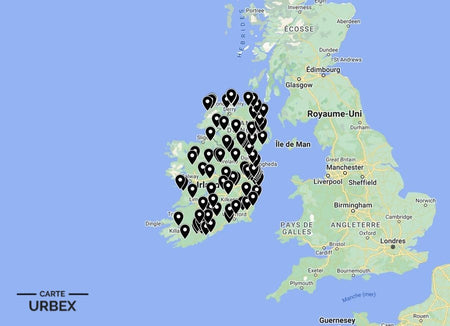
🇮🇪 Ireland – Copper, Lead and Famine-Era Mine Heritage
Ballincollig Gunpowder Mills — Co Cork
The largest gunpowder manufacturing complex in Ireland — operating from 1794 to 1903 and supplying the British Army through the Napoleonic Wars, the Crimean War, and the Indian Mutiny. The incorporated mills, magazine buildings, and canal infrastructure lie in remarkable atmospheric dereliction in the Lee valley; the gunpowder mill architecture — low-profile, earth-banked, explosion-containing — is a building type unique in Irish industrial heritage.
🔗 Also read: Top 5 Abandoned Places in Ireland →
❓ FAQ – Abandoned Mines and Collieries in the UK
Why did UK coal mines close?
The decline of the UK coal industry was caused by a combination of factors: geological depletion of the most accessible seams, competition from cheaper imported coal, the 1984-85 miners' strike and the subsequent pit closure program, and the gradual shift to North Sea gas for electricity generation. From a peak of over 1,000 active collieries in 1920, the last deep coal mine in England — Kellingley Colliery in Yorkshire — closed in 2015.
Are abandoned mine shafts dangerous?
Extremely. The UK has tens of thousands of capped and uncapped mine shafts — many in open countryside with no visible surface indication. Never approach any ground depression near a former mine site; never enter any shaft opening or mine adit without specialist equipment and training. Underground mine atmospheres can be oxygen-deficient, may contain methane or carbon monoxide, and structural collapse can occur without warning.
What is the most historically significant abandoned mine in the UK?
The Alderley Edge copper mines in Cheshire — Bronze Age copper tools have been recovered from mine workings at Alderley Edge, making it one of the earliest mining sites in the British Isles. The fact that the same mine was worked continuously from the Bronze Age to the Victorian era creates an industrial heritage of 3,500 years' duration that no other UK site can match.
What happened at the Gresford Disaster?
On 22 September 1934, fire broke out in the Dennis section of Gresford Colliery near Wrexham — 266 men were killed in the worst mining accident in Welsh history. The pit was sealed with most of the victims still inside; only eleven bodies were ever recovered. The memorial winding wheel is preserved at the site as a national monument to the dead, making Gresford the most emotionally charged piece of derelict mining heritage in the UK.
Safety – Abandoned Mines UK
- Mine shafts: never approach any ground depression near a former mine site — shafts can be concealed, capped with fragile covers or simply unmarked. The UK has hundreds of thousands of historic mine workings
- Never enter mine workings: abandoned mine tunnels and adits present oxygen deficiency, methane and carbon monoxide risks, unstable roof structures and flood risk. Never enter any mine without specialist training and gas detection equipment
- Chemical contamination: former coke works and ore processing sites have heavy metal and chemical contamination in soil — wear gloves and never disturb ground surfaces
- Never explore alone
The urbex code: "Respect the decay. It tells the story."
🎯 Summary – Best Abandoned Mines in the UK
From the Bronze Age copper mines of Alderley Edge to the Victorian twin headstocks of Pleasley Colliery, the coke works of the Rhondda and the granite quarry that built Aberdeen, the UK's abandoned mines and collieries span 3,500 years of mineral extraction and represent the most historically varied mining landscape in the world. Every site in this guide is GPS-mapped in our UK collection.

Abandoned Places Map UK
- ✓ 640+ GPS locations — England, Scotland, Wales & Ireland
- ✓ Abandoned mines, collieries, quarries & more
- ✓ Instant access after purchase
- ✓ Free updates forever
€19.99
Explore All 640+ Locations →