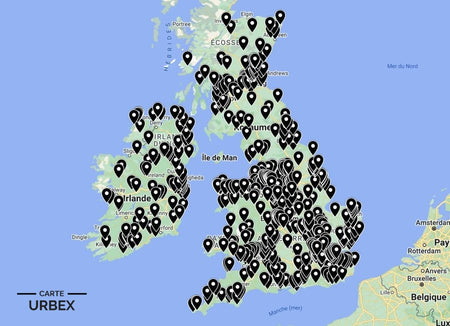
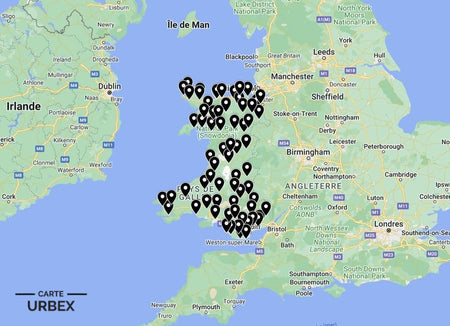
Birmingham is England's second city — the city of a thousand trades, where metalworking, jewellery and automotive industries drove the British economy for two centuries. Its abandoned places carry that weight: the world's oldest surviving railway terminus, a 1938 Art Deco theatre in Dudley and the canal-side warehouse heritage of a city with more miles of canal than Venice. Here are 5 of the best abandoned places in Birmingham, selected from our Abandoned Places Map UK — 640+ GPS locations across England, Scotland, Wales and Ireland.
Why Birmingham Is a Hidden Gem for Urban Exploration
Birmingham's urbex landscape spans three centuries of industrial heritage — the 1838 railway terminus, Victorian jewellery workshop courtyards, 1950s power stations and the BCN canal corridor whose warehouse infrastructure represents some of the most historically specific abandoned architecture in England. The sheer variety of building types, from Georgian to Art Deco, within a compact geography makes Birmingham one of the richest urbex destinations in the Midlands.
1. Curzon Street Station – Birmingham — 1838 Grand Junction Railway Terminus, Oldest Surviving Mainline Railway Station in the World, Grade I Listed, Long-Term Derelict (Known Location)
Curzon Street Station was built in 1838 as the Birmingham terminus of the Grand Junction Railway — the oldest surviving mainline railway terminus building in the world, designed by Philip Hardwick in Greek Revival style. Closed to passengers when New Street opened in 1854, used as a goods office for over a century before falling derelict. Grade I listed and subject to HS2-related restoration discussions, the 1838 station portico is one of the most historically extraordinary surviving pieces of early railway architecture anywhere on earth.
🔗 Learn more: Wikipedia – Curzon Street Station Birmingham
2. Nechells Generating Station – Nechells, Birmingham — 1952 Art Deco Power Station, Turbine Hall and Control Room Still Standing, Cooling Towers Demolished 1984 (Known Location)
Nechells Generating Station was a 1952 Art Deco power complex whose turbine hall, cooling towers and control infrastructure dominated the Nechells industrial landscape for decades. The cooling towers were demolished in 1984 but the control room and substation buildings still stand in various states of atmospheric decay. The post-war industrial scale and Art Deco architectural ambition make Nechells one of the most historically significant abandoned power station sites in the West Midlands.
🔗 Also read: Top 5 Abandoned Places in Coventry →

3. Dudley Hippodrome – Dudley, West Midlands — 1938 Art Deco Theatre, Closed 2009, Grade II Listed, Original Auditorium and Fly Tower Still Standing (Known Location)
Dudley Hippodrome opened in 1938 as a grand Art Deco variety theatre — a 1,200-seat auditorium with original decorative plasterwork, a functioning fly tower and a facade that was the architectural landmark of Dudley town centre for 70 years. Closed in 2009 when the operating company went into administration, the building has been the subject of years of restoration campaigns while remaining substantially derelict inside. Grade II listed; one of the most discussed and most campaigned-for abandoned theatres in the West Midlands.
🔗 Learn more: Historic England – Dudley Hippodrome
4. Abandoned Birmingham Jewellery Quarter Workshop – 1870s-1900s Goldsmith's Courtyard, Original Workbenches and Acid Bath Fixtures Still Mounted, Hockley (Hidden Gem — Our Map Only)
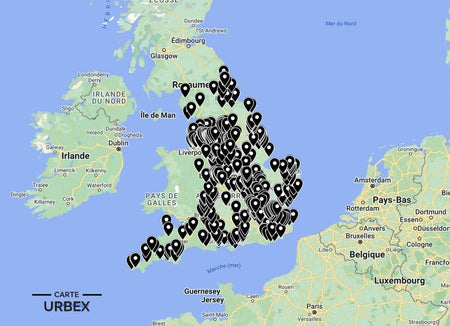
An 1870s-1900s jewellery workshop courtyard in Hockley — the original top-lit workroom designed to flood the goldsmith's benches with natural light, original workbench frames still mounted along the walls and the acid bath fixtures used in gold refining still in place. Birmingham's Jewellery Quarter produced over 40% of British jewellery output through the Victorian era; when the industry consolidated, dozens of original workshop courtyards were simply closed. Discover its exact location on our England Urbex Map.
5. Abandoned BCN Canal-Side Warehouse – 1840s-1860s Narrowboat Wharf, Original Hoist Machinery and Iron Loading Doors Intact, Canopied Canal Arm (Off the Radar — Our Map Only)
An 1840s-1860s canal-side warehouse on the Birmingham Canal Navigations network — the original hoist machinery above the loading doors, iron-shuttered windows and the canopied canal arm where narrowboats loaded under cover. Birmingham's BCN canal network was the distribution backbone of the city's industrial economy; canal freight decline left extraordinary warehouse infrastructure along the corridors. Included in our England collection — 400+ locations.
❓ FAQ
What is the most famous abandoned place in Birmingham?
Curzon Street Station — the 1838 Grand Junction Railway terminus, the oldest surviving mainline railway station in the world. Grade I listed, designed by Philip Hardwick in Greek Revival style and closed to passengers in 1854 when New Street opened.
What is Dudley Hippodrome?
A 1938 Art Deco variety theatre closed in 2009 when the operating company went into administration. Grade II listed, with original 1,200-seat auditorium and fly tower still standing. One of the most campaigned-for abandoned theatres in the West Midlands.
Why is Birmingham's Jewellery Quarter historically significant?
The Hockley Jewellery Quarter produced over 40% of British jewellery output at Victorian peak — a dense concentration of specialist workshops, assay offices and metal trades within a few streets. The quarter's Victorian workshop buildings survive in extraordinary concentration as the largest Victorian commercial heritage district in Britain.
Safety Tips
- Canal edges: BCN canal towpaths in derelict warehouse zones have unguarded drops into deep water with no ladder access — maintain a minimum 2-metre clearance from all canal edges
- Acid residues: old Jewellery Quarter workshops may retain traces of pickling acids used in gold and silver finishing — never touch workbench surfaces without gloves
- Never explore alone — always bring at least one other person; the Jewellery Quarter's courts are easy to get disoriented in after dark
The urbex code: "Take nothing but photographs, leave nothing but footprints"
🎯 Summary
Birmingham's abandoned places range from the 1838 railway terminus that is the oldest surviving mainline station in the world, to a 1938 Art Deco theatre standing derelict in Dudley and Victorian jewellery workshop courtyards with acid bath fixtures still mounted on the walls. Each of these 5 derelict buildings in Birmingham is a different layer of the city of a thousand trades.

Abandoned Places Map England
- ✓ 400+ GPS locations across England
- ✓ Exclusive locations not found anywhere else
- ✓ Instant access after purchase
- ✓ Free updates forever
€14.99
Explore All Locations →